How to Deal With a Difficult Landlord in NZ

Dealing with a difficult landlord can turn your dream rental into a nightmare, but as a Kiwi tenant, you've got solid rights backed by law to fight back. Whether it's dodgy repairs, unfair rent hikes,...
James writes about the New Zealand property market, renting, home ownership, and housing costs. He breaks down complex property topics into practical advice for renters and buyers.
Dealing with a difficult landlord can turn your dream rental into a nightmare, but as a Kiwi tenant, you've got solid rights backed by law to fight back. Whether it's dodgy repairs, unfair rent hikes, or harassment, knowing your options under the Residential Tenancies Act 1986 (updated in 2024) empowers you to take control and protect your home.
We've all heard stories—landlords ignoring leaks, slapping on illegal rent increases, or playing games with bonds. With tenancy laws evolving in 2025 and 2026, including easier terminations and pet rules, it's crucial to stay informed. This guide breaks down practical steps, real NZ examples, and resources like Tenancy Services to help you handle issues head-on.
Understanding Your Rights as a Tenant in New Zealand
Before confronting your landlord, know the basics. The Residential Tenancies Act 1986 (RTA) governs all rentals in NZ, outlining responsibilities for both parties. Landlords must provide a safe, habitable home, while tenants pay rent on time and keep the place tidy. Recent amendments via the Residential Tenancies Amendment Act 2024, passed on 17 December 2024, have shaken things up, especially around terminations and pets.
Key rights include:
- A property meeting Healthy Homes Standards by 1 July 2025—all rentals must be warm, dry, and draught-free.
- Protection from illegal rent increases—only once every 12 months, with proper notice.
- Bond handling: Must be lodged with Tenancy Services within 23 working days.
- Quiet enjoyment: No harassment or unreasonable interference.
If your landlord breaches these, you're not stuck. Start by documenting everything—photos, emails, dates. This builds your case for the Tenancy Tribunal, NZ's go-to for resolving disputes fast and free.
Recent Law Changes Impacting Tenants (2025-2026)
From 30 January 2025, landlords can end periodic tenancies with 90 days' no-cause notice, or 42 days for specific reasons like moving in themselves or selling. Fixed-term tenancies from 1 May 2025 need 90-21 days' notice to end, or they roll into periodic ones. Pet rules in 2026 require landlords to approve pets unless they have reasonable grounds to refuse, with options for pet bonds up to two weeks' rent.
These shifts give landlords more flexibility but don't erode core tenant protections. For instance, Healthy Homes compliance is non-negotiable, with fines up to $7,200 per breach.
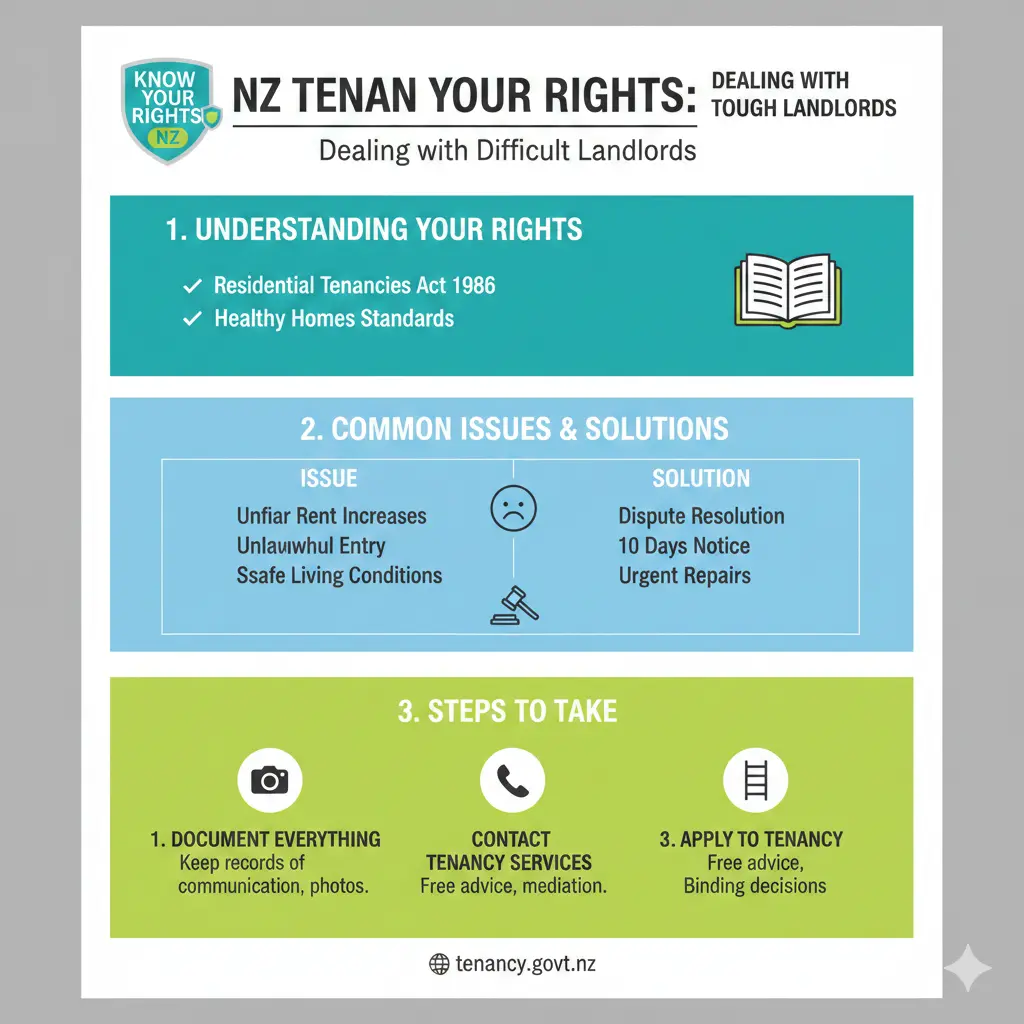
Common Issues with Difficult Landlords and How to Spot Them
Difficult landlords often test boundaries. Here's what to watch for, with NZ-specific examples.
Unreasonable Rent Increases
Rent can only rise once every 12 months, regardless of amount, and tenants must get 60 days' written notice stating the new amount. Example: If your Auckland flat jumps from $600 to $750 weekly without notice, that's illegal. In 2025, Tenancy Tribunal cases spiked over dodgy hikes amid market pressures.
Maintenance and Repairs Delays
Landlords must fix urgent issues (no hot water, leaks) within 24 hours, and non-urgent within a reasonable time. Under Healthy Homes, all properties hit standards by 1 July 2025—think insulation, efficient heaters, ventilation. Real case: A Wellington tenant in 2024 won a rent rebate after mould went unchecked for months.
Bond Disputes and Pet Problems
Bonds cover cleaning or damage beyond fair wear and tear. With 2026 pet laws, landlords can set conditions and charge a pet bond, but can't blanket-ban pets. If your landlord withholds your bond unfairly, apply to the Tribunal within set timeframes.
Harassment or Illegal Entry
Landlords need 48 hours' notice for inspections (twice yearly max) and can't enter without consent otherwise. Harassment—like constant texts or threats—violates quiet enjoyment rights.
Termination Tricks
Post-2025, 90-day no-cause notices are legal for periodic tenancies, but tenants can challenge bad faith via Tribunal within 12 months (or 28 working days to cancel). Watch for fake "renovation" excuses under old rules.
Step-by-Step Guide: How to Deal With Your Difficult Landlord
Don't go nuclear first—follow this proven process tailored for Kiwis.
Step 1: Communicate in Writing
Email or use the official Tenancy Services notice forms. Be polite but firm: "The heater isn't working, per Healthy Homes standards. Please fix within 24 hours." Keep records—screenshots, timestamps.
Step 2: Issue a Formal 14-Day Notice to Remedy
If ignored, send a 14-day notice demanding fixes. Templates are free on tenancy.govt.nz. This shows you're serious and starts the clock for Tribunal action.
Step 3: Apply to the Tenancy Tribunal
Free, online applications via tenancy.govt.nz. Orders can include rent reductions, repairs, bond refunds, or even tenancy termination in extreme cases. In 2025, tribunals handled thousands of Healthy Homes disputes efficiently. Expect hearings within weeks.
Step 4: Get Support from Free Services
- Tenancy Services: 0800 836 262, advice hotline.
- Community Law Centres: Free legal help nationwide.
- Citizens Advice Bureau: Local branches for mediation tips.
- WINZ Advocacy: If low-income, check tenancy support.
Pro tip: For Auckland or Wellington hotspots, join tenant unions like Renters United for group power.
Step 5: Know When to Walk Away
If it's toxic, give 21 days' notice to end periodic tenancies (post-2025 rules). Inspect new places thoroughly and use TradeMe or FB Marketplace checklists.
Preventing Problems: Tips for a Smooth Tenancy
Proactive Kiwis avoid drama:
- Review the Tenancy Agreement: Ensure Healthy Homes statement is included; flag pet clauses pre-2026.
- Do a Detailed 48-Hour Inspection: Photos of every dent, note issues immediately.
- Pay Rent on Time, Communicate Early: Builds goodwill.
- Understand Notice Periods: 21 days to leave periodic; fixed-terms need agreement.
- Lodge Bonds Properly: Confirm via tenancy.govt.nz.
In high-demand areas like Christchurch post-quakes, screen landlords via references. Use apps like SmartRenters for condition reports.
Real Kiwi Stories: Lessons from the Tribunal
Take Sarah from Dunedin: Her landlord ignored a leaking roof, leading to mould. After a 14-day notice failed, Tribunal ordered repairs and three months' rent abatement—$4,500 back in her pocket. Or Mike in Hamilton, fighting a bond grab over "pet damage" pre-2026 laws; he won full refund with photos proving fair wear.
These cases highlight: Evidence wins. Tribunals favour tenants with records 80% of the time in maintenance disputes.
Next Steps: Take Control Today
Grab your tenancy agreement, snap photos of issues, and contact Tenancy Services at 0800 836 262. Download forms from tenancy.govt.nz and build your paper trail. You're not alone—thousands of Kiwis resolve landlord woes yearly through these channels. Stay informed on 2026 updates, move confidently, and turn that rental stress into security.
Frequently Asked Questions
Sources & References
-
1
Tenancy Law Change in NZ | Checketts McKay Law — cmlaw.co.nz
-
2
Tenancy Law Update for Landlords and Tenants - Crockers — www.crockers.co.nz
-
3
The 2026 Pet Law Change: What NZ Landlords Should Be Doing — 360propertymanagement.co.nz
-
4
Tenancy law changes — tenancy.govt.nz — www.tenancy.govt.nz
-
5
Healthy Homes law change: what every tenant & landlord needs to know — www.willislegal.co.nz
-
6
Healthy Homes Standards: What Landlords Must Do Before 2026 — rwsilverdale.co.nz
-
7
Rent Increase Rules NZ 2026: What Landlords Can't Do Under the Law — www.artbeat.org.nz
Useful Tools
Related Articles

The Ultimate Rental Inspection Checklist for NZ Tenants
Moving into a rental in New Zealand can feel like a big step, but nothing prepares you quite like acing that first property inspection—or preparing for the regular ones that follow. As a tenant, knowi...

Healthy Homes Standards: A Guide for NZ Landlords & Renters
If you're renting or managing a property in Aotearoa, you've probably heard about the Healthy Homes Standards. These legal requirements aren't just bureaucratic boxes to tick—they're designed to ensur...

Renter's Rights in New Zealand: Know Your Protections
Imagine signing a lease only to face unexpected repairs, unfair rent hikes, or eviction threats—that's the reality too many Kiwis have faced. But with the Renters' Rights in New Zealand evolving throu...

Tenancy Law Changes 2025: What Renters Need to Know
If you're renting in New Zealand, the tenancy law changes kicking in from early 2025 could reshape your rights and responsibilities as a tenant. These updates to the Residential Tenancies Act (RTA) br...