Getting a Business Loan in NZ: Options and Requirements

Starting a business in New Zealand often requires external funding, and understanding your loan options is crucial for success. Whether you're a sole trader, partnership, or company, there are multipl...
Priya writes about immigration pathways, job searching, and building a career in New Zealand. She covers visa options, CV writing, interview preparation, and workplace culture for newcomers and locals alike.
Starting a business in New Zealand often requires external funding, and understanding your loan options is crucial for success. Whether you're a sole trader, partnership, or company, there are multiple pathways to secure the capital you need—from traditional bank loans to government-backed schemes and alternative lenders. This guide walks you through what lenders look for, the types of loans available, and how to position your application for approval.
Understanding What Lenders Look For
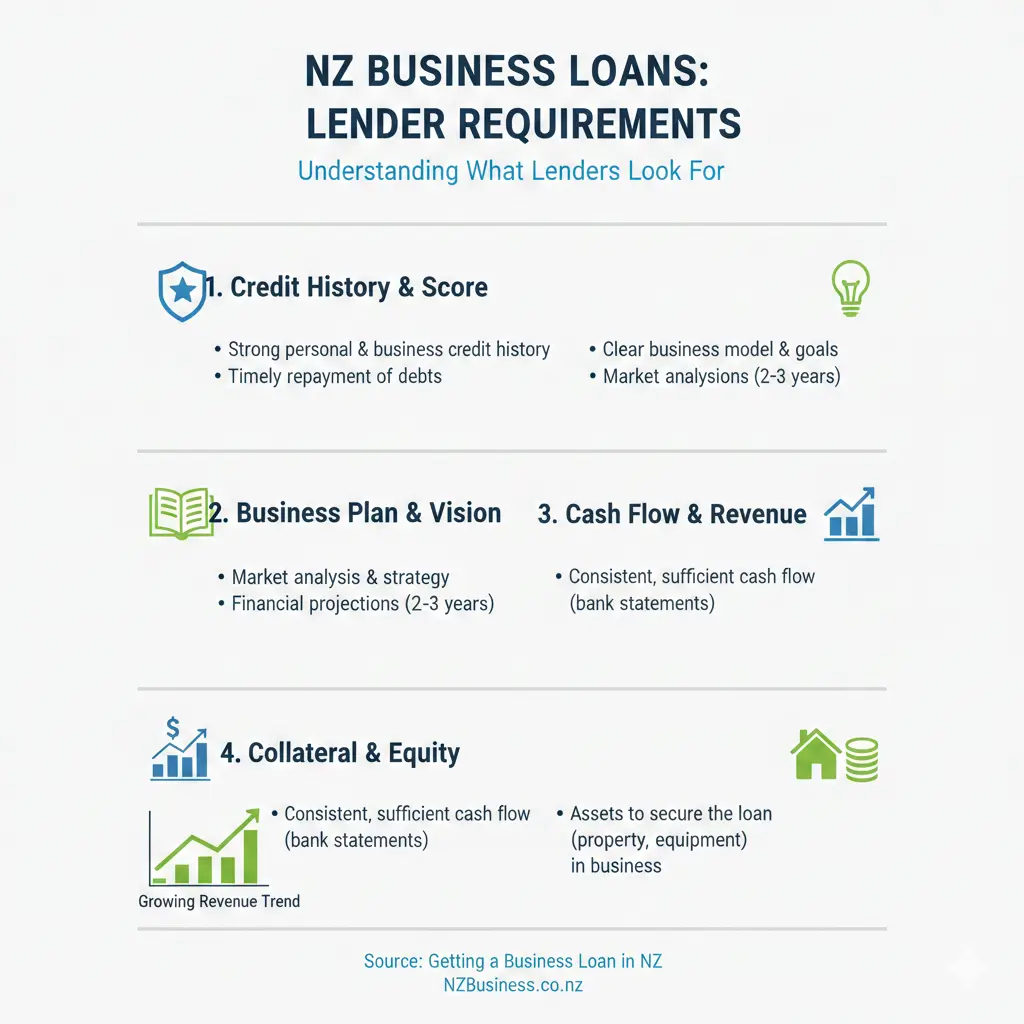
Before you approach a lender, it's worth understanding the criteria they'll assess. Banks and alternative lenders evaluate several key factors to determine whether you're a safe investment.
Credit Score and Financial History
Your credit score and personal financial history are among the first things lenders examine. A good credit history demonstrates that you've managed debt responsibly in the past. Late payments or outstanding debt can adversely affect your loan application, as banks want to ensure their investment is secure.
Business Performance and Cash Flow
Lenders need confidence that your business can generate enough cash to repay the loan. They'll examine your business revenue, cash flow, and profit margins. You'll need to demonstrate that your business can cover its existing outgoings plus the new loan repayment. This is why financial projections are so important—they show lenders you've thought through how you'll achieve your sales targets and maintain profitability.
Business Age and Ownership Structure
How long your business has been operating matters significantly. Sole traders and partnerships typically need a minimum of six months in operation, while companies often require one to two years. The minimum age for business owners is usually 18, and banks may ask for the owner to have a minimum shareholding in the company.
Industry and Market Position
Lenders assess whether your industry is viable and whether your business has a defensible market position. They want to understand the market gaps you're filling, your competitive advantages, and realistic profit projections.
Types of Business Loans Available in New Zealand
New Zealand has several loan options to suit different business needs and circumstances.
Bank Loans
The major banks—ANZ, BNZ, Westpac, and Kiwibank—all offer business loans. Bank loans come in several forms:
- Secured loans: These typically have lower interest rates because they're backed by collateral (such as property or equipment)
- Unsecured loans: These don't require collateral but generally have higher interest rates
- Term loans: Fixed-term loans useful for one-time large purchases
- Revolving lines of credit: Flexible options that allow you to borrow up to a certain limit and repay on an ongoing basis
- Overdrafts: Can help with managing cash flow
Interest rates on bank loans in New Zealand are typically based on the OCR (Official Cash Rate) set by the Reserve Bank of New Zealand, plus a margin determined by each bank.
Alternative Lenders
If traditional banks aren't suitable for your situation, alternative lenders like Prospa offer small business financing options. Some alternative lenders may have different eligibility criteria—for example, some don't conduct credit checks and may approve loans more quickly than banks.
Government-Backed Loans and Grants
New Zealand's government offers various funding options for businesses. These may come with more favourable terms than bank loans, including lower interest rates and longer repayment periods. However, government funding typically has stricter eligibility criteria and may require you to meet certain conditions, such as creating jobs or achieving performance targets.
Key government funding sources include:
- NZGCP (New Zealand Growth Capital Partners): Early-stage focus on New Zealand companies in software, agritech, and deep technology
- MBIE (Ministry of Business, Innovation and Employment): General business development and innovation funding
- NZTE (New Zealand Trade and Enterprise): Supports investment, capital, and export/trade for New Zealand businesses
You can find a range of funding options on the New Zealand Growth Capital Partners website.
Alternative Financing Options
If traditional loans aren't working out, consider:
- Crowdfunding: Raising capital from multiple investors or supporters
- Invoice financing: Borrowing against outstanding invoices to improve cash flow
- Equity financing: Bringing on investors in exchange for ownership stake
Documentation You'll Need
Regardless of the lender, you'll need to provide comprehensive documentation to support your application.
- Business plan: A detailed outline of your business model, products or services, and market research
- Financial statements: Profit and loss statements, balance sheets, and cash flow statements
- Tax returns: Personal and business tax returns spanning two years
- Proof of identity: Valid ID documentation
- Personal statement of financial position: Everything you own, what you owe, income, and living expenses
- Financial projections: Monthly profit and loss projections and cash flow forecasts for at least three years
- Information about collateral: Details of any assets you're willing to use as security
Collateral and Personal Guarantees
Most business loans require some form of security. Common collateral options include:
- Your residential property (commonly used even for commercial loans)
- Business property or equipment
- Personal assets or savings
Lenders may also require personal guarantees from business directors or partners. If you're using a guarantor, they must typically be 18 or older (generally under 75), have a stable income source, and have significant assets or savings.
Specific Requirements for Different Business Structures
Sole Traders and Partnerships
If you're operating as a sole trader or partnership, you'll need to have been in business for a minimum of six months before most lenders will consider you.
Companies
Companies typically need to have been operating for one to two years. You'll also need to demonstrate that you hold a minimum shareholding in the company.
Minimum Revenue Requirements
Some lenders set minimum revenue thresholds. For example, Heartland's small business loans require a minimum annual revenue of $50,000. Your business must also maintain a reasonable debt-to-income ratio.
The Application Process
Here's how to approach applying for a business loan in New Zealand:
- Assess your needs: Determine exactly how much you need to borrow and what you'll use the funds for
- Gather your documentation: Compile all financial statements, tax returns, and business plans
- Choose the right loan type: Consider whether a secured or unsecured loan suits your situation
- Research lenders: Compare terms and conditions across banks and alternative lenders
- Prepare your business plan: Make sure it clearly outlines how you'll use the funds and your profit projections
- Submit your application: Provide all required documentation to your chosen lender
The bank will assess your creditworthiness, the viability of your business plan, and your ability to repay.
Getting Ready to Apply
Before you approach a lender, spend time strengthening your application. Get your finances in order, ensure your credit history is clean, and develop a solid business plan that demonstrates market opportunity and realistic growth projections. The more prepared you are, the stronger your case for approval.
Start by researching the lenders that best suit your business structure and needs. Compare interest rates, loan terms, and eligibility criteria. If you're an early-stage business, explore government funding options through MBIE, NZTE, or NZGCP. And remember—rejection from one lender doesn't mean you won't succeed with another. Different lenders have different criteria, so persistence pays off.
Frequently Asked Questions
Sources & References
-
1
Business Loan Requirements NZ — Bizzloans New Zealand — www.bizzloans.co.nz
-
2
Business Borrowing Options — MoneyHub NZ — www.moneyhub.co.nz
-
3
Best Small Business Loans — MoneyHub NZ — www.moneyhub.co.nz
-
4
How to apply for a business loan — ANZ — www.anz.co.nz
-
5
Applying for a business loan — Westpac NZ — www.westpac.co.nz
-
6
How to Get a Business Loan for Your Startup — Xero NZ — www.xero.com
-
7
How to fund your new business — BNZ — www.bnz.co.nz
-
8
Business loans — Kiwibank — www.kiwibank.co.nz
-
9
Small Business Financing Options to Fuel Your Growth — Prospa NZ — www.prospa.co.nz
-
10
What type of finance is best for your business? — ASB Bank — www.asb.co.nz
Related Articles

Why Every Kiwi Should Have a "Side Hustle" in 2026
Imagine topping up your KiwiSaver, covering those rising power bills, or even saving for a deposit on your first home—all while keeping your day job. In 2026, with New Zealand's cost of living still b...

AI Tools for Small Business: How Kiwis are Automating Their Work
Imagine wrapping up your day in Auckland or Christchurch, knowing your small business emails are drafted, social posts scheduled, and customer queries handled—all without lifting a finger. That's the...

Working for Yourself: How to Register as a Sole Trader in NZ
Ever dreamed of ditching the 9-to-5 and calling the shots on your own terms? For many Kiwis, becoming a sole trader is the perfect way to turn that dream into reality—it's simple, low-cost, and lets y...

Side Hustles That Actually Work in NZ: From E-commerce to Local Services
Ever feel like your paycheck just isn't stretching far enough in today's New Zealand? With living costs climbing and Kiwis hunting for smarter ways to boost income, side hustles are more popular than...