Finding Accommodation as a Newcomer to NZ

Finding your first home in Aotearoa as a newcomer can feel daunting, but with the right strategy, you'll soon settle into Kiwi life. Whether you're arriving on a work visa, student permit, or family r...
Priya writes about immigration pathways, job searching, and building a career in New Zealand. She covers visa options, CV writing, interview preparation, and workplace culture for newcomers and locals alike.
Finding your first home in Aotearoa as a newcomer can feel daunting, but with the right strategy, you'll soon settle into Kiwi life. Whether you're arriving on a work visa, student permit, or family reunification, knowing your options—from quick temporary stays to long-term rentals or buying—makes all the difference in those early weeks.
Temporary Accommodation: Your First Stop in New Zealand
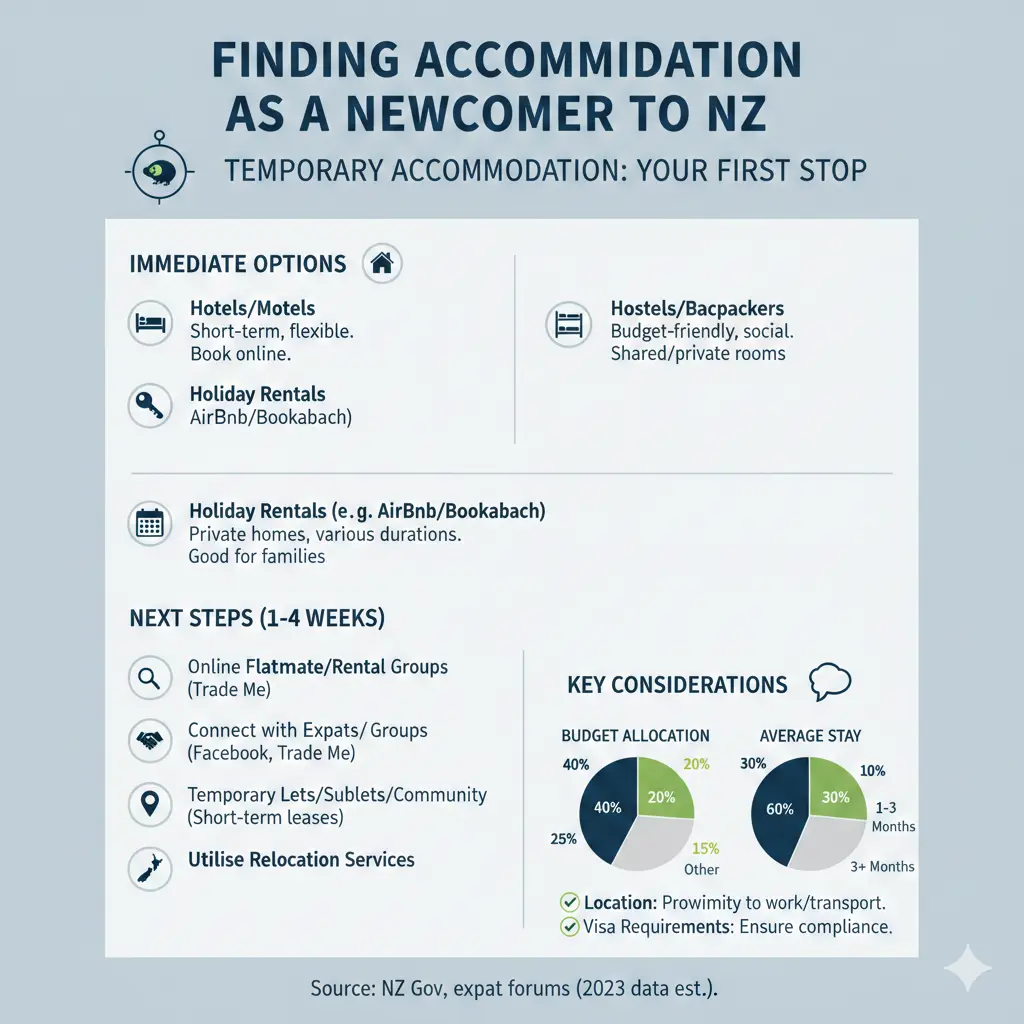
When you touch down at Auckland, Wellington, or Christchurch Airport, you need a base while scouting permanent housing. Most newcomers opt for short-term spots that offer flexibility and no long commitments. In 2026, expect costs to reflect high demand in major cities, but smaller spots like holiday parks keep things affordable.
Hotels, Motels, and Holiday Parks
Hotels and motels are straightforward for the first few nights or weeks. Always request a quote for extended stays to snag better rates—many offer weekly discounts. Holiday parks and camping grounds shine for budget-conscious arrivals, with cabins, tourist flats, or self-contained units starting cheaper than city hotels. These often include shared kitchens and laundries, perfect if you're easing into Kiwi self-sufficiency.
For example, in Nelson, The Beachcomber Hotel provides basic comfort near Tahunanui Beach with an outdoor BBQ area, ideal for summer arrivals. In Rotorua, holiday parks near the lakes offer scenic, peaceful options away from urban hustle.
Hostels and Boarding Houses
Hostels suit social newcomers keen to meet locals and expats fast. In Queenstown, Adventure Q2 Hostel runs daily activities and has a full kitchen to cut meal costs in this pricey spot. Wellington's The Marion stands out with its clean vibe, rooftop deck, free weekend pancakes, and yoga gear—great for building community early.
Boarding houses, advertised as 'rooms to rent', give private rooms with shared facilities. They're common in suburbs and cost-effective for solo arrivals.
Airbnb and Short-Term Rentals
Airbnb bridges temporary and longer stays. In Wellington's Newtown, quirky studios like Newtown Oasis offer private entrances and proximity to cafes, sleeping up to two. Rotorua's Lakeside Haven, with lake views and ping pong, works for groups. In 2026, short-term rentals average NZD 500–800/week, hostels NZD 35–60/night.
Pro Tip: Book temporary spots via Trade Me Property or Facebook groups before arrival, and aim for 2–4 weeks to allow rental hunting without pressure.
Navigating the Rental Market as a Newcomer
New Zealand's rental scene is competitive, especially in Auckland and Wellington, where demand outstrips supply. As a newcomer, you'll need a New Zealand bank account, IRD number, and proof of income or visa status to apply. Tenancy laws protect tenants via the Residential Tenancies Act—always get a written agreement.
Popular Rental Options
- Shared Flats: Most affordable at NZD 180–300/week per person in 2026, plus NZD 30–50 utilities. Ideal for singles; sites like Flatmates Wanted NZ and Trade Me list them.
- Private Rentals/Studios: More privacy but pricier; expect higher in cities.
- Homestays: Great for cultural immersion, especially students, with meals and hosts aiding integration.
City-by-City Rental Insights (2026 Averages)
| City | Shared Flat (per person/week) | Studio/1-Bed (week) | Notes |
|---|---|---|---|
| Auckland | NZD 250–350 | NZD 450–600 | Highest demand; try suburbs like Mt Eden. |
| Wellington | NZD 220–320 | NZD 400–550 | Windy but vibrant; Newtown or Te Aro hot spots. |
| Christchurch | NZD 180–280 | NZD 350–500 | Rebuilding boosts supply; family-friendly. |
| Queenstown | NZD 250–400 | NZD 500–700 | Tourist-driven prices; hostels first. |
| Dunedin | NZD 150–250 | NZD 300–450 | Student haven, cheaper options. |
Actionable Steps to Rent:
- Register on Trade Me Property, Flatmates.co.nz, or Facebook Marketplace.
- Visit properties quickly—good ones go fast.
- Prepare docs: passport, visa, bank statements, references.
- Check for healthy homes compliance (insulation, heating mandated since 2019).
- Bond: 4 weeks' rent max; lodged with Tenancy Services.
Avoid scams: never pay deposits unseen, and use licensed agents.
Buying Property: Long-Term Settling for Eligible Newcomers
If your visa allows (e.g., resident visa), buying is viable after establishing roots. Foreign buyers face restrictions under the Overseas Investment Act—check immigration.govt.nz for eligibility. In 2026, median house prices hover around NZD 850,000 nationally, higher in Auckland (NZD 1.1m).
Steps to Buy
Get pre-approval from KiwiBank or ANZ, engage a lawyer, and use realestate.co.nz. First-home buyers qualify for Kāinga Ora schemes like progressive home ownership if income-eligible. Expect 20% deposits for investors; first-timers less via KiwiSaver withdrawals.
Reality Check: Rentals first build credit and local references before buying.
Tips for Success: Budgeting, Rights, and Kiwi Quirks
Budget Breakdown for Newcomers
- Rent: 30–40% income.
- Utilities: NZD 100–200/month household.
- Bond/Moving: NZD 1,000–3,000 upfront.
- Power: Shop Spark or Contact for deals.
Know Your Rights
Tenants can't be evicted without 90 days' notice (fixed-term) or 63 days (periodic). Report issues to Tenancy Tribunal. Healthy Homes standards ensure warmth—crucial for damp winters.
Kiwi Hacks
- Join local Facebook groups: "Auckland Newcomers" or "Wellington Rentals."
- Smaller cities like Napier (Marine Parade Airbnbs beachside) or Invercargill save cash.
- Pet-friendly? Declare upfront—many landlords charge extra.
- Sustainable choices: Insulated rentals cut power bills 20%.
Next Steps to Secure Your Kiwi Pad
Start today: Update your CV for local jobs (boosts rental apps), sign up for Trade Me alerts, and connect with Immigration NZ's settlement advisers. With patience, you'll trade airport limbo for a sunny bach or cosy flatmate setup. Welcome to New Zealand—your new chapter awaits!
Frequently Asked Questions
Sources & References
-
1
Where to Stay in New Zealand (Best Places in 2026) — www.thebrokebackpacker.com
-
2
Student Accommodation in New Zealand & Average Costs 2026 Complete Guide — boomerangedu.com
-
3
Hotels, motels and other places to live temporarily — www.immigration.govt.nz
-
4
MOVING To NEW ZEALAND (2026 Updated)! Everything You NEED ... — www.youtube.com
Related Articles

Best Cities to Live in NZ: A Honest Comparison for Newcomers
Choosing where to settle in New Zealand can feel overwhelming, especially if you're a newcomer eyeing the best cities to live in NZ. Whether you're moving for work, study, or a fresh start, this hones...

Shipping Your Life to NZ: Cost Comparisons of Major Moving Companies
Moving your entire life to New Zealand doesn't have to break the bank or your spirit. Whether you're a Kiwi returning home from overseas or someone chasing that fresh start in Aotearoa, comparing cost...

The Ultimate Checklist for Moving to New Zealand
Moving to New Zealand is an exciting step towards a fresh start in one of the world's most beautiful countries. Whether you're chasing job opportunities, a laid-back lifestyle, or our stunning landsca...

Setting Up Your NZ Life: Bank Accounts; IRD Numbers; and Utilities
Moving to a new place in New Zealand can feel overwhelming, but getting your bank account, IRD number, and utilities sorted early makes settling in smooth and stress-free. Whether you're a new migrant...