How to Buy Shares in New Zealand: Step-by-Step Guide

Ever wondered how to dip your toes into share investing without getting overwhelmed? Whether you're saving for a house deposit, retirement, or just want to grow your hard-earned cash, buying shares in...
The Lifetimes NZ editorial team curates, fact-checks, and updates guides on personal finance, property, health, immigration, legal, business, and lifestyle topics relevant to Lifetimes NZ readers. Articles are produced with AI assistance and reviewed by the editorial team before publication.
Ever wondered how to dip your toes into share investing without getting overwhelmed? Whether you're saving for a house deposit, retirement, or just want to grow your hard-earned cash, buying shares in New Zealand is more accessible than ever in 2026. This step-by-step guide breaks it down into simple, actionable steps tailored for Kiwis, helping you navigate local platforms, tax rules, and smart strategies to build wealth over time.
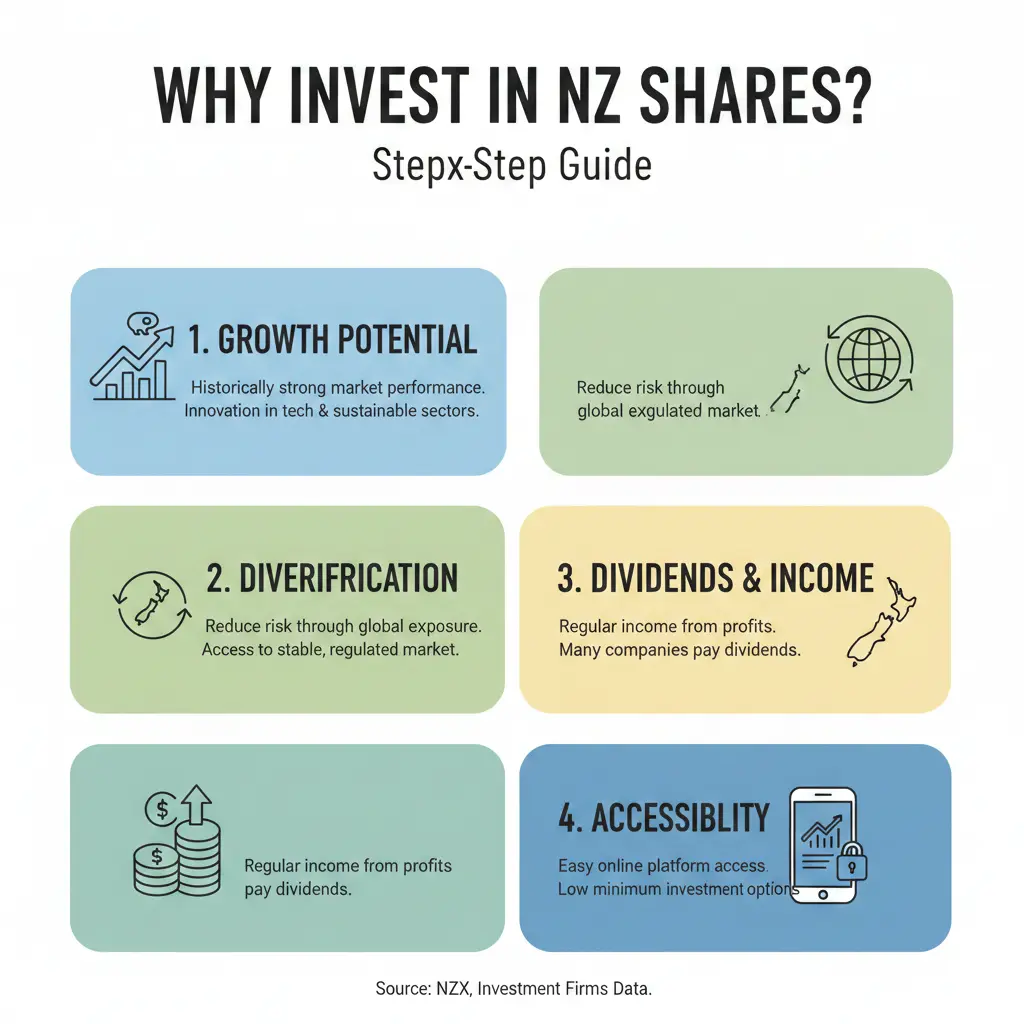
Why Invest in Shares in New Zealand?
Shares represent ownership in companies, and when those companies grow, so can your investment. In New Zealand, the NZX (New Zealand Exchange) lists over 150 companies, from household names like Auckland International Airport to global giants via platforms offering US markets. Historically, shares have delivered strong long-term returns, often outpacing inflation and savings accounts, though they're riskier with short-term ups and downs.
For beginners, shares beat term deposits in potential growth. With apps making it easy to start small—no minimums on some platforms—you can invest $10 weekly and build habits. But remember, past performance isn't a guarantee of future results, so focus on the long game.
Key Benefits for Kiwis
- Accessibility: Platforms like Sharesies, Hatch, and ASB let you start with pocket change.
- Diversification: Spread risk across NZX50 companies or global ETFs like Vanguard's S&P 500 (VOO).
- Tax Advantages: No capital gains tax on shares held long-term, but dividends may be taxable.
- KiwiSaver Complement: Shares boost returns beyond default KiwiSaver funds.
Step 1: Get Your Finances in Order
Before buying shares, ensure you're ready. Build an emergency fund covering 3-6 months' expenses, pay off high-interest debt (like credit cards at 20%+), and contribute to KiwiSaver for free employer matches. Use tools like MoneyHub's budget calculators to track spending.
Practical Tip: Aim to invest what you won't need for 5+ years—shares suit long-term horizons, as short-term volatility can erode gains.
Step 2: Choose the Right Brokerage Platform
New Zealand offers user-friendly platforms for buying shares on the NZX or international markets. Here's a comparison of popular options in 2026:
| Platform | Best For | Fees | Markets |
|---|---|---|---|
| Hatch | US shares/ETFs | $3 per trade | US, some NZ |
| Sharesies | Beginners, funds | 0.5% brokerage (min $0.50) | NZX, US, AUS |
| ASB Securities | Bank customers | From $15 + 0.3% | NZX mainly |
| Tiger Brokers | Low-cost global | Low flat fees | Global |
Hatch shines for low fees and US access—sign up with email, phone, DOB, and ID like a driver's licence. Many offer $20 sign-up bonuses. Compare via FMA's register to ensure they're licensed.
How to Sign Up
- Visit the platform's site/app (e.g., hatchinvest.nz).
- Enter personal details and verify ID (RealMe or passport works).
- Link your NZ bank account for deposits via POLi or direct debit.
- Complete KYC (Know Your Customer) quiz—takes 5-10 minutes.
Warning: Stick to NZX-accredited brokers to avoid scams. Unlisted shares can be illiquid and hard to sell.
Step 3: Decide What to Invest In
Don't chase hot tips—diversification is key for beginners. Instead of picking individual shares (risky unless experienced), opt for:
- ETFs/Index Funds: NZX50 ETF tracks top NZ companies like Fisher & Paykel. Global ones like VOO cover 500 US firms.
- Managed Funds: Via Sharesies or Simplicity—low fees, auto-diversified.
- Individual Shares: Limit to 10% of portfolio. Check top performers on TradingView's NZX list, but research earnings via NZX.com.
For 2026, analysts eye resilient sectors like healthcare and tech. Start with blue-chips: Air NZ, Meridian Energy.
Risk Levels
- Low: Broad ETFs (e.g., Smartshares NZ Top 50).
- Medium: Sector funds.
- High: Single stocks like emerging tech.
Pro Tip: Use dollar-cost averaging—invest fixed amounts regularly to smooth volatility.
Step 4: Fund Your Account and Place Your First Trade
Transfer money (e.g., $100) from your bank. On Hatch:
- Search ticker (e.g., "VOO").
- Review company/ETF info and price.
- Select "Market Buy," enter amount (fees shown, e.g., $3).
- Review and confirm—settles in 2-3 business days.
On Sharesies, buy parcels from $1. Monitor via app portfolio. Orders execute during market hours (NZX: 10am-4pm NZT).
Costs to Watch: Brokerage fees, currency conversion (1-2% for US), and potential FX fees. Aim under 1% total annually.
Step 5: Understand Taxes and Reporting
No capital gains tax in NZ (2026 rules), but dividends are income. For overseas shares:
- Report dividends ≥$200 NZD from foreign firms to IRD.
- If total overseas investments ≥$50,000, file Foreign Investment Fund (FIF) disclosure—use IRD's formula or fair dividend rate (5%).
Platforms like Hatch provide tax reports. Log into myIR to file via myIR Forms. Consult IRD.govt.nz or an advisor for PIR (Prescribed Investor Rate) matching.
Common Mistakes to Avoid
- Timing the Market: Don't sell in panic—hold long-term.
- Low-Ball Offers: Ignore unsolicited buyouts below market price.
- Overtrading: Fees eat returns; trade quarterly max.
- No Research: Always read PDS for IPOs or funds.
Advanced Tips for Kiwi Investors
Integrate with KiwiSaver: Use after-tax income for shares. For property goals, pair with PIE funds at correct PIR. Track via apps like Sharesight. In 2026, consider ESG ETFs aligning with NZ's green focus.
Next Steps to Start Investing Today
Pick a platform, sign up, and make your first $50 investment this week. Review quarterly, rebalance annually, and scale up as confidence grows. Consult a financial adviser via fma.govt.nz for personalised advice—this guide isn't it. With discipline, shares can supercharge your financial future in Aotearoa.
Frequently Asked Questions
Sources & References
-
1
How to Invest in New Zealand for Beginners (2026) - YouTube — www.youtube.com
-
2
How to Invest in Shares: A Step-by-Step for Beginners — moneyhub.co.nz — www.moneyhub.co.nz
-
3
Investing In... 2026 - New Zealand - Chambers Global Practice Guides — practiceguides.chambers.com
-
4
Shares - Ways to Invest — fma.govt.nz — www.fma.govt.nz
-
5
Investing 101: how to start investing — sharesies.nz — www.sharesies.nz
-
6
The beginners guide to trading shares — asb.co.nz — www.asb.co.nz
-
7
Top 8 Best Investments in New Zealand (2026) — opespartners.co.nz — www.opespartners.co.nz
-
8
The 2026 investor's survival guide - YouTube — youtube.com — www.youtube.com
-
9
Five stock picks for 2025 - Insights — craigsip.com — craigsip.com
Related Articles

Ethical Investing in NZ: Top 5 Sustainable Funds for Kiwis
Ever wondered if you can grow your KiwiSaver or investments while doing good for the planet and people? Ethical investing in New Zealand is booming, with Kiwis pouring billions into funds that priorit...

Beginner's Guide to Investing in New Zealand
Getting started with investing in New Zealand doesn't have to be complicated. Whether you're looking to grow your wealth, save for retirement, or build financial security, there are plenty of accessib...

ETFs vs Managed Funds: Which is Better for Kiwi Investors?
When you're ready to invest your money, you'll likely come across two main options: exchange-traded funds (ETFs) and managed funds. Both offer diversification and professional management, but they wor...

Index Funds NZ: The Simple Way to Invest
Ever wondered how to grow your hard-earned KiwiSaver or savings without spending hours picking stocks or paying sky-high fees? Index funds offer a straightforward path to building wealth, tracking mar...