Beginner's Guide to Investing in New Zealand

Getting started with investing in New Zealand doesn't have to be complicated. Whether you're looking to grow your wealth, save for retirement, or build financial security, there are plenty of accessib...
Sarah covers personal finance, tax, and KiwiSaver topics for Lifetimes NZ. She focuses on making money management straightforward and practical for everyday Kiwis.
Getting started with investing in New Zealand doesn't have to be complicated. Whether you're looking to grow your wealth, save for retirement, or build financial security, there are plenty of accessible investment options available to Kiwis right now. The key is understanding what's out there, knowing your risk tolerance, and choosing investments that align with your personal goals and financial situation.
Why Should You Start Investing?
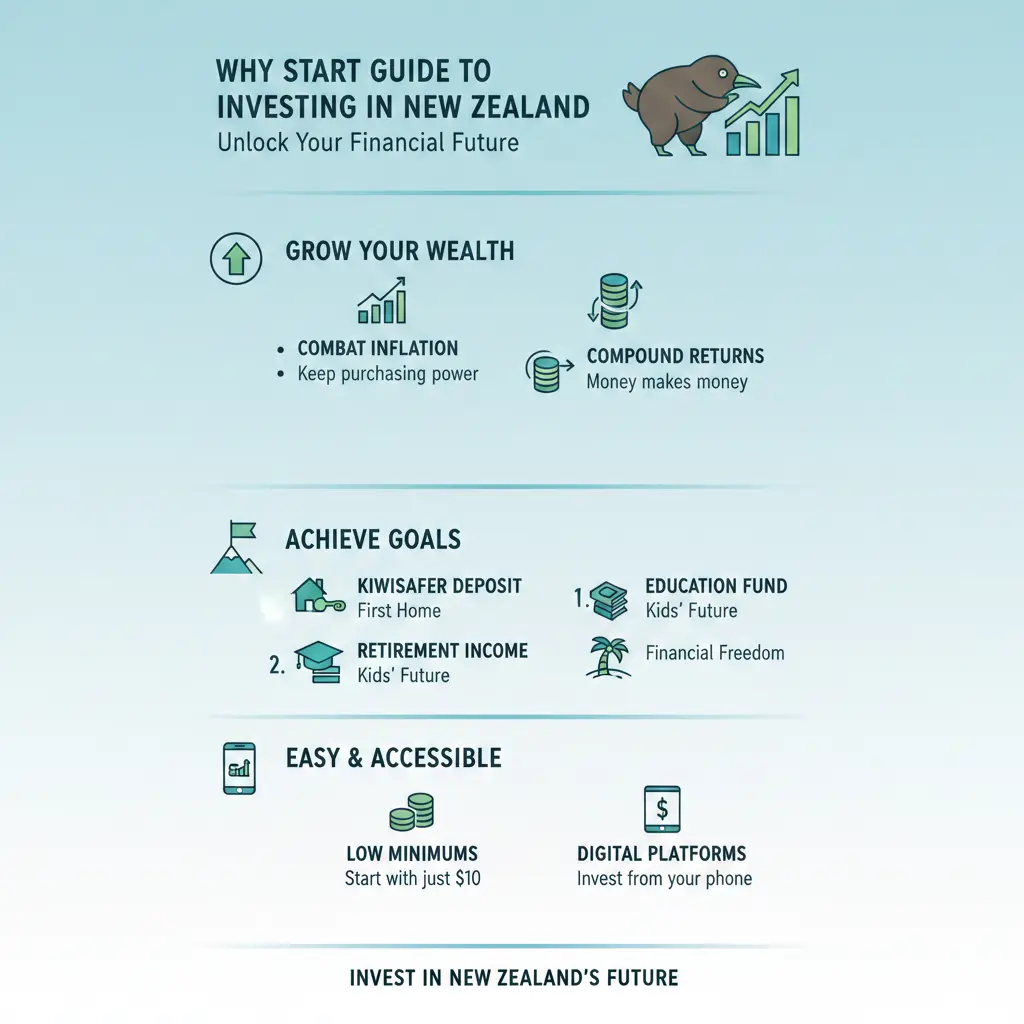
Investing is one of the most effective ways to build long-term wealth. Rather than letting your money sit idle in a savings account, investing allows your money to work for you. The earlier you start, the more time your investments have to grow through compound returns. Even if you're starting with small amounts, consistent investing over time can make a significant difference to your financial future.
Understanding Your Investment Options in New Zealand
KiwiSaver – The Easiest Starting Point
KiwiSaver is a voluntary retirement savings scheme that's specifically designed for Kiwis and is one of the best entry points for new investors. If you're employed, you can enrol in KiwiSaver and contribute between 3%, 4%, 6%, 8%, or 10% of your pay.
Here's what makes KiwiSaver particularly attractive: your employer must contribute 3% of your pay as well (provided you contribute at least 3%). This is essentially free money – your employer is matching your investment. The government also contributes up to $521.43 per year, though there are eligibility requirements. Some employers, particularly in the government sector, will even match your contributions up to 4.5% of your pay.
You don't need any upfront capital to start – you simply contribute from your paycheck. You also get to choose the type of fund your KiwiSaver money goes into, giving you control over how your money is invested.
Managed Funds – Diversification Made Simple
Managed funds work similarly to KiwiSaver but offer more flexibility. A managed fund pools your money with other investors and spreads it across different investments – shares, bonds, property, and more – all in one go. This is an excellent way for emerging investors to build a diversified portfolio without having to pick individual investments themselves.
With managed funds, a professional fund manager makes the investment decisions for you, so you don't have to worry about selecting individual stocks or property investments. You can choose from different fund types:
- Conservative funds – These tend to have more stable value with fewer big ups and downs. They're ideal if you need your money within the next few years, such as for a house deposit.
- Growth or aggressive funds – These have more volatility but tend to deliver higher returns over time. They're better suited if you don't need your money for 8 or more years.
Term Deposits – The Safe Option
If you prefer a low-risk investment with predictable returns, term deposits might be for you. You know exactly what your return will be upfront, and the interest rate stays the same for your entire term. Compared to alternatives like managed funds and shares, term deposits are relatively safe – though your returns may be lower.
Shares and ETFs – Taking More Control
If you're ready to take a more active role in your investing, you can buy individual company shares or exchange-traded funds (ETFs). ETFs are investment funds that trade on the stock exchange, giving you exposure to a basket of companies or assets with a single purchase.
To buy shares in New Zealand, you'll need to use a brokerage platform. Several options are available, including major banks like ASB, as well as platforms like Hatch, Sharesies, and Stake. Many Kiwis prefer local platforms like Hatch because they offer low fees, easy-to-use interfaces, and access to both local and international markets, particularly the American stock market.
Property Investment
Property is a popular investment option in New Zealand, but it requires significant capital upfront. You'll typically need a 20% deposit for a new build or 30% for an existing property. While you can borrow this against your own home, property investment does require substantial financial commitment and carries the risk of lack of diversification if you're putting all your investment money into one or two houses.
How to Get Started: A Step-by-Step Approach
Step 1: Learn What's Available
Take time to understand the different investment options available to you. Read about KiwiSaver, managed funds, term deposits, shares, and other options. The Financial Markets Authority (FMA) offers excellent free resources on investing basics.
Step 2: Assess Your Comfort Level and Risk Tolerance
Different investments carry different levels of risk. Conservative investments like term deposits are safer but offer lower returns. Growth-focused investments like shares and aggressive managed funds can deliver higher returns but come with more volatility. Consider how much risk you're comfortable with and how soon you'll need access to your money.
Step 3: Choose Investments That Match Your Goals
The right investment for you depends on three key factors: how much risk you want to take, how much money you have available, and what your future goals are. If you're just starting out, KiwiSaver is often the best first step because of the employer and government contributions. As you build your financial knowledge and capital, you can explore other options.
Step 4: Start Small and Invest Consistently
You don't need large amounts of money to begin investing. Whether it's increasing your KiwiSaver contributions, investing in a managed fund, or buying your first shares through a brokerage platform, starting with what you can afford and investing consistently over time is more important than the amount you start with.
Key Principles for Successful Investing
Diversification – Spread Your Risk
One of the most important investing principles is diversification – spreading your money across different investments rather than putting all your eggs in one basket. This helps protect your overall portfolio if one investment underperforms. Managed funds and ETFs make diversification easy because they automatically spread your money across multiple assets.
Watch Out for Fees
Investment fees can sneak up on you and significantly impact your returns over time. When choosing between investment platforms and funds, compare their fee structures. For example, some brokerage platforms like Hatch charge around $3 per investment transaction. Understanding what you're paying is crucial to maximising your returns.
Understand Your Time Horizon
How long you can leave your money invested matters significantly. If you need your money within the next few years, conservative investments are more appropriate. If you have 8+ years or more before you need the funds, you can afford to take on more risk because you have time for your investments to recover if they dip in value.
Tax Considerations for Kiwi Investors
As a Kiwi investor, you have tax obligations to consider. The Inland Revenue Department (IRD) requires investors to declare investment income, including dividends, interest, and capital gains in certain situations. If you're actively buying and selling shares frequently, you may need to complete additional paperwork to ensure you're meeting all your tax obligations. It's worth consulting with the IRD or a tax professional to understand your specific situation.
Your Next Steps
Starting your investing journey is simpler than you might think. If you're employed and haven't already, enrol in KiwiSaver – it's the easiest way to start building wealth with employer and government contributions. If you want more control or have funds outside of KiwiSaver, research managed funds or brokerage platforms that suit your needs.
Remember, the best investment for you depends on your personal situation, goals, and risk tolerance. There's no one-size-fits-all answer. Start with what feels right for you, educate yourself as you go, and don't be afraid to adjust your strategy as your circumstances change. The most important thing is to start now – time is your greatest asset when it comes to investing.
Frequently Asked Questions
Sources & References
-
1
Top 8 Best Investments in New Zealand (2026) | Opes Partners — www.opespartners.co.nz
-
2
How to Invest in New Zealand for Beginners (2026) - YouTube — www.youtube.com
-
3
Investing 101: how to start investing — Sharesies New Zealand — www.sharesies.nz
-
4
Investing 101: A Beginner's Guide to Growing Your Wealth — www.kourawealth.co.nz
-
5
Investing basics | Financial Markets Authority — www.fma.govt.nz
Related Articles

Ethical Investing in NZ: Top 5 Sustainable Funds for Kiwis
Ever wondered if you can grow your KiwiSaver or investments while doing good for the planet and people? Ethical investing in New Zealand is booming, with Kiwis pouring billions into funds that priorit...

How to Buy Shares in New Zealand: Step-by-Step Guide
Ever wondered how to dip your toes into share investing without getting overwhelmed? Whether you're saving for a house deposit, retirement, or just want to grow your hard-earned cash, buying shares in...

ETFs vs Managed Funds: Which is Better for Kiwi Investors?
When you're ready to invest your money, you'll likely come across two main options: exchange-traded funds (ETFs) and managed funds. Both offer diversification and professional management, but they wor...

Index Funds NZ: The Simple Way to Invest
Ever wondered how to grow your hard-earned KiwiSaver or savings without spending hours picking stocks or paying sky-high fees? Index funds offer a straightforward path to building wealth, tracking mar...