How to Write a CV That Gets Interviews (NZ Guide)

Struggling to land interviews in New Zealand's competitive 2026 job market? Your CV is your ticket through the door, but with Applicant Tracking Systems (ATS) scanning thousands of applications and Ki...
Priya writes about immigration pathways, job searching, and building a career in New Zealand. She covers visa options, CV writing, interview preparation, and workplace culture for newcomers and locals alike.
Struggling to land interviews in New Zealand's competitive 2026 job market? Your CV is your ticket through the door, but with Applicant Tracking Systems (ATS) scanning thousands of applications and Kiwi recruiters spending just seconds on each one, it needs to shine.
Whether you're a recent grad eyeing entry-level roles, a mid-career pro switching industries, or an executive aiming higher, this guide walks you through crafting a CV that gets results. We'll cover Kiwi-specific tips, like highlighting cultural awareness and tailoring for local trends in tech, healthcare, and sustainable energy, all backed by expert advice.
Understand the New Zealand Job Market in 2026
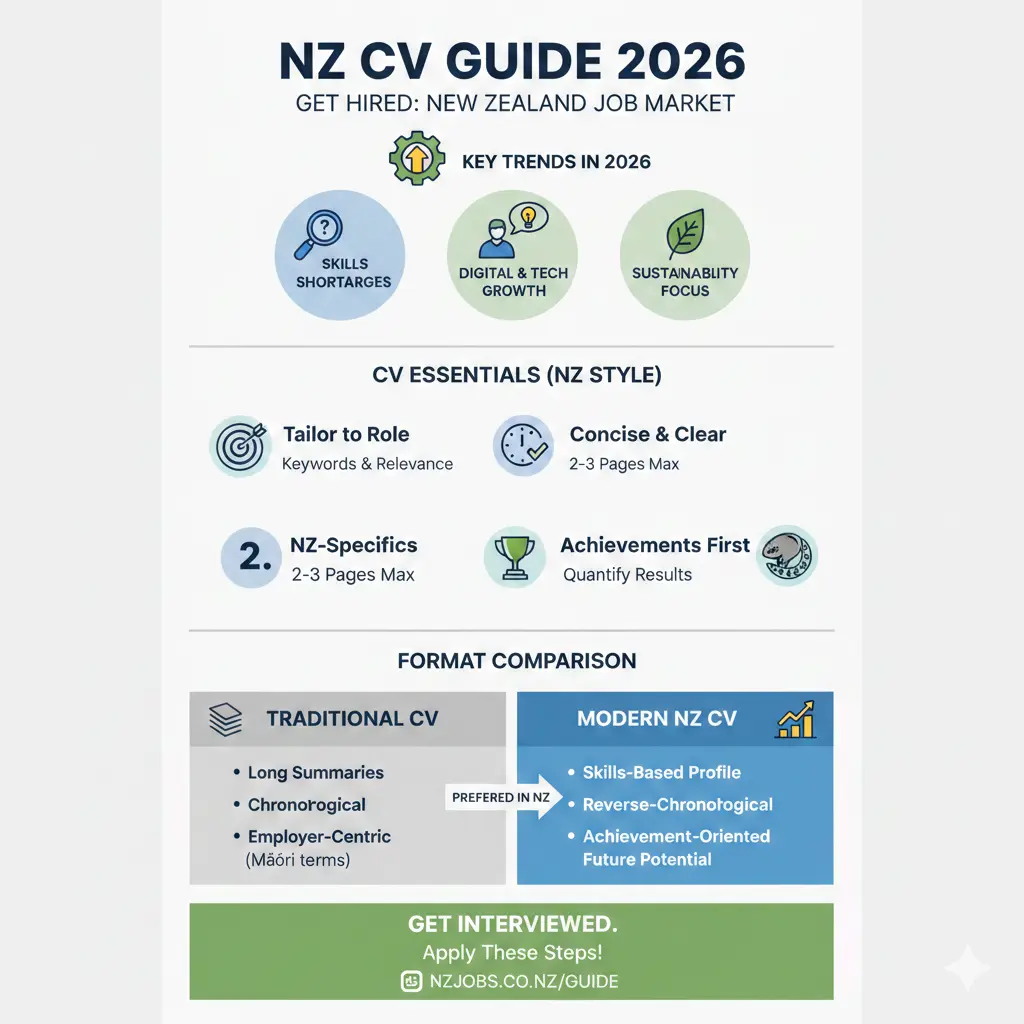
New Zealand's job landscape in 2026 favours adaptable candidates with digital skills and a collaborative mindset. Industries like technology, healthcare, and green energy are booming, while remote and hybrid work remains the norm post-pandemic. Employers value humility, teamwork, and contributions to Māori and Pacific communities—tailor your CV to reflect this cultural fit.
Kiwi CVs are typically 2-3 pages, concise to respect busy hiring managers. Many firms use ATS software, so weave in job-specific keywords naturally to pass initial screens. Research roles on sites like Seek.co.nz or Trade Me Jobs, and align your CV with NZQA-recognised qualifications or industry certifications.
Key Trends Shaping CVs This Year
- AI and data skills: Highlight literacy in tools like AI platforms or data analysis—hot across sectors.
- Sustainability focus: Mention eco-conscious achievements, as NZ employers prioritise this.
- Remote work savvy: Emphasise experience in virtual setups and tools like Microsoft Teams.
- Cultural competence: Note tikanga Māori or community involvement if relevant.
Choose the Right CV Format for Your Situation
Select a format that showcases your strengths. The reverse-chronological style suits steady career progressors, listing jobs from most recent backwards. Opt for functional if you have employment gaps, focusing on skills over timeline. A combination hybrid works for most Kiwis, blending both.
Keep it clean and ATS-friendly: use standard fonts like Arial or Calibri (10-12pt), 1-inch margins, and PDF format unless specified otherwise. Skip photos unless for creative roles.
| Format | Best For | NZ Example |
|---|---|---|
| Chronological | Consistent career history | Healthcare nurse advancing roles |
| Functional | Gaps or career changers | Parent returning post-childcare |
| Combination | Most applicants | Tech pro with projects + experience |
Essential Sections: Build Your Standout CV
Contact Information
Top it off with must-haves: full name (bold and larger font), NZ phone (include area code), professional email (no [email protected]), city/suburb, LinkedIn profile, and optionally a portfolio link. "Referees available on request" is standard unless the ad demands details—prepare 2-3 contacts separately.
Professional Summary
This 3-5 sentence opener hooks recruiters. Summarise your value: experience, key skills, and fit for the role. Example for a marketing role: "Results-driven marketer with 5+ years in digital campaigns, boosting engagement by 40% for Kiwi brands. Skilled in SEO and cultural storytelling, seeking to drive growth at [Company]."
Tailor it—mirror job ad language for ATS and humans.
Work Experience
List in reverse order: job title, employer, location, dates (month/year). Focus on achievements, not duties. Use action verbs like "achieved," "managed," "developed," and quantify: "Led team of 5 to deliver project 20% under budget."
Include volunteer or workplace training for transferable skills. Limit to 10-15 years unless highly relevant; omit irrelevant early jobs.
NZ Tip: For roles with ACC or health focus, note safety compliance experience.
Education and Qualifications
Reverse chronological: qualification, provider, location, dates. List NCEA, diplomas, degrees, micro-credentials, or online courses first if recent grad. Mid-career? Keep brief.
Include NZQA levels or endorsements. Example: "Bachelor of Commerce, University of Auckland, 2022."
Skills Section
Categorise 8-10 key ones: technical (e.g., Excel, Adobe, coding) and soft (communication, leadership). Back with examples: "Problem-solving: Resolved 50+ customer issues monthly." Prioritise 2026 demands like AI literacy.
Interests and Extras
Add sparingly—leadership hobbies like coaching marae sports show teamwork; skip TV or socialising. Include languages (e.g., te reo Māori level) or projects with results.
Tailor Your CV for Every Application
One-size-fits-all fails in NZ. Analyse the job description: echo keywords like "agile methodologies" or "cloud computing." Customise summary and experience bullets. Use tools like Jobscan for ATS checks.
Pro Tip: For public sector roles (e.g., via careers.govt.nz), emphasise KiwiSaver contributions or community service.
ATS Optimisation and Common Pitfalls
Beat ATS by using standard headings (e.g., "Work Experience"), no tables/graphics in core sections, and 5-10 keywords naturally. Pitfalls to avoid:
- Typos—proofread twice or use Grammarly.
- Generic content—be specific.
- Overlength—trim to 2-3 pages.
- Lies—recruiters check.
For creatives/tech, add GitHub or Canva portfolio links.
CV Templates and Tools for Kiwis
Start with free templates from Tahatū or MoneyHub NZ, customising fully. Hays offers downloadable guides. Update quarterly, even off-market.
Next Steps to Land Interviews
Polish your CV today: draft, tailor to a dream job, get feedback from a mate or LinkedIn network. Upload to Seek and Trade Me, track applications, and follow up politely. Register with Careers.govt.nz for workshops or Tahatū for youth guidance. You've got this—your standout CV awaits!
Frequently Asked Questions
Sources & References
-
1
How to write a CV - Tahatū Career Navigator — tahatu.govt.nz
-
2
How to Write a CV That Gets Interviews in 2026 | NZ Job Markets — www.cvexperts.co.nz
-
3
How to Write a CV for the New Zealand Market in 2026 — www.robertwalters.co.nz
-
4
How to write a CV in NZ - Robert Half — www.roberthalf.com
-
5
How to write a CV - template and tips New Zealand - Hays — www.hays.net.nz
-
6
CV Templates for New Zealand Students - MoneyHub NZ — www.moneyhub.co.nz
Related Articles

Using Case Converters for Professional NZ Emails
This article references the following sources for accuracy and further reading:

Highest Paying Jobs in NZ 2026: Industries That are Desperate for Staff
If you're considering a career change or planning your next move in the New Zealand job market, you'll want to know where the money is—and more importantly, where employers are actively hiring. The go...

The Perfect NZ CV: A Free Template for 2026 Job Seekers
Your CV is your first chance to impress employers and land that job interview you're after. Whether you're a school leaver, career changer, or experienced professional, having a well-crafted CV tailor...

Best Recruitment Agencies for Tech Jobs in NZ
Searching for your next tech role in New Zealand's buzzing job market? With Kiwi tech hubs like Auckland, Wellington, and Christchurch leading the charge in cloud computing, cybersecurity, and softwar...