Interview Tips: How to Impress NZ Employers

Landing your dream job in New Zealand starts with nailing the interview. Kiwi employers value humility, clear communication, and a genuine fit for their team, so arming yourself with practical strateg...
Priya writes about immigration pathways, job searching, and building a career in New Zealand. She covers visa options, CV writing, interview preparation, and workplace culture for newcomers and locals alike.
Landing your dream job in New Zealand starts with nailing the interview. Kiwi employers value humility, clear communication, and a genuine fit for their team, so arming yourself with practical strategies can set you apart from the crowd.
Whether you're eyeing a role in Auckland's bustling tech scene or a hands-on position in the South Island's primary industries, these interview tips are tailored for Kiwis. We'll cover everything from preparation to follow-up, drawing on advice from official sources like Te Pūkenga Work and top NZ recruiters. By 2026, with remote work still common and AI tools aiding recruitment, showing your adaptability and cultural alignment is key.
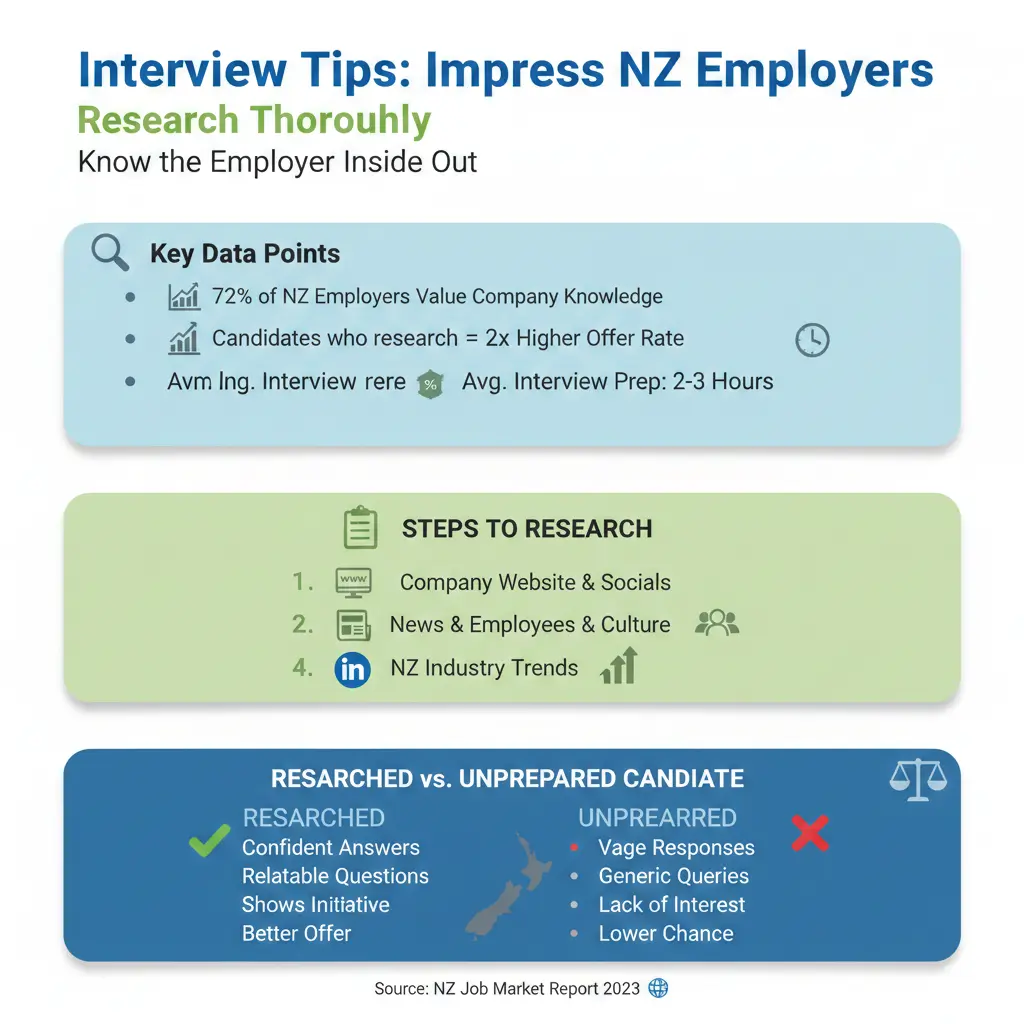
Research Thoroughly: Know the Employer Inside Out
Before stepping into any interview, dive deep into the organisation. Kiwi bosses appreciate candidates who show they've done their homework—it demonstrates enthusiasm and initiative.
Why Research Matters in NZ
In New Zealand's close-knit job market, employers like Fonterra or Spark often seek team players who align with their values, such as sustainability or innovation. Read the job description on their careers page, check recent news on Stuff.co.nz, and explore their LinkedIn or company website. Understand their challenges, like navigating supply chain issues post-2025 floods, and tie your skills to those needs.
- Review the organisation's annual report from Companies Office (companiesoffice.govt.nz) for financial health and goals.
- Follow their social media for insights into culture—many Kiwi firms post about team events or community involvement.
- Note KiwiSaver contributions or ACC levies they mention, showing awareness of local employment perks.
Practical Tip: Create a One-Pager
Prepare a cheat sheet with key facts: their mission, recent projects, and how your experience matches. This keeps you sharp without notes during the chat.
Prepare Your Toolkit: What to Bring and Wear
First impressions count in NZ interviews, where a tidy, smart appearance signals reliability without flashiness.
Dressing for Success Kiwi-Style
You don't need a suit for most roles—opt for smart casual that fits the industry. Tech firms in Wellington might suit business casual (collared shirt, chinos), while trades expect clean workwear. Always iron your clothes, polish shoes, and skip heavy scents. As per Te Pūkenga advice, look smart and tidy without breaking the bank.
Essentials to Pack
- Multiple copies of your CV tailored to the job.
- Portfolio or examples of work, like project reports or design mocks.
- References ready to share, including KiwiSaver or IRD details if relevant for payroll checks.
- Notepad, pen, and a list of questions for them.
- Backup transport plan—use Google Maps for NZ traffic, and arrive 10-15 minutes early.
For virtual interviews via Zoom (common in 2026), test your setup: stable Wi-Fi, neutral background, and professional lighting.
Master Common Interview Questions with the STAR Method
NZ interviews often use behavioural questions to gauge real skills. The STAR method—Situation, Task, Action, Result—is your go-to for structured, impressive answers.
Top Questions and Kiwi-Approved Responses
Here's how to tackle frequent ones:
- Tell us about yourself: Summarise work history, qualifications, and goals in 1-2 minutes. "I've spent five years in retail management at The Warehouse, boosting team sales by 20%, and I'm excited to bring that to your customer-focused role."
- Why do you want to work here? Link research to your fit: "Your commitment to sustainable farming aligns with my experience at Zespri, where I optimised supply chains."
- What are your strengths and weaknesses? Strengths first: "I'm great at problem-solving under pressure." For weaknesses: "I used to overcommit, but now I prioritise with tools like Asana."
- Tell me about a time when... Use STAR: Situation: Tight deadline on a project. Task: Coordinate team. Action: Delegated tasks via Slack. Result: Delivered early, saving 10% costs.
Handling Gaps or Tricky Topics
Be honest about CV gaps: "I took time for family travel, upskilling in digital marketing via free Trade Me Learning courses, and now I'm eager to contribute." Never lie—NZ employment law under the Employment Relations Act 2000 values transparency, and checks via Referee.io are common.
Body Language and Communication: Project Kiwi Confidence
Kiwis prefer humble confidence over bravado. Smile, make eye contact, and lean in to show enthusiasm.
Key Dos and Don'ts
| Do | Don't |
|---|---|
| Firm handshake (or namaste for virtual) | Slouch or cross arms |
| Speak clearly, vary tone | Mumble or dominate talking |
| Smile and nod actively | Fidget or check phone |
| Sit upright, hands visible | Be cocky—stay humble |
If English isn't your first language, focus on clarity over perfection—employers value effort. Pause thoughtfully: "Good question, let me think."
Ask Smart Questions: Make It a Two-Way Street
Show interest by asking about the role, team, or growth. This flips the interview into a conversation.
- What does success look like in the first 90 days?
- How does the team collaborate—hybrid or office-based post-2026 guidelines?
- What training opportunities, like KiwiSaver workshops or ACC safety certs, are offered?
- Tell me about the culture here.
Avoid salary first—wait for their lead, as per NZ norms.
Virtual and Panel Interviews: 2026 NZ Specifics
With hybrid work standard, prep for video: Use Teams or Zoom, dress fully, and have a quiet space. For panels (common at govt roles via careers.govt.nz), address everyone by name.
Tech skills matter—mention proficiency in Xero or MYOB for admin roles.
Follow-Up: Seal the Deal
Send a thank-you email within 24 hours: "Thanks for discussing the role. I'm excited about contributing to your team's goals." Reiterate a key point from STAR examples. If no reply in a week, polite follow-up via LinkedIn.
Next Steps to Ace Your Interview
Book a mock interview via Careers.govt.nz or a recruitment agency like Randstad. Update your LinkedIn, practice STAR daily, and visualise success. You've got the skills—now impress those NZ employers. Kia kaha!
Frequently Asked Questions
Sources & References
-
1
Tips for Interviews - Te Pūkenga | Te Tahatu — tahatu.govt.nz
-
2
NZ Job Interview English, English Interview Skills - YouTube — www.youtube.com
-
3
Interview Tips - Randstad New Zealand — www.randstad.co.nz
-
4
15+ Most Common Interview Questions - MoneyHub NZ — www.moneyhub.co.nz
-
5
Top 6 Skills for Recruiters in New Zealand (2026) - Employment Hero — employmenthero.com
Related Articles

Using Case Converters for Professional NZ Emails
This article references the following sources for accuracy and further reading:

Highest Paying Jobs in NZ 2026: Industries That are Desperate for Staff
If you're considering a career change or planning your next move in the New Zealand job market, you'll want to know where the money is—and more importantly, where employers are actively hiring. The go...

The Perfect NZ CV: A Free Template for 2026 Job Seekers
Your CV is your first chance to impress employers and land that job interview you're after. Whether you're a school leaver, career changer, or experienced professional, having a well-crafted CV tailor...

Best Recruitment Agencies for Tech Jobs in NZ
Searching for your next tech role in New Zealand's buzzing job market? With Kiwi tech hubs like Auckland, Wellington, and Christchurch leading the charge in cloud computing, cybersecurity, and softwar...