ACC Rehabilitation: Getting Back to Work After Injury

Imagine slipping on a wet factory floor or twisting an ankle on a construction site—sudden pain, uncertainty, and the looming question: how do I get back to work? For Kiwis, ACC rehabilitation is the...
Sarah covers personal finance, tax, and KiwiSaver topics for Lifetimes NZ. She focuses on making money management straightforward and practical for everyday Kiwis.
Imagine slipping on a wet factory floor or twisting an ankle on a construction site—sudden pain, uncertainty, and the looming question: how do I get back to work? For Kiwis, ACC rehabilitation is the lifeline that turns injury into recovery, helping you reclaim independence and earnings without the financial stress.
ACC's no-fault scheme covers most injuries, funding treatment, compensation, and rehab to get you back on your feet. But with rising costs and a projected $26 billion deficit by 2030, ACC is refocusing on efficient rehab to ensure sustainability for all New Zealanders. This guide breaks down the 2026 landscape of ACC rehabilitation: getting back to work after injury, with practical steps tailored for Kiwi workers.
Understanding ACC Rehabilitation in 2026
ACC rehabilitation goes beyond patching you up—it's a structured plan to restore your pre-injury life, including work capacity. Social rehabilitation, for instance, funds non-medical supports like home modifications or equipment to maximise independence when an injury impacts daily life.
In 2026, ACC's turnaround plan prioritises three areas: client-first care for lasting recovery, returning Kiwis to work and independence, and resetting operations for basics like tight financial discipline. Last year, ACC spent $8.1 billion on rehab, treatment, and compensation—a 65% jump from a decade ago—prompting these changes to keep levies affordable.
What Counts as an ACC-Covered Injury?
Most accidents qualify, from workplace slips to sports injuries, but not illnesses or gradual wear. Report via the ACC app or 0800 101 996 within days for quick approval. Early claims speed up rehab access.
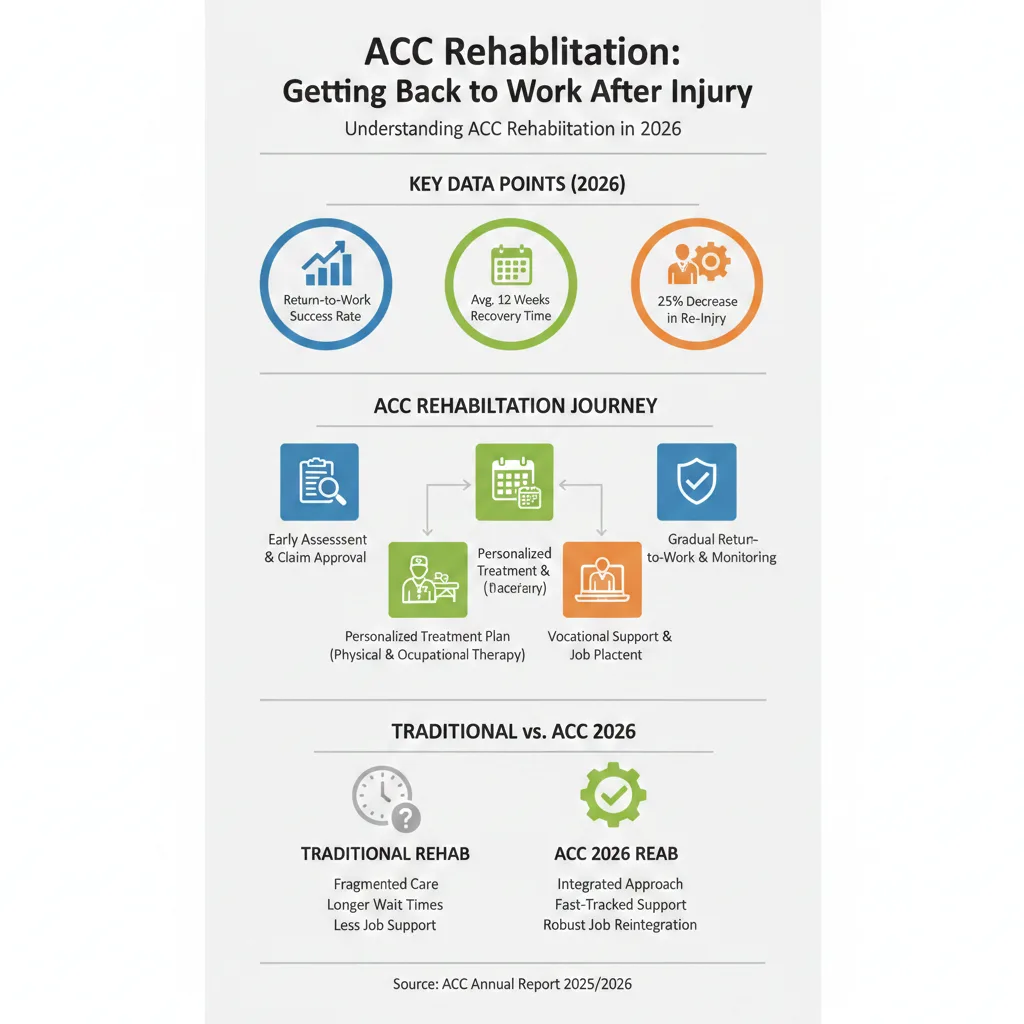
Your ACC Claim Journey: From Injury to Approval
Filing a claim is straightforward. Download the ACC app, scan your details, and submit. ACC assesses within 5-10 days, approving 95% of valid claims. Once approved, your case manager crafts a personalised rehab plan.
- Notify ACC immediately: Use online portal or call centre.
- Gather evidence: GP notes, photos, witness statements.
- Weekly compensation kicks in: 80% of your earnings (up to $124,053 max in 2026) from week 2 if off work over a week.
Pro tip: Keep working if possible—ACC encourages gradual return to build evidence of capability.
Core Components of ACC Rehabilitation
Rehab is holistic, blending medical, vocational, and social supports. ACC's 2026 focus: timely, cost-effective interventions to avoid long-term claims.
Medical Rehabilitation
Physio, surgery, or specialist referrals funded fully. For sprains, gentle movement aids faster physical and mental recovery. ACC now strengthens expectations for evidence-based treatments amid turnaround efforts.
Vocational Rehabilitation: The Key to Getting Back to Work
This targets employment. Services include:
- Workplace assessments: Ergonomic changes, like adjustable desks for back injuries.
- Retraining: Courses via providers like local polytechs, funded up to your needs.
- Job placement: Case managers connect you with employers.
- Graduated return: Part-time hours building to full, with wage top-ups.
ACC aims to improve return-to-work via early intervention and 285 new case managers in 2026. Non-serious injuries get priority focus.
Social Rehabilitation
Funds independence aids: mobility equipment, childcare during recovery, or home mods. Strictly injury-related, assessed for 'maximum practicable restoration'. ACC is refining needs assessments for consistency.
2026 Updates: ACC's Turnaround Plan and What It Means for You
ACC faces a $23-26 billion hole by 2030 due to rehab inefficiencies, health system pressures, and court expansions. The turnaround plan responds:
- Client-first care: Timely, clinically sound treatment.
- Back to work push: Better case management, exiting long-term claims (8,000 in 2025, 11,000 planned for 2026).
- Basics reset: Hiring staff, AI for decisions, controlling social rehab growth.
"Getting New Zealanders back to work and independence – return-to-work and independence outcomes must improve through effective case management and early intervention."
Critics note some claimants feel pushed out prematurely, shifting costs to WINZ. ACC insists it's case-by-case, levy-payer funded only for injury needs.
Levies and Sustainability
2026 levies rise slightly to fund rehab—businesses pay earnings-related levies (around 1.5-3% by industry), earners 1.27% on income. Better rehab reduces long-term costs for all Kiwis.
Practical Steps: Your Roadmap to Returning to Work
Active participation speeds recovery. Here's your action plan:
Step 1: Engage Your Case Manager Early
Meet weekly. Share goals like 'back at work in 3 months'. They'll coordinate GP, physio, and employer liaison.
Step 2: Build a Graduated Return Plan
| Week | Activity Level | Support |
|---|---|---|
| 1-2 | Light duties, 50% hours | Physio, wage comp top-up |
| 3-6 | Increase to 75% | Vocational counselling |
| 7+ | Full time | Monitor, adjust if needed |
Step 3: Access Free Resources
- ACC's recovery hub: Videos, apps for home exercises.
- Provider directory: Find local rehab specialists.
- Employer obligations: Under Health and Safety at Work Act, they must support safe return.
Step 4: Monitor Progress and Dispute if Needed
Track via MyACC portal. If declined, appeal free via ACC or District Court. Advocates like Shine Lawyers assist.
Real Kiwi Stories: Success Through ACC Rehab
Take Julie Fairey, hit by a car while cycling. Months into rehab, she's eyeing a bike return, supported by ACC physio and mental health check-ins. Or consider warehouse workers who've retrained via funded courses, back earning full wages.
These stories highlight: early intervention works. ACC's plan builds on such wins.
Challenges and How to Overcome Them
Long-term claims are under scrutiny—25,000 over a year in 2025. Pre-existing conditions may limit cover. Solution: Document everything, get independent assessments.
Mental health post-injury? ACC funds counselling if injury-linked. Combine with community support like gym groups.
Financial tips: Pair ACC with KiwiSaver withdrawals if needed (check IRD rules). Budget via MSD tools if transitioning.
FAQ: Common Questions on ACC Rehabilitation
What if my employer won't accommodate my return?
ACC mediates; employers must under law. Escalate to case manager.
How long does weekly compensation last?
Up to 2 years typically, extendable if rehab proves need. Focus on vocational rehab avoids cut-off.
Can I choose my rehab provider?
Yes, from ACC's approved list for best outcomes.
What if my injury worsens during rehab?
Update your claim immediately—ACC reassesses.
Are family caregivers covered?
Entitlements for weekly comp if you're primary earner; social rehab for child-related needs.
2026 levy changes affecting me?
Minimal for individuals; businesses see industry tweaks. Check acc.co.nz/levies.
Next Steps: Take Control of Your Recovery Today
Don't wait—log into MyACC, book a case review, and start gentle movement. Contact 0800 101 996 for personalised advice. With ACC's 2026 focus on efficient rehab, you're set for a stronger return to work and life.
Disclaimer: This is general info. Seek advice from ACC, your adviser, or lawyer for your situation. Financial decisions impact tax, KiwiSaver—consult professionals.
Related Articles

Industry Bodies and Professional Associations NZ
Whether you're launching a business, advancing your career, or navigating financial regulations, industry bodies and professional associations in New Zealand offer invaluable support. These organisati...

Emergency Benefit NZ: When You Have No Other Options
When you're struggling financially and don't qualify for other benefits, the Emergency Benefit might be your lifeline. It's a discretionary payment designed for Kiwis in genuine hardship who've exhaus...

Unpaid Internships NZ: Are They Legal?
Unpaid internships are a common pathway for students and graduates to gain work experience in New Zealand, but there's often confusion about whether they're actually legal. The short answer is: unpaid...

Estate Administration NZ: Managing Someone's Affairs After Death
Losing a loved one is one of life's toughest challenges, and stepping in to manage their estate can feel overwhelming. In New Zealand, estate administration—the process of handling someone's affairs a...