Bad Debts NZ: Writing Off Unpaid Invoices

When a customer doesn't pay an invoice, it doesn't just disappear—it becomes a bad debt that can drain your business cash flow and affect your bottom line. In New Zealand, writing off unpaid invoices...
Sarah covers personal finance, tax, and KiwiSaver topics for Lifetimes NZ. She focuses on making money management straightforward and practical for everyday Kiwis.
When a customer doesn't pay an invoice, it doesn't just disappear—it becomes a bad debt that can drain your business cash flow and affect your bottom line. In New Zealand, writing off unpaid invoices involves specific tax and accounting rules that most business owners need to understand. Whether you're a sole trader, small business, or larger company, knowing how to properly handle bad debts can save you money, protect your business, and help you make smarter financial decisions.
What Is a Bad Debt?
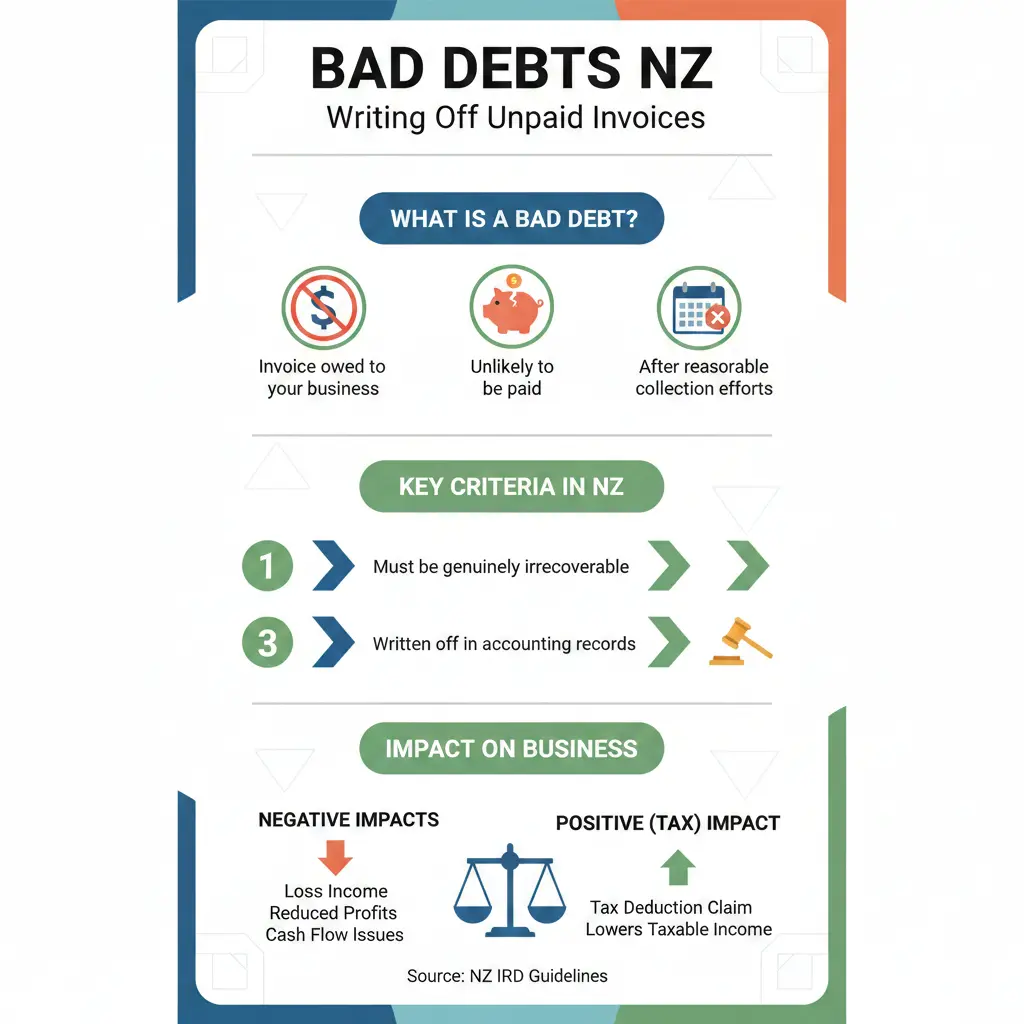
A bad debt occurs when a customer or debtor fails to pay an amount they owe you, and you've determined that the debt is unlikely to be recovered. This could be a customer invoice, a loan you've made, or any other financial arrangement where payment is overdue and collection seems unlikely.
Bad debts are different from simply being owed money. Many businesses have outstanding invoices that are eventually paid, sometimes months later. A bad debt is specifically a debt you've written off—meaning you've decided it's uncollectible and removed it from your books as an asset.
Tax Deductions for Bad Debts in New Zealand
Who Can Claim Bad Debt Deductions?
If your company carries on a business of holding or dealing in financial arrangements, you're generally allowed a tax deduction for bad debt in the income year in which the debt is written off. This applies if the debt you're writing off is a financial arrangement of the same or similar type as the financial arrangements held as part of your business, and you're not associated with the debtor.
For most New Zealand businesses, this means you can claim a deduction when you've genuinely tried to collect the debt and decided it's uncollectible. However, the rules have specific requirements you'll need to meet.
Requirements for Claiming Bad Debt Deductions
To claim a bad debt deduction with the Inland Revenue Department (IRD), you need to:
- Have a genuine business relationship with the debtor
- Have made a genuine attempt to collect the debt
- Have written off the debt in your accounting records
- Be able to demonstrate that the debt is genuinely uncollectible
- Not be associated with the debtor (meaning you don't have significant control or ownership links)
The IRD takes bad debt claims seriously, so you'll need to keep documentation showing your collection efforts—emails, letters, phone records, and any legal action you've taken. This paper trail is essential if the IRD questions your claim.
The Legal Consequences of Unpaid Debt
Before writing off a debt, it's important to understand what options you have to recover it. In New Zealand, creditors have several tools available to enforce payment.
Recovery Methods
If a debtor owes you money, you can:
- Request the debtor's employer deduct money from their salary to cover the debt
- Allow the creditor to withdraw funds directly from the debtor's bank account
- Order the seizure and sale of the debtor's property to pay the debt
These enforcement measures require a judgment from the court, which means you'll need to take legal action first. This is why many small businesses decide to write off debts—the cost and time involved in pursuing recovery through the courts often exceeds the amount owed.
Insolvency and Bankruptcy
If your debtor has declared bankruptcy or entered a No Asset Procedure (NAP), your chances of recovery are significantly reduced. In these cases, writing off the debt may be your only realistic option.
Protecting Your Rights as a Creditor
The Fair Trading Act and the Credit Contracts and Consumer Finance Act protect debtors from unjust debt collection practices. This means you need to be careful about how you pursue debts—aggressive or harassing collection tactics could expose you to legal liability.
If you're uncertain about your rights or the debtor's situation, it's worth seeking legal advice before writing off the debt. A lawyer can help you understand whether you've exhausted all reasonable recovery options and whether your bad debt claim will be acceptable to the IRD.
How to Write Off Bad Debts: A Step-by-Step Guide
Step 1: Document Your Collection Efforts
Before writing off a debt, create a file showing all your collection attempts. Include:
- Original invoice and payment terms
- Reminder emails and letters sent
- Phone call records and notes from conversations
- Any legal action taken (court claims, etc.)
- The debtor's response (or lack thereof)
Step 2: Determine the Debt Is Uncollectible
Make a formal assessment that the debt cannot be recovered. This might be because:
- The debtor has disappeared or relocated
- The debtor is insolvent or bankrupt
- The cost of pursuing recovery exceeds the debt amount
- The debtor has refused to pay despite multiple attempts
- A reasonable time has passed (typically 12 months or more) with no payment
Step 3: Update Your Accounting Records
Remove the bad debt from your accounts receivable and record it as a bad debt expense. You may have a provision for doubtful debts on your balance sheet—if so, adjust this accordingly.
Step 4: Keep Records for the IRD
Maintain all documentation for at least seven years. The IRD may ask to see your evidence if they question your bad debt claim during an audit.
Step 5: Consider Debt Assignment
Before writing off a debt completely, you might consider selling it to a debt collection agency. Under New Zealand law, debts can be assigned (sold) to another party, provided the debtor is given notice of the assignment. This allows you to recover some value from the debt while transferring the collection responsibility to someone else.
ACC Instalment Plans and Interest Rates
If you're an employer managing ACC levies, it's worth noting that the Accident Compensation Corporation (ACC) has updated its rules around instalment plans and bad debt. ACC now allows for regulations to be made describing circumstances where ACC may waive or remit bad debt on instalment plan interest, particularly in cases of financial hardship.
If you're struggling with ACC levy payments, you can enter an instalment plan rather than face penalty interest. Understanding these options is crucial for managing your business finances effectively.
Business Insolvency and Debt
If your business is struggling with multiple bad debts and can't pay your own creditors, you may need to consider insolvency options. In New Zealand, these include:
- Bankruptcy: A legal status for those who cannot repay their debts, which releases you from most debts but allows creditors to access your assets
- No Asset Procedure (NAP): A simpler insolvency process for those with minimal assets
The IRD has been actively enforcing unpaid tax debts, with liquidations reaching a 15-year high in 2025 as businesses struggled to meet their obligations. If you're facing significant debt, seeking professional advice early is essential.
Next Steps: Managing Bad Debts in Your Business
Bad debts are an unfortunate reality for many New Zealand businesses, but understanding how to handle them properly can minimise their impact on your bottom line. Start by implementing strong credit management practices—clear payment terms, regular invoicing, and prompt follow-up on overdue accounts can prevent many debts from becoming "bad" in the first place.
If you do have unpaid invoices, document your collection efforts thoroughly and make a realistic assessment of whether recovery is possible. Before writing off a debt, consider whether selling it to a debt collection agency might recover some value.
For tax purposes, keep detailed records of all bad debts you write off and the reasons why. This documentation is essential if the IRD questions your claim. If you're uncertain about the tax treatment of bad debts or your business is facing significant debt challenges, consult with an accountant or tax advisor who understands New Zealand tax law.
Remember, the goal isn't just to write off debts—it's to prevent them in the first place through good credit management, clear contracts, and prompt follow-up on payments. By taking a proactive approach to debt management, you can protect your cash flow and keep your business healthy.
Frequently Asked Questions
Sources & References
-
1
Appendix 12 – RIS ACC Interest Rates and Bad Debt — www.mbie.govt.nz
-
2
What Are the Legal Consequences of Unpaid Debt? — legalvision.co.nz
- 3
-
4
IRD Crackdown Drives Liquidations to 15-Year High — www.hcamag.com
-
5
New Zealand - Corporate - Deductions — taxsummaries.pwc.com
Related Articles

Industry Bodies and Professional Associations NZ
Whether you're launching a business, advancing your career, or navigating financial regulations, industry bodies and professional associations in New Zealand offer invaluable support. These organisati...

Emergency Benefit NZ: When You Have No Other Options
When you're struggling financially and don't qualify for other benefits, the Emergency Benefit might be your lifeline. It's a discretionary payment designed for Kiwis in genuine hardship who've exhaus...

Unpaid Internships NZ: Are They Legal?
Unpaid internships are a common pathway for students and graduates to gain work experience in New Zealand, but there's often confusion about whether they're actually legal. The short answer is: unpaid...

Estate Administration NZ: Managing Someone's Affairs After Death
Losing a loved one is one of life's toughest challenges, and stepping in to manage their estate can feel overwhelming. In New Zealand, estate administration—the process of handling someone's affairs a...