Best Places to Retire in NZ: Climate Costs and Healthcare

Choosing where to retire is one of the most important decisions you'll make, and New Zealand offers some truly exceptional options. Whether you're drawn to sunshine-rich coastal regions, vibrant cultu...
The Lifetimes NZ editorial team curates, fact-checks, and updates guides on personal finance, property, health, immigration, legal, business, and lifestyle topics relevant to Lifetimes NZ readers. Articles are produced with AI assistance and reviewed by the editorial team before publication.
Choosing where to retire is one of the most important decisions you'll make, and New Zealand offers some truly exceptional options. Whether you're drawn to sunshine-rich coastal regions, vibrant cultural hubs, or affordable inland towns, finding the right location depends on balancing climate, healthcare access, and your budget. This guide explores New Zealand's best retirement destinations and helps you weigh the factors that matter most to your future.
Why Location Matters for Your Retirement
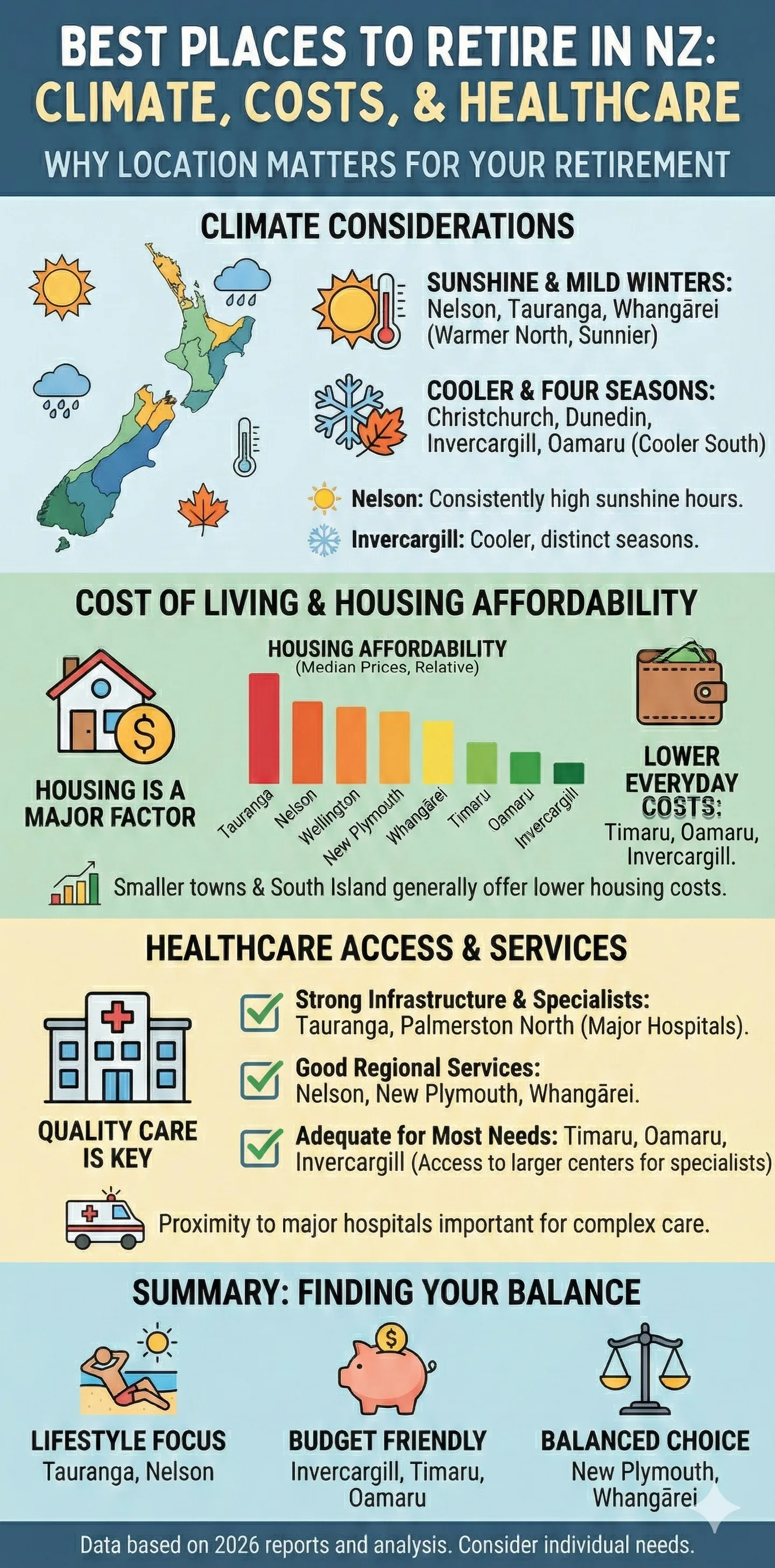
Your retirement location shapes your quality of life, healthcare access, social connections, and financial security. New Zealand's diverse geography means you can choose between bustling cities, peaceful coastal towns, or quiet rural settings—each with different climate patterns, cost of living, and healthcare infrastructure. The right choice depends on your priorities and lifestyle preferences.
Top Retirement Destinations in New Zealand
Bay of Plenty: Sunshine and Coastal Living
The Bay of Plenty consistently ranks as one of New Zealand's most popular retirement regions, and for good reason. The region boasts among the highest number of annual sunshine hours of any New Zealand area, making it ideal if you're chasing warm, dry weather. The area is also conveniently positioned within a two to five hours' drive of Auckland, so you can easily visit family and friends in the city without relocating too far away.
Papamoa, a seaside suburb in the Bay of Plenty, is experiencing a cluster of new retirement village construction, offering modern accommodation options. Nearby Rotorua provides an inland alternative with geothermal attractions and rich Māori cultural experiences, alongside solid healthcare services. The region's combination of natural beauty, accessibility, and amenities makes it particularly attractive for active retirees.
Canterbury: Choice and Infrastructure
Canterbury is New Zealand's retirement village hub. The region hosts over 70 retirement villages, giving you exceptional choice whether you're looking for independent living, assisted living, or aged care facilities. Most villages cluster around Christchurch, Timaru, Ashburton, and Rangiora, though rural options exist too.
Canterbury is home to major retirement village operators including Ryman Healthcare, Summerset, Arvida, Ultimate Care Group, Oceania, and Bupa, alongside smaller boutique providers. This concentration means competitive pricing and diverse service options. Many villages offer tiered care—starting with independent living and transitioning to assisted living or on-site care homes as your needs change.
Hawke's Bay: Wine Country Charm
If you're seeking a warmer climate with a relaxed lifestyle, Hawke's Bay is an excellent retirement choice. The region features majestic mountains, rolling green hills, breathtaking coastlines, and abundant vineyards and orchards. The climate is noticeably warmer than many other regions, and the wine, food, and arts culture create a vibrant social scene.
Most retirement villages are located in Napier, Hastings, and Havelock North, with major operators including Ryman, Summerset, Oceania, Arvida, and Bupa all present. The region also offers world-class golf courses and excellent healthcare facilities. Property prices in Napier remain relatively reasonable—approximately $1–2 million NZD will purchase one of the nicest houses in the area.
Nelson and Marlborough: South Island Sunshine
For South Island retirees, Nelson is renowned for its sunny climate, stunning landscapes, and welcoming community. Richmond (near Nelson) topped New Zealand's sunshine standings with 2,840 hours of sunshine recorded in 2016, beating even popular North Island destinations. Nelson offers a relaxed pace of life, vibrant culture, and natural beauty that appeals to many retirees.
Marlborough is another popular South Island retirement spot, featuring award-winning winelands, incredible wildlife, and great healthcare. The region combines natural beauty with cultural attractions and strong healthcare infrastructure.
Whangārei: The Affordable Alternative
Described as the "Tauranga of ten years ago" by some real estate agents, Whangārei is a great option for retirees priced out of the Tauranga or Coromandel markets. One-fifth of Whangārei's residents are retirees, creating a welcoming community with established social networks. The region features waterfalls, forests, and recently improved infrastructure, with more affordable property prices than popular coastal alternatives.
West Coast: Hidden Gem for Budget-Conscious Retirees
The West Coast is becoming increasingly popular with retirees seeking stunning scenery, affordable housing, and a quieter lifestyle. While it has a reputation for rain, different areas offer varying climates. Karamea is becoming popular due to its high sunshine hours comparable to Nelson or Blenheim, plus reliable rainfall means you won't face water restrictions.
The West Coast has a population of just 32,700—only 0.6% of New Zealand's population. If you're seeking solitude or love the great outdoors, this region offers exceptional value. You might not even need to downsize your home while still having money left over for renovations.
Other Popular Destinations
Several other regions attract retirees:
- Kapiti Coast: Offers small-town lifestyle with city infrastructure access, low crime rates, and countryside feel
- Bay of Islands: Popular for high sunshine hours and laid-back lifestyle
- Coromandel: Attractive coastal region, though increasingly expensive
- Rodney District (north of Auckland): Convenient to the city with rural charm
- Whanganui, Palmerston North, and Masterton: Reasonably affordable options for downsizers
Key Factors to Consider When Choosing Your Retirement Location
Climate and Sunshine Hours
New Zealand's climate varies significantly by region. If sunshine is important to you, Richmond near Nelson, Blenheim, Takaka, and New Plymouth consistently record the highest sunshine hours. Coastal areas generally have milder, more stable temperatures than inland regions. Consider your health needs—arthritis sufferers often prefer warmer, drier climates.
Healthcare Access
Healthcare quality and accessibility should be a priority. Major centres like Christchurch, Auckland, and Wellington have comprehensive hospital and specialist services. Regional centres like Napier, Tauranga, and Nelson offer solid healthcare infrastructure. If you're considering more remote areas, check what services are available locally and what requires travel to larger centres.
New Zealand's public healthcare system is free or heavily subsidised for residents. Check with your local District Health Board about aged care services, GPs, specialists, and aged residential care options in your chosen region.
Cost of Living and Property Prices
Property prices vary dramatically across New Zealand. Popular coastal regions like Tauranga, the Bay of Islands, and Coromandel command premium prices. More affordable alternatives include Whangārei, the West Coast, Whanganui, Palmerston North, and Masterton.
Beyond property costs, consider:
- Rates and council charges
- Utility costs (heating, power, water)
- Local services and amenities pricing
- Healthcare costs (GP visits, prescriptions, specialists)
- Retirement village fees (if applicable)
Social Connections and Community
Staying socially and physically active is key to a fulfilling retirement. Look for regions with established retiree communities, social clubs, volunteer opportunities, and activities matching your interests. Regions like Whangārei with high retiree populations often have well-developed social networks and age-friendly services.
Accessibility and Transport
Consider proximity to family, friends, and essential services. The Bay of Plenty's two to five hour drive to Auckland suits those wanting city access. Coastal towns often have good road connections but may be more isolated. If you plan to travel internationally, proximity to major airports (Auckland, Christchurch, Wellington) matters.
Understanding Retirement Village Costs
If you're considering a retirement village, understand the cost structure. Retirement villages typically involve:
- Entry payments: Upfront lump sum (often substantial)
- Monthly fees: For accommodation, utilities, and services
- Care fees: Additional costs if you require assisted living or aged care
- Deferred fees: Amounts paid when you leave the village
Major operators like Summerset and Ryman Healthcare operate nationwide, while smaller providers serve specific regions. Visit multiple villages in different regions to understand what's available and compare costs.
Planning Your Retirement Move
Visit Before You Commit
Visit multiple villages in different regions and spend time in the local area, picturing yourself living there year-round. Retirement is long-term—a location that appeals for a weekend might feel isolating after six months.
Check Your Eligibility
If you're not yet a New Zealand citizen or permanent resident, check immigration requirements. New Zealand's residence visa options for retirees have specific financial requirements. Visit immigration.govt.nz for current requirements.
Financial Planning
Work with a financial adviser to understand how your retirement income (NZ Super, KiwiSaver, savings, investments) will support your chosen location. Consider:
- Your NZ Super entitlement (currently available from age 65)
- KiwiSaver withdrawal options at retirement
- Property sale proceeds (if downsizing)
- Investment income
- Part-time work opportunities in your chosen region
Seek advice from a registered financial adviser before making major decisions. The Financial Markets Authority website helps you find qualified advisers.
Frequently Asked Questions
What's the sunniest place to retire in New Zealand?
Richmond near Nelson recorded 2,840 sunshine hours in 2016, making it one of New Zealand's sunniest locations. Blenheim, Takaka, and New Plymouth also record very high sunshine hours. The Bay of Plenty and Hawke's Bay offer excellent sunshine with more developed infrastructure and services than some South Island alternatives.
How much does it cost to retire in New Zealand?
This depends entirely on your chosen location and lifestyle. Retirement villages can cost anywhere from hundreds of thousands to over a million dollars in entry fees, plus monthly charges. Property purchases range from under $500,000 in affordable regions like the West Coast to over $2 million in popular coastal areas. Your NZ Super (currently $26,845 annually for a single person) provides a baseline income, but most retirees supplement this with savings, investments, or KiwiSaver withdrawals.
Which regions have the best healthcare for retirees?
Major centres (Auckland, Wellington, Christchurch) have the most comprehensive healthcare. However, regional centres like Napier, Tauranga, Christchurch, Nelson, and Dunedin all offer solid healthcare infrastructure. Check specific services available in your chosen region, particularly aged care facilities and specialist services relevant to your health needs.
Is it cheaper to retire on the North Island or South Island?
Generally, South Island regions (particularly the West Coast, inland Marlborough, and smaller towns) offer better value. However, popular North Island coastal towns command premium prices. Affordable options exist on both islands—the key is choosing less-popular regions. Whangārei, Whanganui, Palmerston North, and Masterton offer good value on the North Island, while West Coast towns and inland Marlborough provide excellent South Island affordability.
Can I visit a retirement village before committing?
Absolutely—in fact, you should. Visit multiple villages in different regions and spend time in the local area. Most villages welcome visitors and can arrange tours. Spend a few days in your potential retirement location to experience the community, services, and lifestyle before making a decision.
What if I want to stay close to family in Auckland?
The Bay of Plenty is ideal—it's within a two to five hour drive of Auckland, allowing regular visits without relocating too far. Rodney District (north of Auckland) and the Kapiti Coast also offer reasonable proximity to the city with more rural, relaxed lifestyles.
Making Your Decision
Choosing where to retire requires balancing multiple factors: climate, healthcare, affordability, community, and proximity to family. New Zealand offers exceptional diversity—from sunny coastal regions to quiet rural towns, vibrant cultural hubs to peaceful countryside.
Start by identifying your top priorities. If climate matters most, focus on regions with high sunshine hours. If affordability is crucial, explore less-popular alternatives. If healthcare access is paramount, consider major regional centres. Then visit your shortlisted locations, spend time in the community, and imagine yourself living there long-term.
Consider consulting a financial adviser about your retirement income and a healthcare professional about your specific health needs. Both can help you make an informed decision aligned with your circumstances and goals.
Your retirement should reflect your values and lifestyle preferences. New Zealand's diverse regions mean you can find a location that truly feels like home.
Related Articles

Industry Bodies and Professional Associations NZ
Whether you're launching a business, advancing your career, or navigating financial regulations, industry bodies and professional associations in New Zealand offer invaluable support. These organisati...

Emergency Benefit NZ: When You Have No Other Options
When you're struggling financially and don't qualify for other benefits, the Emergency Benefit might be your lifeline. It's a discretionary payment designed for Kiwis in genuine hardship who've exhaus...

Unpaid Internships NZ: Are They Legal?
Unpaid internships are a common pathway for students and graduates to gain work experience in New Zealand, but there's often confusion about whether they're actually legal. The short answer is: unpaid...

Estate Administration NZ: Managing Someone's Affairs After Death
Losing a loved one is one of life's toughest challenges, and stepping in to manage their estate can feel overwhelming. In New Zealand, estate administration—the process of handling someone's affairs a...