Cross-Lease Properties NZ: Risks and Benefits Explained

Ever driven through an established Kiwi suburb and spotted two cosy homes sharing a single driveway, wondering how that ownership tangle works? Cross-lease properties are a uniquely New Zealand quirk,...
The Lifetimes NZ editorial team curates, fact-checks, and updates guides on personal finance, property, health, immigration, legal, business, and lifestyle topics relevant to Lifetimes NZ readers. Articles are produced with AI assistance and reviewed by the editorial team before publication.
Ever driven through an established Kiwi suburb and spotted two cosy homes sharing a single driveway, wondering how that ownership tangle works? Cross-lease properties are a uniquely New Zealand quirk, born from 1960s developers dodging subdivision rules, and they still make up a big chunk of our housing stock today. While they offer affordable entry into homeownership, they come with shared land pitfalls that can turn neighbourly chats into legal headaches. This guide breaks down the **risks and benefits of cross-lease properties NZ**, arming you with practical advice to navigate buying, owning, or converting one in 2026.
What Is a Cross-Lease Property in New Zealand?
At its core, a cross-lease property lets multiple owners share one freehold title to a block of land while leasing exclusive rights to their individual dwellings—typically for 999 years at a peppercorn rent. Picture this: in a two-home setup, you own half the land as tenants-in-common with your neighbour, but hold a lease over your house and its footprint, as defined on a flats plan registered with Land Information New Zealand (LINZ).
The setup includes three key documents:
- Lease document: Outlines your exclusive use area, covenants, and restrictions like maintenance duties or pet bans.
- Flats plan: A surveyed diagram showing building footprints, lease boundaries (dotted lines), common areas like driveways, and exclusive zones.
- Underlying freehold title: Proves shared ownership of the whole site.
Unlike straightforward freehold—where you own land and building outright—or unit titles with their structured body corporate, cross-leases rely on informal neighbour agreements. No body corporate means no mandatory meetings or levies, but disputes hinge on lease covenants.
How Cross-Lease Differs from Freehold and Unit Titles
Here's a quick comparison to clarify:
| Ownership Type | Land Ownership | Building Rights | Governance |
|---|---|---|---|
| Freehold | Full ownership of land + building | Complete control | None needed |
| Unit Title | Share of common property | Individual unit + body corporate rules | Mandatory body corporate |
| Cross-Lease | Undivided share of land | 999-year lease on dwelling | Lease covenants + neighbour consent |
Cross-leases suit budget-conscious Kiwis in cities like Christchurch or Auckland's older suburbs, but always match the flats plan to the physical site—omissions like unplotted decks spell trouble.
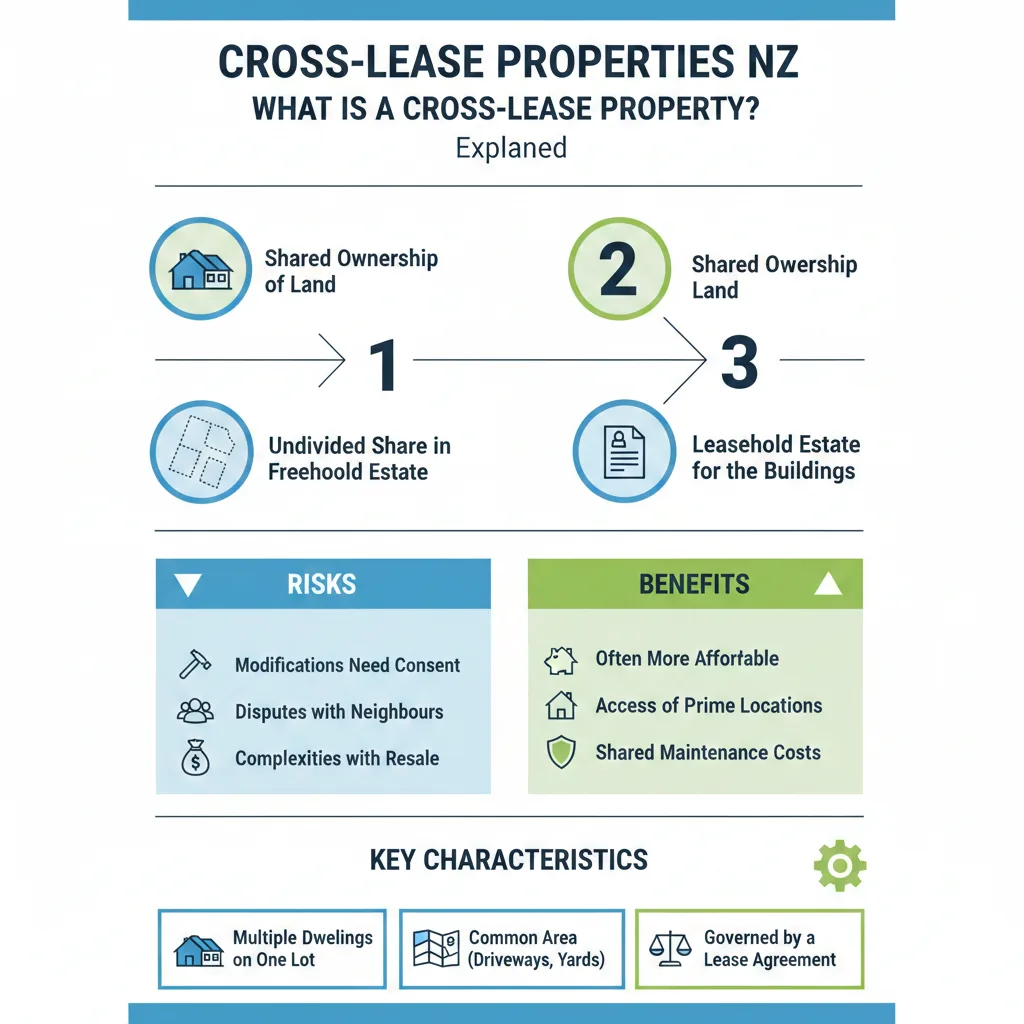
Benefits of Cross-Lease Properties NZ
Despite the complexities, cross-leases shine for first-home buyers and investors eyeing value in tight markets.
Affordability and Accessibility
Cross-leases often sell for less than equivalent freeholds, making them a foot in the property door amid 2026's high prices. Sharing land keeps development costs low, passing savings to buyers—ideal for KiwiSaver first-timers or those saving for a deposit via the Progressive Home Ownership scheme.
Privacy with Shared Perks
You get exclusive occupancy of your home and yard (if specified), plus shared access to driveways or gardens without full body corporate fees. It's a balance: more privacy than units, less isolation than freehold.
Conversion Potential
Many convert to freehold or unit titles for resale appeal. With unanimous neighbour consent, Resource Management Act (RMA) approval, a cadastral survey, and LINZ registration, you gain standalone titles—boosting value but costing $20,000–$50,000 depending on site complexity.
"Cross-lease to freehold subdivision eliminates the need for ongoing neighbour approvals on extensions," notes one surveying firm.
Risks of Cross-Lease Properties NZ
The hybrid nature brings headaches—defective titles top the list, affecting thousands of Kiwi homes yearly.
Defective Titles and Flats Plan Mismatches
If your deck, garage, or fence isn't on the flats plan, the title's defective. Fixing requires all owners' consent, surveys, and LINZ updates—delays sales and scares lenders. Lawyers always cross-check plans during due diligence.
Neighbour Consent for Changes
Want to extend, add a granny flat, or build a shed? You need written approval from all co-owners. Even internal structural work on shared walls might qualify. In 2026, granny flats under 70sqm skip building consent but still demand cross-lease nod and flats plan updates.
No Body Corporate Safety Net
Maintenance splits per lease—external walls might be yours alone. Disputes over leaky roofs or driveways rely on covenants, not professional managers. Sour relations? Good luck enforcing via mediation or District Court.
Resale and Financing Hurdles
Banks scrutinise cross-leases more, sometimes demanding fixes pre-loan. Buyers favour freeholds, so expect 5–10% discounts. IRD-wise, they're standard for tax (e.g., bright-line test), but shared ownership complicates KiwiSaver withdrawals.
Insurance and Liability Traps
You insure your lease area; common parts fall to informal shares. ACC covers personal injuries, but disputes over shared fences hit pockets hard without clear covenants.
Practical tip: Before buying, get a lawyer's report on lease terms, flats plan accuracy, past consents, and your renovation dreams.
Practical Steps for Buying a Cross-Lease Property in NZ
- Hire a property lawyer early: They'll dissect the cross-lease document, confirm exclusive areas, and flag defects.
- Site inspection vs. flats plan: Walk the boundary—measure decks, fences, structures.
- Check consents: Verify council records for alterations via your local council's portal (e.g., Auckland Council).
- Neighbour chit-chat: Gauge relations; ask about past issues.
- Lender pre-approval: Confirm banks like Kiwibank or ANZ accept the title.
- Building report: Essential for weathertightness, common in older cross-leases.
For sellers, fix defects first—LINZ record searches cost under $50 but save thousands.
Converting Cross-Lease to Freehold or Unit Title
Tempted to untangle? Steps include:
- Unanimous co-owner agreement.
- Resource consent under RMA (via regional council).
- Cadastral survey for new boundaries.
- LINZ title registration—freehold for houses, unit title for flats.
Costs: $25,000+ for surveys and consents; timelines 6–12 months. Post-conversion, sell faster and borrow easier. Consult surveyors like Cogswell for quotes.
FAQ: Cross-Lease Properties NZ
1. Do cross-lease properties have body corporates?
No, they're governed by lease covenants, not a body corporate like unit titles. Responsibilities are informal.
2. Can I add a granny flat to a cross-lease?
Yes, under 70sqm skips 2026 building consent, but get all owners' written consent and update the flats plan.
3. How do I fix a defective cross-lease title?
Secure consents, survey updates, and LINZ registration—budget $10,000–$30,000 with lawyer help.
4. Are cross-leases cheaper to insure?
Often yes, for your lease area only, but shared liabilities add risk—shop via AA Insurance or State.
5. Can I subdivide a cross-lease without neighbours?
No, unanimous consent is mandatory under RMA rules.
6. What's the tax impact for cross-lease owners?
Treated like freehold for IRD—bright-line test applies (2–10 years). No special KiwiSaver rules, but confirm with advisor.
Next Steps for Kiwis Eyeing Cross-Lease
Cross-lease properties offer smart affordability but demand diligence on titles and neighbours. Start with a lawyer's due diligence pack, compare to freehold options on Trade Me, and crunch numbers with a mortgage broker. If converting, quote surveyors now. For tailored advice, chat to your bank or visit LINZ.govt.nz for title searches. Remember, this isn't financial advice—consult professionals for your situation, especially with IRD or ACC angles.
Word count: ~1850
Related Articles

Working Multiple Jobs NZ: Tax and Legal Considerations
Juggling multiple jobs can boost your income, but it's crucial to understand the tax implications and legal requirements that come with working more than one role in Aotearoa. Whether you're a contrac...

Name Changes NZ: Legal Process and Costs
Considering a fresh start with a new name? Whether it's after marriage, divorce, or simply embracing a personal transformation, changing your name in New Zealand is straightforward but requires follow...

Holiday Home Tax Rules NZ: Private Use and Rental
Own a bach in Coromandel or a holiday home in Queenstown? You're not alone—many Kiwis cherish these escapes, but renting them out while enjoying personal use can trip you up on tax rules. Getting the...

Industry Bodies and Professional Associations NZ
Whether you're launching a business, advancing your career, or navigating financial regulations, industry bodies and professional associations in New Zealand offer invaluable support. These organisati...