Flatmate Rights NZ: What You Need to Know

Sharing a flat in New Zealand is a rite of passage for many Kiwis, whether you're a student in Dunedin, a young professional in Auckland, or saving for that first home deposit. But what happens when r...
The Lifetimes NZ editorial team curates, fact-checks, and updates guides on personal finance, property, health, immigration, legal, business, and lifestyle topics relevant to Lifetimes NZ readers. Articles are produced with AI assistance and reviewed by the editorial team before publication.
Sharing a flat in New Zealand is a rite of passage for many Kiwis, whether you're a student in Dunedin, a young professional in Auckland, or saving for that first home deposit. But what happens when rent goes unpaid, bonds disappear, or your flatmate trashes the lounge? Knowing your flatmate rights NZ under the Residential Tenancies Act (RTA) can save you stress, money, and even a trip to the Tenancy Tribunal.
This guide breaks down everything you need to know about flatmate rights in 2026, from legal obligations to practical tips for smooth living. Whether you're the head tenant, a subletting flatmate, or sharing with mates, we've got the actionable advice tailored for Kiwi households.
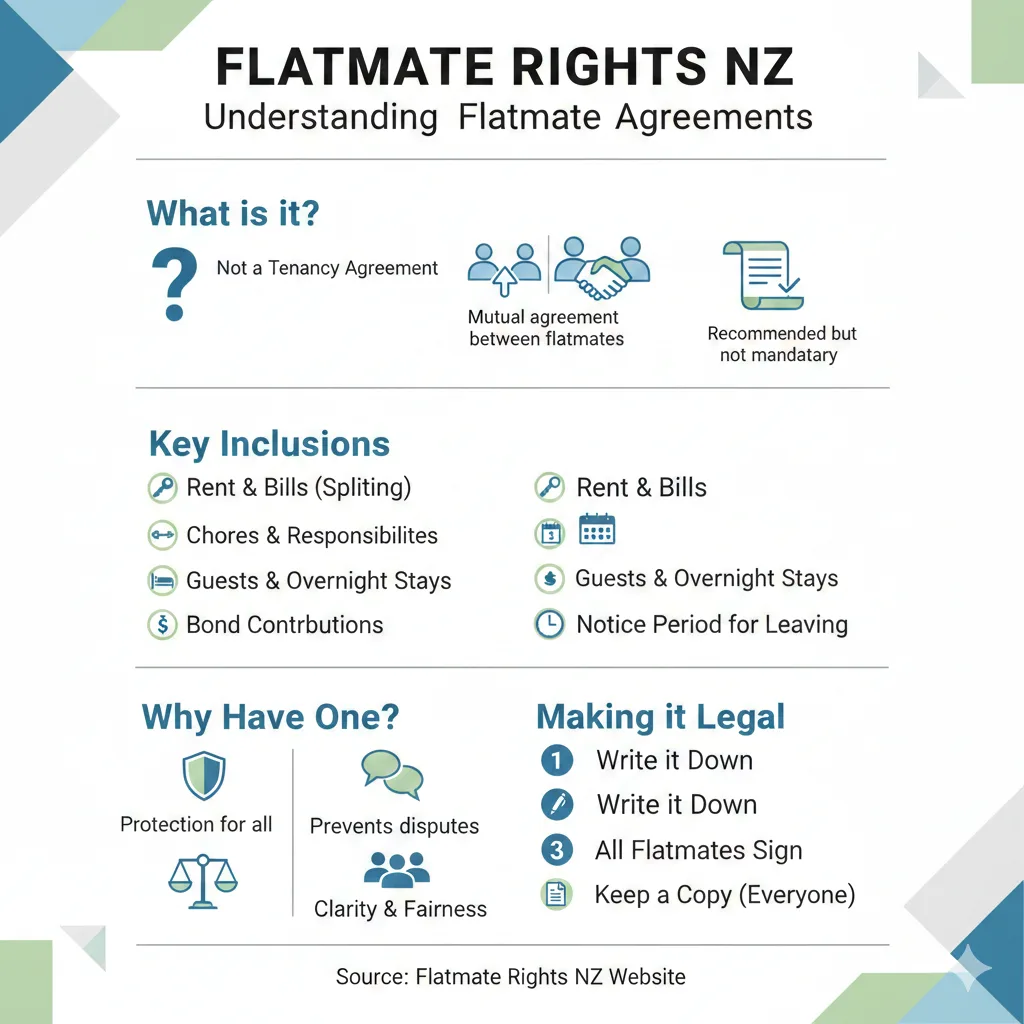
Understanding Flatmate Agreements in New Zealand
Flatmate arrangements in NZ typically fall under two models: the head tenant and flatmate setup or joint tenancy. In a head tenant scenario, one person signs the main tenancy agreement with the landlord, then sublets rooms to flatmates. Joint tenancies mean everyone signs the same agreement with the landlord.
Head Tenant vs Flatmate: Key Differences
- Head tenant responsibilities: Liable for all rent to the landlord, property condition, and Healthy Homes compliance. You can end flatmate agreements with 28 days' notice but must follow RTA rules.
- Flatmate (subtenant) rights: Protected under the RTA as if you were a tenant. You can't be evicted without proper notice, and your bond must be lodged with Tenancy Services.
- Joint tenants: All equally responsible for rent and damages. Any one can end the whole tenancy with notice to the landlord.
Pro tip: Always put your flatmate agreement in writing, even if it's informal. Include rent amounts, bill splits, cleaning rosters, and notice periods. Verbal agreements are valid but hard to prove.
Your Rights as a Flatmate Under the RTA
The Residential Tenancies Act 1986 (updated through 2026) applies to all flat-sharing, whether lawful or not—even granny flats built under the new 2026 exemptions. You can't "contract out" with side agreements; the RTA overrides them.
Right to Quiet Enjoyment and Privacy
Flatmates must respect each other's space. No entering rooms without permission, excessive noise after 10pm, or uninvited guests overstaying. If breached, document incidents and give written notice before escalating to the Tenancy Tribunal.
Rent and Bond Protections
Rent must be agreed upfront and paid on time. Head tenants can't raise rent mid-agreement without notice (60 days for periodic tenancies in 2026). Bonds—up to 4 weeks' rent—must be lodged online with Tenancy Services within 23 working days. Use the bond lodgement service at tenancy.govt.nz to avoid disputes.
| Scenario | Head Tenant Action | Flatmate Remedy |
|---|---|---|
| Late rent | 14 days' written notice to remedy, then 14 days to vacate | Pay up or negotiate payment plan |
| Damage beyond fair wear | Deduct from bond via tribunal order | Dispute at Tenancy Tribunal |
| Unpaid bills | Include in agreement; seek tribunal order | Pay share or face eviction |
Healthy Homes Standards Compliance
From 2026, all rentals (including sublet rooms) must meet Healthy Homes guarantees: heating, insulation, ventilation, moisture, draughts, and drainage. Head tenants are responsible, but flatmates can report non-compliance to the Ministry of Business, Innovation and Employment (MBIE). Fines up to $7,200 per issue apply.
Obligations: What Flatmates Must Do
Rights come with responsibilities. Keep your room clean, pay bills on time, and give proper notice. Under the RTA:
- Pay rent weekly or as agreed—no deductions for "repairs" without consent.
- Keep the property reasonably clean and tidy.
- Report maintenance issues promptly to avoid liability.
- 28 days' written notice to end a fixed-term subtenancy; 21 days for periodic in 2026 updates.
Practical tip: Use apps like Splitwise for bill tracking or Flatmate Finder on Trade Me for vetted sharis. Always check references—ask about payment history and cleanliness.
Common Flatmate Disputes and How to Resolve Them
From Auckland's million-dollar flats to Christchurch student digs, disputes hit hard. Top issues in 2026:
Unpaid Rent or Bills
Send a 14-day remedy notice via email or registered post. If ignored, apply to the Tenancy Tribunal online—free and fast, with hearings within 20 working days. Tribunal orders are enforceable like court judgments.
Property Damage and Cleaning Fights
Conduct joint inspections at move-in and move-out. Take dated photos. For bonds, all parties must sign the 55/14B form or it goes to tribunal. In 2025/26 stats, cleaning disputes made up 25% of claims.
Noisy or Disruptive Flatmates
- Discuss informally first.
- Written warning citing RTA quiet enjoyment.
- 14-day notice to vacate if needed.
- Tribunal for urgent orders (e.g., work orders).
Real Kiwi example: In a 2025 Wellington case, flatmates won $1,200 compensation for a party-loving subtenant after tribunal evidence of noise logs and neighbour complaints.
2026 Updates: Granny Flats and Flatmate Rights
Big changes hit in early 2026: Kiwis can now build granny flats up to 70m² without building or resource consents on residential/rural zones. Saves up to $5,650 and 14 weeks.
But RTA still applies fully—even to these new builds. Must use Licensed Building Practitioners (LBPs), notify council, and comply with Building Code. Check your title for covenants first.
"These exemptions will save New Zealanders up to $5,650 in direct costs when building a granny flat and speed up the process by up to 14 weeks."— RMA Reform Minister Chris Bishop, Beehive.govt.nz
Financial Impacts: Bonds, Rent, and Tax
Flat-sharing helps with KiwiSaver contributions and rent affordability, but watch finances:
- Bond refunds: Automatic if no disputes; otherwise, tribunal within 14 days.
- Tax on rent: Head tenants earning over $200/week from sublets must declare to IRD as income. Use myIR portal.
- WINZ accommodation supplement: Eligible if rent exceeds 25% income; apply via MyMSD.
Disclaimer: This isn't financial advice. Consult IRD, a tenancy adviser, or accountant for your situation.
FAQ: Flatmate Rights NZ
Can I kick out a flatmate immediately for not paying rent?
No, follow 14+14 day notice under RTA. Tribunal for enforcement.
Does the RTA apply to granny flats built in 2026?
Yes, fully—even consent-exempt ones.
What if my flatmate damages my stuff?
Document and claim via bond or tribunal; personal insurance covers belongings.
How much notice for periodic flatmate agreements?
21 days in 2026.
Can landlords interfere in flatmate disputes?
No, unless it affects the main tenancy.
What's the fine for breaching Healthy Homes?
Up to $7,200 per guarantee.
Next Steps for Hassle-Free Flat Living
Armed with this knowledge, you're set to navigate flatmate life like a pro. Download the Tenancy Services app, draft a solid agreement today, and check tenancy.govt.nz for templates. If trouble brews, call 0800 TENANCY or apply online to the tribunal—resolutions average 10 days. For granny flat shares, verify LBP builds and RTA compliance. Happy flatting, Kiwis—may your bonds return intact and your dishes always done.
Need more? Explore our guides on KiwiSaver rentals or WINZ support at lifetimes.co.nz.
Related Articles

Industry Bodies and Professional Associations NZ
Whether you're launching a business, advancing your career, or navigating financial regulations, industry bodies and professional associations in New Zealand offer invaluable support. These organisati...

Emergency Benefit NZ: When You Have No Other Options
When you're struggling financially and don't qualify for other benefits, the Emergency Benefit might be your lifeline. It's a discretionary payment designed for Kiwis in genuine hardship who've exhaus...

Unpaid Internships NZ: Are They Legal?
Unpaid internships are a common pathway for students and graduates to gain work experience in New Zealand, but there's often confusion about whether they're actually legal. The short answer is: unpaid...

Estate Administration NZ: Managing Someone's Affairs After Death
Losing a loved one is one of life's toughest challenges, and stepping in to manage their estate can feel overwhelming. In New Zealand, estate administration—the process of handling someone's affairs a...