Graduate Job Market NZ: Landing Your First Role

Stepping into New Zealand's graduate job market in 2026 feels like timing a wave just right—there's cautious optimism amid recovery signs, but competition is fierce with unemployment at a decade-high...
Sarah covers personal finance, tax, and KiwiSaver topics for Lifetimes NZ. She focuses on making money management straightforward and practical for everyday Kiwis.
Stepping into New Zealand's graduate job market in 2026 feels like timing a wave just right—there's cautious optimism amid recovery signs, but competition is fierce with unemployment at a decade-high 5.4% and applications surging per job ad. As a fresh grad, you're not just competing with fellow Kiwis; offshore talent is flooding in, making standout preparation essential to land that first role.
We've seen job ads dip below pre-COVID levels, yet candidate activity is rising fast, driven by cost-of-living pressures and hopes for better wages. The good news? Early 2026 signals point to a turnaround: GDP growth returning, business investment lifting, and regional hiring ticking up, especially in Auckland and Wellington. This article breaks down the landscape, hot sectors for graduates, and actionable steps tailored for Kiwis to secure your foothold—think CV tweaks, networking hacks, and salary savvy.
Understanding the 2026 Graduate Job Market in New Zealand
New Zealand's labour market is shifting from stagnation to slow recovery after two tough years. Unemployment hit 5.4% in late 2025, the highest in over a decade, reflecting tighter conditions from high interest rates, subdued spending, and sector adjustments. For graduates, this means more applicants per role—TA teams are handling heavier shortlists—but also opportunities as employers stabilise and plan headcount with wage growth easing to around 2%.
National Trends and Regional Hotspots
Growth is uneven: Auckland, driving 38% of GDP, shows early recovery in IT, logistics, and construction after sharp unemployment rises. Wellington faces public sector contraction, while Canterbury and Otago stabilise, and Central North Island surprises with resilience. Taranaki lags, but most regions report job ad upticks.
- Auckland (Tāmaki Makaurau): Strongest shift, with demand rebuilding in professional services and consumer roles.
- Wellington: Policy freezes easing; watch public sector and strategy roles.
- Christchurch/Canterbury: Job ads growing despite employment dips.
- South Island (Otago/Southland): Stabilising, good for agriculture and healthcare.
Graduates should target these areas, using Seek.co.nz or Trade Me Jobs for localised listings. Stats NZ tracks employment rates seasonally adjusted, showing the 15+ cohort's trends—vital for benchmarking your prospects.
Impact of AI and Skill Shifts
AI demand surges in IT, marketing, and strategy, reshaping entry-level expectations. Businesses are early adopters, prioritising capability-building hires over full automation. Graduates with AI literacy—think prompt engineering or data tools—stand out, even if your degree isn't tech-focused.
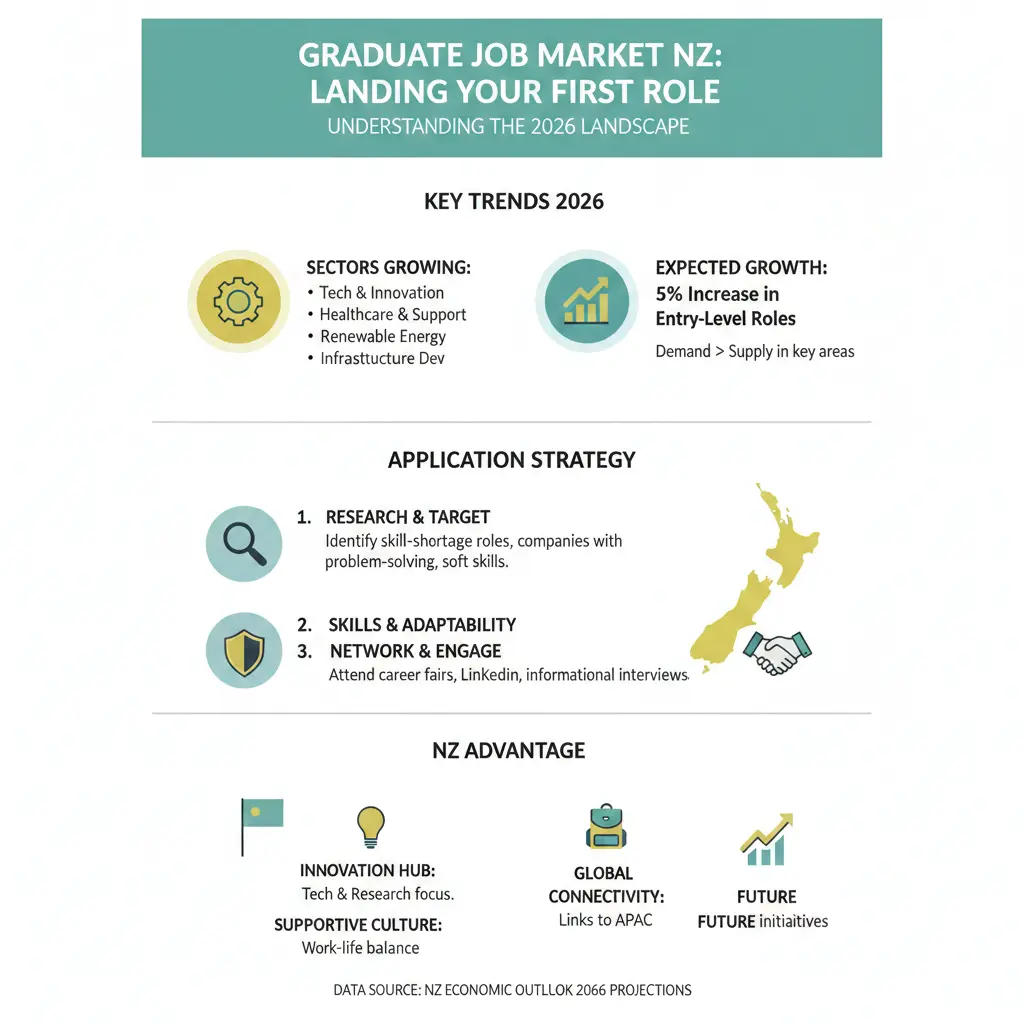
In-Demand Graduate Roles and Sectors for 2026
Healthcare, education, IT, and agriculture lead, per the Green List—Immigration NZ's skill shortage guide offering visa perks for migrants but signaling domestic gaps grads can fill. Hays NZ flags accountants, software developers, and executive assistants as top demands.
Top Sectors and Entry-Level Opportunities
| Sector | Key Graduate Roles | Median Salary (NZD) | Green List Tier |
|---|---|---|---|
| Healthcare | Registered Nurses, Medical Radiation Therapists | 80,000–100,000 | Tier 1 (Straight to Residence) |
| Education | Middle/Secondary Teachers, Educators | 60,000–75,000 | Tier 1/Tier 2 |
| IT & Digital | Software Engineers, Testers, Multimedia Specialists | 124,000 avg. | Tier 1 |
| Agriculture/Forestry | Dairy Farmers, Vets, Arborists | 60,000 | Skill Shortage |
| Professional Services | Accountants, Executive Assistants | 70,000–90,000 | High Demand |
Degrees in nursing, teaching, ICT, or engineering yield strong ROI via post-study work visas. NZ Graduate Outcomes data links qualifications to 30-39-year-old earnings and jobs from 2018 Census—useful for long-term planning.
Finance Angle: Salaries, Taxes, and KiwiSaver
Entry-level pay hovers at 55,000–70,000 NZD, but in-demand fields hit higher. Factor in IRD's 2026 tax thresholds: 10.5% on income up to $15,600, 17.5% to $53,500, etc.—use the tax calculator at ird.govt.nz. (Note: Rates current as of 2026; check IRD for updates.)
Enrol in KiwiSaver immediately—employers match 3% minimum, supercharging savings. WINZ offers jobseeker support if needed, but graduates often qualify for flexible income assistance. ACC covers work injuries from day one.
"Auckland has taken some of the biggest hits this past year, but it’s also where we’re now seeing the earliest signs of recovery." — Kara Smith, NZ Country Manager, Talent International
Strategies to Land Your First Graduate Role
Optimise Your CV and Cover Letter for Kiwi Employers
Tailor to NZ norms: one-page CV, photo optional, focus on achievements with metrics (e.g., "Boosted team efficiency 20% via AI tool"). Highlight internships, uni projects, and soft skills like adaptability—key in AI-evolving roles. Use keywords from job ads for ATS: "graduate accountant Auckland" or "entry-level software developer".
- Quantify uni results: GPA 3.5+ or relevant modules.
- Include volunteer work—Kiwis value community ties.
- Reference referees early; LinkedIn endorsements help.
Master Networking and Job Platforms
LinkedIn is gold: Connect with alumni via NZ uni groups (Otago, Auckland). Attend careers fairs—UniCareers or GradConnection list events. Offshore apps rise, so personalise outreach: "As a recent Victoria grad, I'm keen on your IT trainee role".
Key platforms:
- Seek.co.nz: 70% of listings.
- Trade Me Jobs: Regional focus.
- LinkedIn: 50% graduate hires.
- Government: careers.govt.nz for grad programmes.
Ace Interviews and Negotiate Offers
Behavioural questions dominate: "Tell me about a team challenge". Prep STAR method (Situation, Task, Action, Result). Virtual interviews common; test tech.
Salary negotiation: Research via Hays Salary Guide or Seek. Aim 5–10% above offer, citing skills/market (e.g., "Green List demand justifies 65k"). Don't forget KiwiSaver matching, flexible hours.
Leverage Government Resources and Grad Programmes
Public sector gems: Treasury, MBIE offer structured grad roles. StudyLink alumni tap post-study networks. Immigration.govt.nz Green List aids if skilled migration-relevant, but Kiwis prioritise locals.
Financial Planning for Your First Job
Your first paycheque triggers setup: Register for myIR at ird.govt.nz for PAYE. Budget via apps like PocketSmith—allocate 50% needs, 30% wants, 20% savings (incl. KiwiSaver).
Actionable tips:
- Emergency fund: 3–6 months expenses in high-interest account (e.g., 4–5% rates 2026).
- Student loans: Repay via payroll; use IRD calculator.
- Superannuation: Max KiwiSaver contributions for govt $521/year top-up.
Disclaimer: This isn't personalised financial advice. Consult a certified adviser or visit sorted.org.nz for your situation.
Next Steps to Launch Your Career
Update your LinkedIn today, apply to 5 roles weekly, and network at one event monthly. Track progress in a spreadsheet. With 2026's turnaround underway, persistence pays—many Kiwis land roles within 3–6 months of targeted effort. You've got the degree; now claim your spot in Aotearoa's rebounding economy. Check ird.govt.nz for tax setup and sorted.org.nz for budgeting tools. Kia kaha!
Frequently Asked Questions
Sources & References
-
1
New Zealand hiring market: Workforce outlook for 2026 — www.talentinternational.com
-
2
The 2026 list of most in demand jobs in New Zealand for skilled — www.pssremovals.com
-
3
New Zealand Unemployment Hits Decade High at 5.4%, Signaling a Turning Point — www.doctorsinbusinessjournal.com
-
4
Most In-Demand Jobs In New Zealand 2026 - Hays NZ — www.hays.net.nz
-
5
NZ Graduate Outcomes: Home Page — nzgraduateoutcomes.ac.nz
-
6
Employment rate - Stats NZ — www.stats.govt.nz
Related Articles

Industry Bodies and Professional Associations NZ
Whether you're launching a business, advancing your career, or navigating financial regulations, industry bodies and professional associations in New Zealand offer invaluable support. These organisati...

Emergency Benefit NZ: When You Have No Other Options
When you're struggling financially and don't qualify for other benefits, the Emergency Benefit might be your lifeline. It's a discretionary payment designed for Kiwis in genuine hardship who've exhaus...

Unpaid Internships NZ: Are They Legal?
Unpaid internships are a common pathway for students and graduates to gain work experience in New Zealand, but there's often confusion about whether they're actually legal. The short answer is: unpaid...

Estate Administration NZ: Managing Someone's Affairs After Death
Losing a loved one is one of life's toughest challenges, and stepping in to manage their estate can feel overwhelming. In New Zealand, estate administration—the process of handling someone's affairs a...