Regional NZ Cost of Living: Beyond the Main Cities
If you're considering a move beyond Auckland, Wellington, or Christchurch, you might be surprised at how much your money can stretch in New Zealand's regional centres. While the big cities dominate he...
The Lifetimes NZ editorial team curates, fact-checks, and updates guides on personal finance, property, health, immigration, legal, business, and lifestyle topics relevant to Lifetimes NZ readers. Articles are produced with AI assistance and reviewed by the editorial team before publication.
If you're considering a move beyond Auckland, Wellington, or Christchurch, you might be surprised at how much your money can stretch in New Zealand's regional centres. While the big cities dominate headlines, smaller towns and regional areas offer significantly lower living costs without sacrificing quality of life. Understanding these regional differences is crucial if you're planning a relocation, starting a business, or simply looking to reduce your expenses.
The Cost of Living Reality: Cities vs Regional Areas
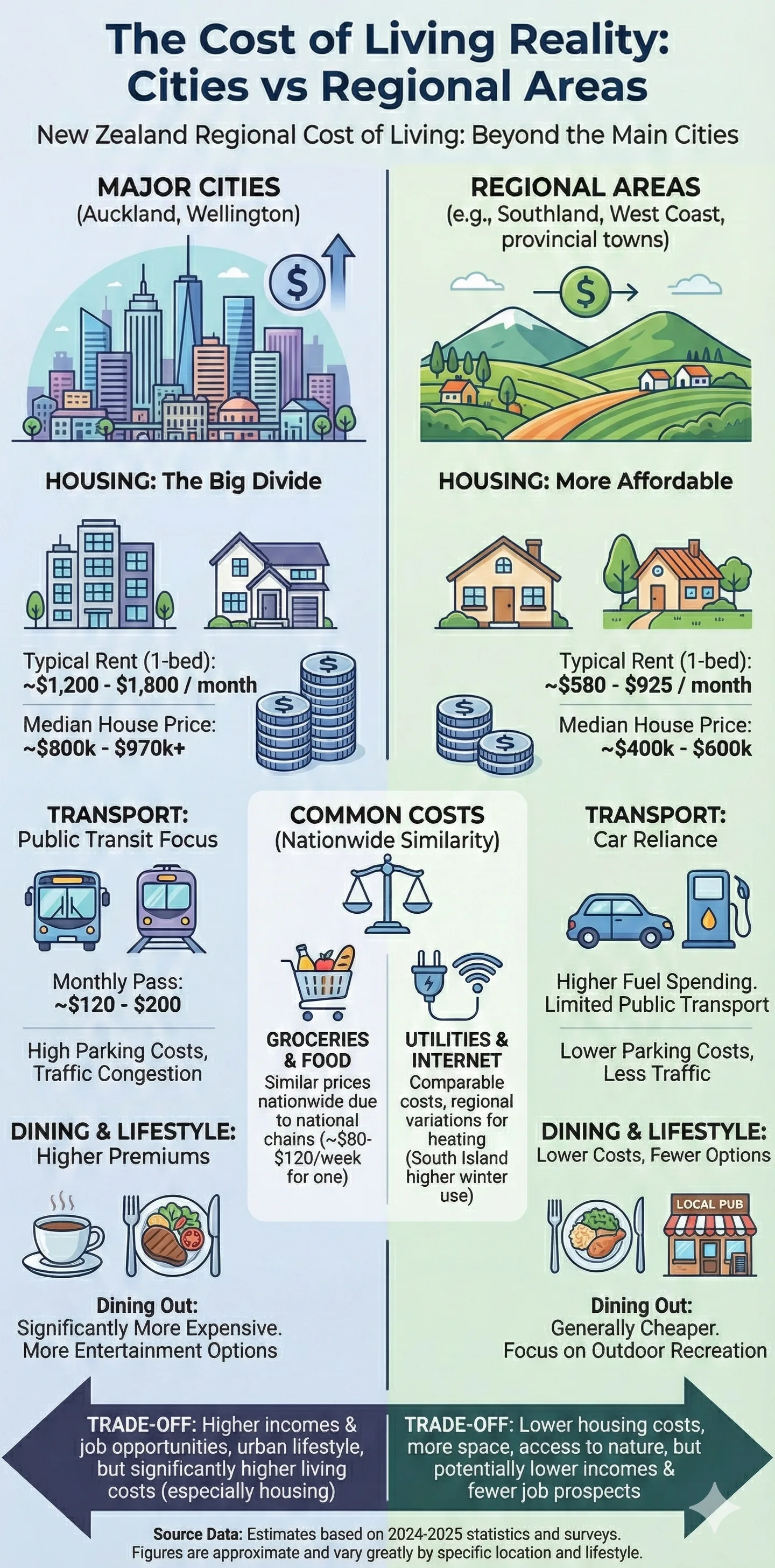
New Zealand's cost of living varies dramatically depending on where you settle. In major cities like Auckland and Wellington, a one-bedroom apartment in the city centre can cost between NZ$1,200 and NZ$1,800 per month, while the same accommodation in Christchurch, Dunedin, or Invercargill ranges from NZ$900 to NZ$1,200. This difference isn't just about rent—it flows through groceries, transport, and entertainment.
For a solo working professional in a medium-cost city, expect monthly expenses between NZ$1,800 and NZ$2,500. However, regional areas can bring this down significantly. The key is understanding which regions offer the best value for your lifestyle and work situation.
Regional Centres Worth Considering
Dunedin: Student-Friendly and Affordable
Dunedin consistently ranks as one of New Zealand's most affordable cities. University halls and dorms cost between NZ$200 and NZ$320 per week, while shared flats run NZ$140 to NZ$280 weekly. This makes it particularly attractive for students and young professionals. The city's vibrant cultural scene, home to the University of Otago, means there's plenty of entertainment without breaking the bank.
Palmerston North: Hidden Gem for Families
Located on the North Island, Palmerston North offers exceptional value. The average cost of living ranges from NZ$1,230 to NZ$1,500 per person—about 65% lower than Wellington, New Zealand's most expensive city. The city boasts more cafes and restaurants per capita than anywhere else in the country, excellent schools, and peaceful green spaces. It's also home to Massey University, one of the country's leading institutions for higher education.
A three-bedroom apartment in the city centre costs NZ$1,600 to NZ$1,910 per month, compared to NZ$2,330 to NZ$2,850 in Wellington. That's a saving of around NZ$400 to NZ$1,000 monthly on accommodation alone.
Invercargill: New Zealand's Most Affordable City
Invercargill, located at the bottom of the South Island, offers some of the lowest living costs in the country. Rent for a one-bedroom apartment typically falls between NZ$900 and NZ$1,200 per month. While it's more remote, the cost savings and tight-knit community appeal to many Kiwis seeking a slower pace of life.
New Plymouth and Regional Taranaki
New Plymouth offers more affordable living conditions with significantly lower rent than major cities and reduced commuting costs due to shorter travel distances. The region appeals to young families, workers seeking lower costs, and those wanting to maintain a strong lifestyle without the expense of urban centres.
Breaking Down Regional Living Costs
Accommodation: The Biggest Expense
Housing is typically the largest part of your cost of living. In regional areas, you'll find:
- Shared flats: NZ$140 to NZ$280 per week (most common and affordable)
- Homestay: NZ$300 to NZ$500 per week (often includes meals and utilities)
- Private studio or apartment: NZ$350 to NZ$550+ per week (most expensive, full independence)
In New Zealand, rent is typically charged weekly, and you may be charged up to four weeks of rent as a bond (rental deposit). This is important to budget for when planning your move.
Food and Groceries
Food costs vary between regions. In smaller centres, groceries are often cheaper than in major cities, though imported goods may cost more due to New Zealand's remote location and small population. Budget around NZ$320 to NZ$480 monthly for food and groceries if you're cooking at home.
You can buy basic groceries from most dairies (New Zealand convenience stores), or get specialty, organic, or discounted food from smaller supermarkets. Prices vary depending on the food type and availability in your region.
Utilities and Services
Monthly utilities (electricity, water, and gas) typically cost NZ$150 to NZ$250, while internet and mobile services run NZ$100 to NZ$150. In regional areas, you may find slightly lower utility costs, though this varies by location.
Transport
Public transport is popular in New Zealand, and most regions have dedicated transport cards that are cheaper than paying cash. Monthly transport passes typically cost NZ$120 to NZ$180. Regional areas often have shorter commute distances, reducing overall transport expenses. Many regions also offer discounts for students, seniors, children, and people with disabilities.
Monthly Budget Examples for Regional Living
Based on current 2026 data, here's what you might expect monthly in a regional centre:
- Accommodation (shared flat or regional hall): NZ$600 to NZ$1,200
- Food and groceries (cooking at home): NZ$320 to NZ$480
- Utilities (electricity, water, gas): NZ$150 to NZ$250
- Internet and mobile: NZ$100 to NZ$150
- Local transport (monthly pass): NZ$120 to NZ$180
- Personal expenses (entertainment, books, hobbies): NZ$200 to NZ$300
Total estimated monthly cost: NZ$1,590 to NZ$2,560
This is significantly lower than major cities, particularly when accommodation costs are reduced.
Buying Property in Regional New Zealand
If you're considering purchasing a home, regional areas offer substantial savings. Median home prices in Auckland frequently exceed NZ$700,000, while Wellington and Queenstown follow closely behind. However, smaller cities offer more attainable prices, often between NZ$400,000 and NZ$600,000.
Additional costs to consider include mortgage interest, home insurance, and annual council rates. Many migrants wait several years before purchasing because it takes time to understand which region suits their budget, work life, and lifestyle.
It's worth noting that generally, only residents and citizens can buy homes in New Zealand. If you're an expat, you'll need to understand visa requirements and residency status before committing to property purchase.
Why Regional Areas Make Financial Sense
Beyond the obvious cost savings, regional New Zealand offers several advantages:
- Lower housing costs: Rent and property prices are significantly cheaper, freeing up budget for other priorities
- Reduced commute times: Shorter travel distances mean lower transport costs and more time for personal pursuits
- Quality of life: Many regional centres offer excellent schools, green spaces, and tight-knit communities
- Employment opportunities: Growing sectors in regions like Taranaki (energy, agriculture) and Otago (tourism, education) provide diverse job prospects
- Less competition: Some regional areas have skills shortages, potentially offering better employment prospects and negotiating power
Practical Tips for Moving to Regional New Zealand
- Visit before you move: Spend time in your chosen region to understand the lifestyle, job market, and community
- Check employment prospects: Ensure there are job opportunities in your field before relocating. Use websites like Seek.co.nz and Trade Me Jobs to research regional employment
- Understand transport links: Research public transport options and travel times to larger centres if you need regular access to city services
- Connect with local communities: Join online groups and forums to understand what living in the region is really like
- Budget for seasonal variations: Some regional areas have seasonal tourism or agricultural patterns that may affect costs and employment
- Factor in healthcare access: Research local medical facilities and whether you'll need to travel for specialist services
Frequently Asked Questions
Is it cheaper to live in regional New Zealand than major cities?
Yes, significantly. Regional centres like Palmerston North are about 65% cheaper than Wellington, with lower rent, similar grocery prices, and reduced transport costs. Even smaller cities like Dunedin and Invercargill offer substantial savings compared to Auckland and Wellington.
What's the cheapest region to live in New Zealand?
Invercargill and Dunedin are among the most affordable, with one-bedroom apartments costing between NZ$900 and NZ$1,200 per month. Palmerston North also offers exceptional value at NZ$1,230 to NZ$1,500 per person monthly.
Can I still find good employment in regional areas?
Many regional areas have growing job markets, particularly in agriculture, tourism, healthcare, and education. However, some specialist roles may only be available in major cities. Research your industry's presence in your chosen region before moving.
Are utilities and groceries cheaper in regional areas?
Utilities are often similar across regions, but groceries can vary. While locally produced goods may be cheaper, imported items can cost more due to New Zealand's remote location and small population. Regional dairies and supermarkets may offer different pricing than city chains.
What should I budget for if I'm moving to a regional centre?
Plan for NZ$1,590 to NZ$2,560 monthly in a regional centre, covering accommodation, food, utilities, transport, and personal expenses. This is lower than major cities, but your actual costs will depend on your lifestyle and the specific region.
Can expats buy property in regional New Zealand?
Generally, only residents and citizens can buy homes in New Zealand. If you're an expat, you'll need to establish residency first. Consult with Immigration New Zealand (immigration.govt.nz) about visa and residency options relevant to your situation.
Making Your Regional Move
Moving to regional New Zealand can significantly reduce your cost of living while improving your quality of life. Whether you're drawn to Dunedin's student culture, Palmerston North's family-friendly environment, or the affordability of Invercargill, regional centres offer genuine alternatives to expensive major cities.
Start by researching your chosen region thoroughly—visit if possible, connect with local communities online, and ensure employment prospects align with your career goals. Use official resources like Immigration New Zealand (immigration.govt.nz) for visa and residency information, and check Trade Me Property and Seek.co.nz for rental and employment opportunities.
The key to successful regional living is planning ahead. Understand your budget, research your chosen area, and connect with the local community before making the move. With careful planning, you'll find that regional New Zealand offers not just lower costs, but a rewarding lifestyle that many Kiwis wouldn't trade for anything.
Related Articles

Industry Bodies and Professional Associations NZ
Whether you're launching a business, advancing your career, or navigating financial regulations, industry bodies and professional associations in New Zealand offer invaluable support. These organisati...

Emergency Benefit NZ: When You Have No Other Options
When you're struggling financially and don't qualify for other benefits, the Emergency Benefit might be your lifeline. It's a discretionary payment designed for Kiwis in genuine hardship who've exhaus...

Unpaid Internships NZ: Are They Legal?
Unpaid internships are a common pathway for students and graduates to gain work experience in New Zealand, but there's often confusion about whether they're actually legal. The short answer is: unpaid...

Estate Administration NZ: Managing Someone's Affairs After Death
Losing a loved one is one of life's toughest challenges, and stepping in to manage their estate can feel overwhelming. In New Zealand, estate administration—the process of handling someone's affairs a...