Trial Periods vs Probation: Know the Difference

Starting a new job in New Zealand often comes with some uncertainty—for both employers and employees. You've likely seen job ads mentioning "90-day trial" or "probation period," but do you know the re...
The Lifetimes NZ editorial team curates, fact-checks, and updates guides on personal finance, property, health, immigration, legal, business, and lifestyle topics relevant to Lifetimes NZ readers. Articles are produced with AI assistance and reviewed by the editorial team before publication.
Starting a new job in New Zealand often comes with some uncertainty—for both employers and employees. You've likely seen job ads mentioning "90-day trial" or "probation period," but do you know the real differences? Understanding trial periods vs probation can protect your rights, help you negotiate better terms, and avoid nasty surprises. With changes to the law in late 2023 allowing all employers to use trial periods, it's more important than ever for Kiwis to get this right.
In this guide, we'll break down the key distinctions, legal requirements, and practical tips tailored to New Zealand's employment landscape. Whether you're job hunting in Auckland, setting up a small business in Wellington, or switching roles in Christchurch, knowing these rules ensures you're on solid ground from day one.
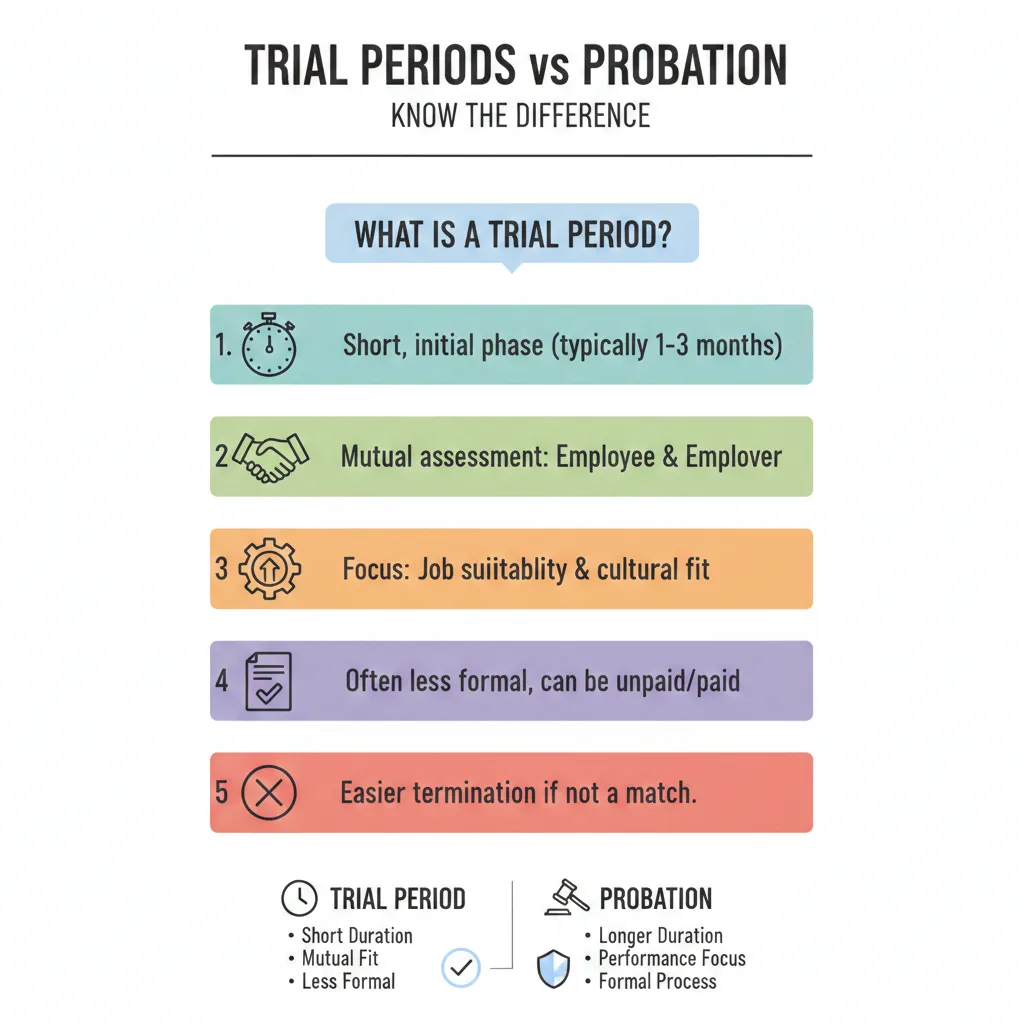
What is a Trial Period?
A trial period lets employers assess a new employee's suitability for up to 90 calendar days from the start of employment. It's a powerful tool, especially since December 2023, when the restriction limiting it to businesses with fewer than 20 employees was lifted—now any size employer can use it.
Key Rules for Trial Periods
To be valid, a trial period must tick these boxes:
- Agreed in writing in the employment agreement before the employee starts work. Verbal agreements don't count.
- Last no longer than 90 days (it can be shorter, like 30 days, but must specify the exact length).
- Only for completely new employees—no prior work with that employer, even casually.
- Include a notice period for dismissal during the trial.
- The employee gets full employee rights, like annual leave, sick leave, and KiwiSaver contributions.
During a trial, employers can dismiss without reason or following a full process, and the employee can't raise a personal grievance for unjustified dismissal. However, protections against discrimination or harassment still apply—you can challenge those.
Example: Trial Period in Action
Imagine you're hired as a barista at a Kiwi café in Dunedin. Your contract states a 90-day trial. If it's not a good fit after 60 days, your boss gives notice per the agreement, and that's it—no appeal on dismissal grounds. But if they dismiss you for your age or gender, that's a personal grievance you can pursue via Employment NZ.
What is a Probationary Period?
A probationary period is a flexible assessment phase, usually at the start of employment, to evaluate skills and fit. Unlike trials, it's not a "get out free" card for employers—they must follow fair dismissal processes.
Key Rules for Probationary Periods
Probation periods offer more employee protections but require careful handling:
- No fixed maximum length—can be any reasonable time agreed in writing (e.g., 3-6 months for complex roles).
- Must be clearly stated in the employment agreement, including duration and what happens at the end (e.g., confirmation, extension, or termination).
- Can apply to new hires or existing employees in new roles.
- Employers must give a good reason for dismissal and a fair chance to improve—full disciplinary process applies.
- Cannot follow a trial period in the same role.
Employees retain all rights, including personal grievances for unjustified actions.
Example: Probation Period in Action
Say you're promoted to team leader at a Hamilton manufacturing firm. Your contract includes a 6-month probation. If performance lags, your employer must discuss issues, set goals, and give warnings before dismissal. Skip that, and you could claim unjustified dismissal at the Employment Relations Authority.
Trial Periods vs Probation: Side-by-Side Comparison
Confused? Here's a clear breakdown of trial periods vs probation to help you spot the differences at a glance.
| Feature | Trial Period | Probationary Period |
|---|---|---|
| Maximum Length | 90 days max | No fixed limit (reasonable duration) |
| Who It's For | New employees only (no prior work) | New or existing employees in new roles |
| Dismissal Process | No reason needed; no personal grievance for dismissal | Good reason + fair process required; personal grievance possible |
| Must Be in Contract? | Yes, before start date | Yes, clearly stated |
| Employee Rights | Full rights (leave, etc.), but limited dismissal protection | Full rights + dismissal protections |
| Available to All Employers? | Yes, since Dec 2023 | Yes |
This table highlights why trial periods suit high-risk hires, while probation offers balanced assessment.
Recent Legal Changes: What Kiwis Need to Know in 2026
The big shift came on 23 December 2023: trial periods opened to all employers, removing the under-20-employee cap. As of 2026, this remains in force, giving small businesses like family-run dairies or tech startups equal footing with corporates.
Courts have ruled invalid trials where agreements weren't signed pre-start, periods exceeded 90 days (e.g., "3 months" became 91 days), or terms said "probation" instead of "trial." Always check your contract against Employment NZ guidelines.
Rights and Responsibilities During These Periods
For Employees
- Review the clause carefully—seek advice from Employment NZ or a union before signing.
- Track your start date; trials can't be backdated.
- You're entitled to holidays, sick pay, and ACC coverage from day one.
- If dismissed unfairly (e.g., discrimination), contact Employment NZ within 90 days.
For Employers
- Act in good faith—don't misuse trials to dodge processes.
- Provide training and feedback to set employees up for success.
- Can't extend trials; decide before day 90.
- Document everything for probation dismissals.
Practical Tips for New Zealand Job Seekers and Employers
For Job Hunters: Negotiate shorter trials if possible, or opt for probation if you value protections. Use tools like the Employment NZ agreement builder. In high-demand sectors like construction or hospitality, leverage skills to push for no trial.
For Employers: For roles needing longer ramps (e.g., nursing), pair probation with performance plans. In 2026's tight labour market, clear communication retains talent—Stats NZ reports ongoing skills shortages in IT and trades.
Actionable Steps:
- Read every contract line—highlight trial/probation clauses.
- Get free advice: Call Employment NZ at 0800 20 90 20.
- Keep records of feedback and performance.
- If issues arise, mediate first via Employment Mediation Services.
"Trial periods must be exercised in good faith." – Employment NZ
FAQ: Trial Periods vs Probation
1. Can I be put on a trial if I've worked for the employer before?
No, trials are strictly for new employees only.
2. What if my contract says "probation" but acts like a trial?
It's invalid as a trial—full protections apply. Courts have ruled this way.
3. Do I get holiday pay during a trial?
Yes, full entitlements from day one.
4. How long can probation last?
As long as reasonable and agreed—e.g., 3-12 months for senior roles.
5. What happens after 90 days on trial?
You become permanent unless dismissed beforehand.
6. Can trials be used in 2026?
Yes, available to all employers since 2023 changes.
Next Steps to Protect Yourself
Armed with this knowledge, review your next contract closely. Download a sample from Employment NZ, consult a community law centre, or chat with a careers advisor via Careers.govt.nz. Employers, update your templates to comply. If wronged, don't delay—file with Employment NZ promptly. Knowledge is your best defence in Kiwi workplaces.
Disclaimer: This is general info, not advice. Consult a lawyer or Employment NZ for your situation.
Useful Tools
Related Articles

Industry Bodies and Professional Associations NZ
Whether you're launching a business, advancing your career, or navigating financial regulations, industry bodies and professional associations in New Zealand offer invaluable support. These organisati...

Emergency Benefit NZ: When You Have No Other Options
When you're struggling financially and don't qualify for other benefits, the Emergency Benefit might be your lifeline. It's a discretionary payment designed for Kiwis in genuine hardship who've exhaus...

Unpaid Internships NZ: Are They Legal?
Unpaid internships are a common pathway for students and graduates to gain work experience in New Zealand, but there's often confusion about whether they're actually legal. The short answer is: unpaid...

Estate Administration NZ: Managing Someone's Affairs After Death
Losing a loved one is one of life's toughest challenges, and stepping in to manage their estate can feel overwhelming. In New Zealand, estate administration—the process of handling someone's affairs a...