Employment Law 101: Annual Leave; Sick Pay; and Your Rights

Ever wondered if you're getting the annual leave or sick pay you're entitled to? As Kiwis, we all deserve fair treatment at work, but navigating employment law can feel like a maze—especially with big...
Priya writes about immigration pathways, job searching, and building a career in New Zealand. She covers visa options, CV writing, interview preparation, and workplace culture for newcomers and locals alike.
Ever wondered if you're getting the annual leave or sick pay you're entitled to? As Kiwis, we all deserve fair treatment at work, but navigating employment law can feel like a maze—especially with big changes on the horizon for 2026. Whether you're clocking full-time hours or juggling a casual gig, knowing your rights to annual leave, sick pay, and more keeps you protected and empowered.
This guide breaks it down simply, with practical tips tailored for New Zealand workplaces. From current rules under the Holidays Act 2003 to the upcoming Employment Leave Act, we'll cover what you need to know right now and how to prepare for the shifts ahead.
Current Annual Leave Rules: What You're Entitled To Today
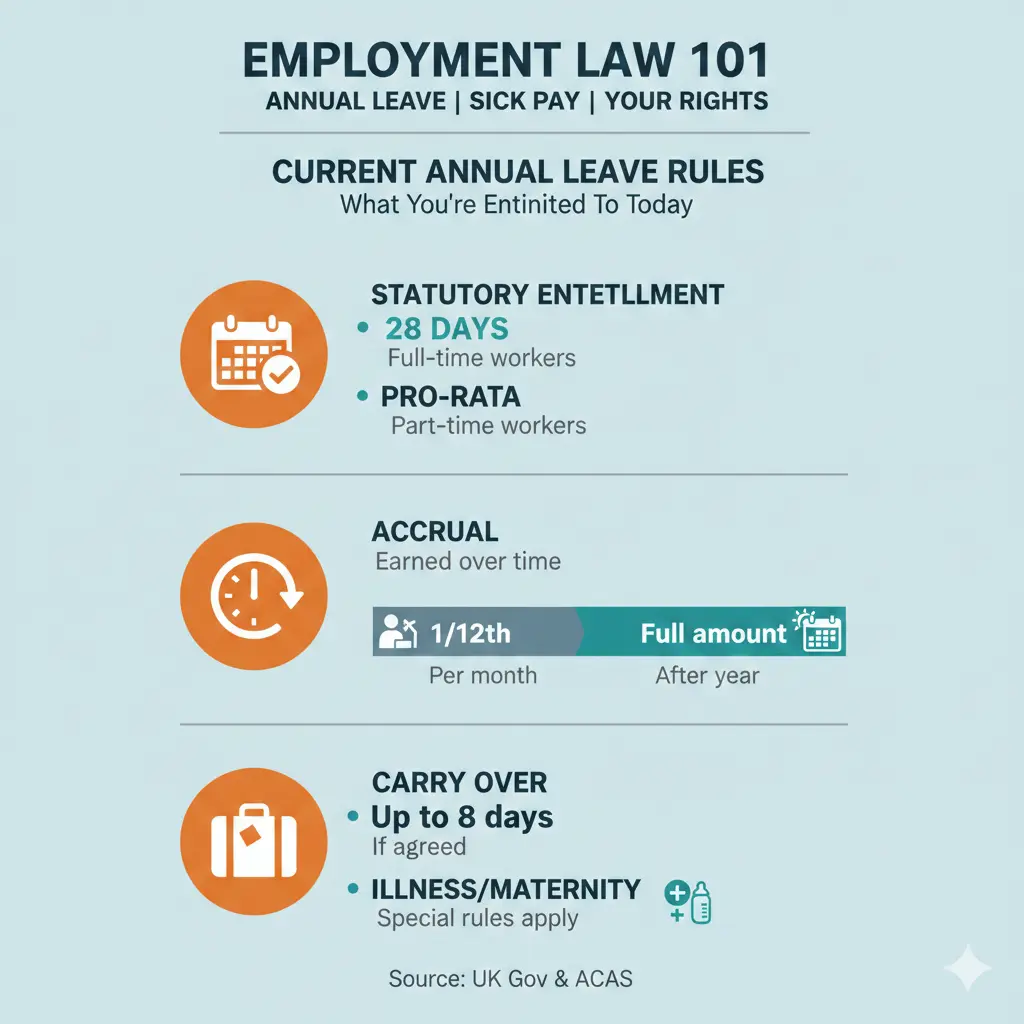
Right now, under the Holidays Act 2003, most employees get at least 4 weeks' paid annual holidays after 12 months of continuous employment. This kicks in on your work anniversary, unless your employer offers leave in advance—which many do to keep things flexible.
How Annual Leave Accrues
- If you work regular hours (full-time or part-time), you build up 4 weeks over the year, either as a lump sum on your anniversary or accrued gradually.
- Your employment agreement must spell out your entitlement—check it first.
- Annual closedowns? Employers can require you to use some leave during shutdowns, but they must pay you for it.
For example, if you're a barista in Auckland working 40 hours a week, that's 160 hours of paid leave per year (4 weeks x 40 hours). Keep records of your balance—employers must too.
Taking Your Annual Leave
You can request leave anytime, but employers get the final say on timing to avoid business disruption. If things go south, you might get paid out instead—typically at your average weekly earnings over the last 12 months.
Pro tip: Always put requests in writing and track approvals. If denied unfairly, chat to your employer or contact Employment New Zealand for free advice.
Sick Leave (Sick Pay) Under Current Law
Sick leave lets you take paid time off for illness, injury, or caring for family—up to 10 days per year after 6 months on the job. It's not unlimited, but it's a lifeline for when life's curveballs hit.
Who Qualifies and How Much?
- Full- and part-timers with 6+ months' service get 10 working days.
- Casual workers? No automatic entitlement, but check your agreement—some include it.
- Pay rate: Based on your ordinary pay, including fixed allowances.
Say you're a nurse in Christchurch with the flu: Use your 10 days without worry. It doesn't accrue beyond the year, so use it or lose it.
Note: ACC covers work-related injuries separately—don't dip into sick leave for those.
Big Changes Coming: The Employment Leave Act 2026
Exciting (and simplifying) reforms are underway. The Government plans to repeal the Holidays Act 2003 with a new Employment Leave Act, introducing draft legislation early 2026. Expect a 24-month transition once passed, giving employers time to update payrolls and agreements.
Annual Leave Revolution
Key shifts include:
- Accrues from day one in hours (0.0769 hours per contracted hour worked—equalling 4 weeks for steady hours).
- Take part-days off using accrued hours, perfect for variable rosters.
- No accrual during unpaid leave or ACC periods, but yes during paid parental/jury leave.
- Paid at your base hourly rate on the day taken, plus fixed allowances.
This means a new starter in Wellington could take a sick half-day after a few weeks, based on hours earned.
Sick Leave Overhaul
- Accrues continuously from day one, proportional to contracted hours.
- Also in hours, for flexible use—even part-days.
- Total value bundled into casual pay (see below).
Casual and Extra-Hours Workers
No more 8% holiday pay add-on. Instead, a 12.5% leave compensation payment every pay period on ordinary hourly wages—covering annual/sick leave value (7.69% + 3.85%, plus extras for casual insecurity). This simplifies things for zero-hour contracts common in hospitality.
Other Updates
- Public/alternative holidays: Hours-based, clearer "would you have worked?" test.
- Bereavement/family violence leave from day one.
- Parental leave annual pay at full rate.
Action for Kiwis: Review your agreement now. Employers must update systems during the transition—ask about training or MBIE resources.
Your Rights: Knowing When to Stand Up
Employment law protects you from dodgy practices. Employers must keep accurate leave records—if they don't, it's a breach.
Common Pitfalls and Fixes
- Not paid correctly? Use the Employment NZ calculator or call 0800 20 90 20.
- Disputes? Start with mediation via MBIE; escalate to the Employment Relations Authority if needed.
- Casual confusion? Demand your 12.5% once changes hit—it's mandatory.
For personalised help, visit employment.govt.nz or your union.
Practical Tips for Managing Leave in NZ Workplaces
- Track everything: Use apps like leave trackers or your payroll portal.
- Plan ahead: Request leave early, especially around closedowns.
- KiwiSaver link: Leave doesn't pause contributions—stay on top via IRD.
- Remote work? Same rules apply; rosters clarify "contracted hours."
- Prepare for 2026: Discuss with your boss—transition affects everyone.
Next Steps: Take Control of Your Leave Rights
Grab your employment agreement, check your leave balance, and bookmark employment.govt.nz. With 2026 reforms simplifying annual leave and sick pay, now's the time to chat with your employer or HR. Stay informed via MBIE updates, and if something feels off, you've got rights—use them. Here's to more beach days and fewer worries at work!
Frequently Asked Questions
Sources & References
-
1
A new era for leave entitlements in New Zealand - Deloitte — www.deloitte.com
-
2
What 2026 holds for employment law - Lane Neave lawyers — www.laneneave.co.nz
- 3
-
4
Significant changes in New Zealand employment law landscape - Buddle Findlay — www.buddlefindlay.com
-
5
Annual holidays - Employment.govt.nz — www.employment.govt.nz
-
6
How many annual holidays you get - Govt.nz — www.govt.nz
-
7
PeopleSoft HCM Global Payroll New Zealand - Holidays Act Reform — blogs.oracle.com
-
8
Holidays Act to be replaced - MBIE — www.mbie.govt.nz
Related Articles
Minimum Wage 2026: Your Rights and What You Should Be Paid
Imagine clocking in for your shift at the local café in Auckland, only to realise your pay slip doesn't match what the law says you should be earning. For around 122,500 Kiwis living on or near the mi...

Public Holidays NZ 2025: Your Rights and Pay
If you're working in New Zealand, understanding your public holiday rights is crucial—it affects your pay, your time off, and your work-life balance. Whether you're an employee wondering how much you'...

Minimum Wage NZ 2025: Current Rates and Your Rights
Imagine clocking in for your shift, working hard all day, only to realise your pay slip doesn't add up. For Kiwis relying on the minimum wage NZ 2025, knowing your rights isn't just smart—it's essenti...

Disputes with Employers: How to Handle Workplace Issues
Imagine clocking in for your shift only to face unfair treatment, unpaid wages, or a boss who ignores your concerns. For Kiwis, workplace disputes with employers are more common than you might think,...