Vaccinations NZ: Schedule Costs and Adult Boosters

Ever wondered if you're up to date with your vaccinations or how much that booster might set you back? In New Zealand, staying immunised isn't just about protecting yourself—it's a smart financial mov...
The Lifetimes NZ editorial team curates, fact-checks, and updates guides on personal finance, property, health, immigration, legal, business, and lifestyle topics relevant to Lifetimes NZ readers. Articles are produced with AI assistance and reviewed by the editorial team before publication.
Ever wondered if you're up to date with your vaccinations or how much that booster might set you back? In New Zealand, staying immunised isn't just about protecting yourself—it's a smart financial move too, with many vaccines fully funded through our public health system, saving Kiwis thousands over a lifetime.
From free childhood jabs to adult boosters like shingles and whooping cough, understanding the Vaccinations NZ: Schedule Costs and Adult Boosters helps you plan ahead, avoid unnecessary costs, and keep your whānau safe. With 2026 rates and eligibility in mind, here's everything you need to know, including where to access free options via Te Whatu Ora and Pharmac-funded schedules.
The National Immunisation Schedule for Children in New Zealand
Our National Immunisation Schedule (NIS) is designed to provide lifelong protection against serious diseases, starting from pregnancy right through to older age. It's fully funded for eligible children under 18, meaning no cost for the vaccine itself—though some providers may charge a small administration fee.
The schedule is timed for the best immune response, covering killer bugs like measles, whooping cough, and meningococcal disease. Parents can track progress via the free Well Child Tamariki Ora health book or online portals through Plunket and Te Whatu Ora.
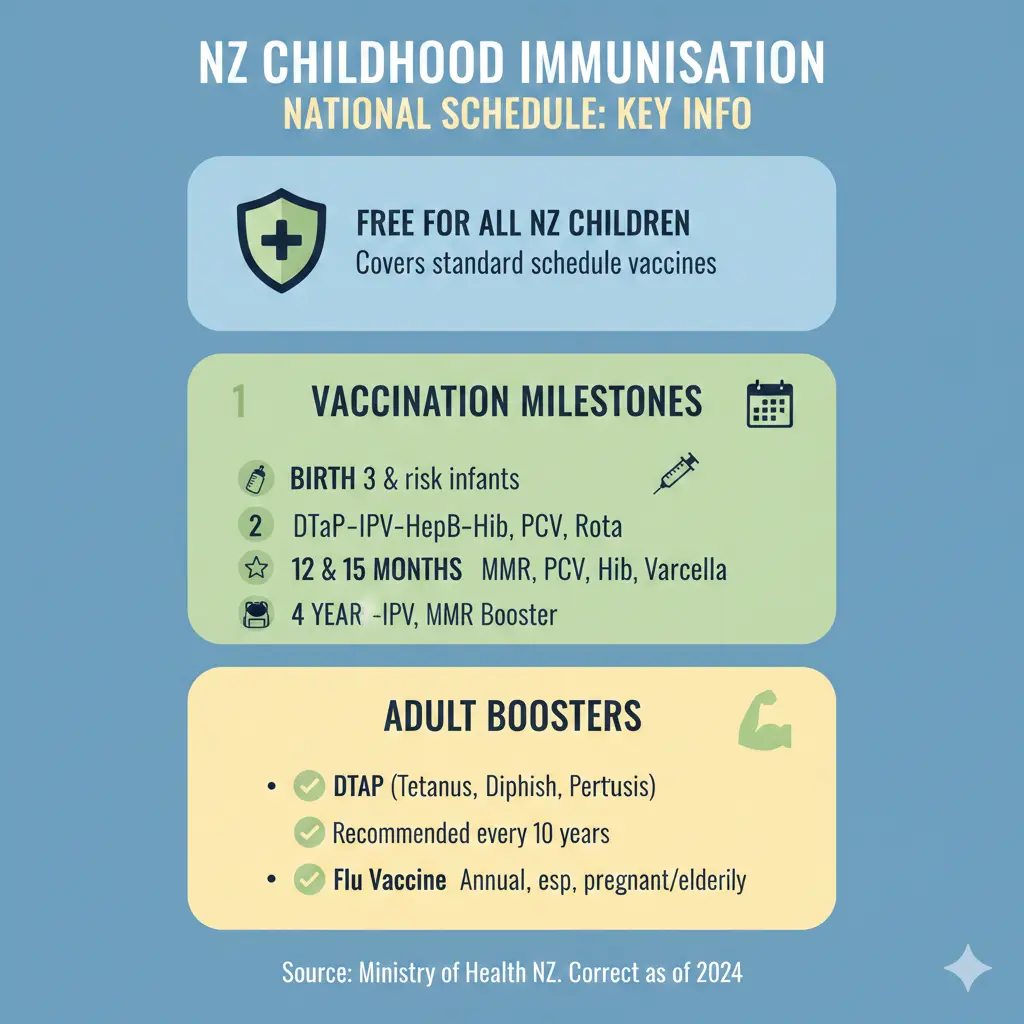
Key Milestones in the Childhood Schedule
- Pregnancy: Tetanus + diphtheria + whooping cough (pertussis) to protect newborns.
- 6 weeks: Rotavirus (first dose before 15 weeks), Diphtheria + tetanus + whooping cough + polio + hepatitis B + Hib, Pneumococcal disease.
- 3 months: Rotavirus (second dose before 25 weeks), Diphtheria + tetanus + whooping cough + polio + hepatitis B + Hib, Meningococcal B (from 8 weeks).
- 5 months: Diphtheria + tetanus + whooping cough + polio + hepatitis B + Hib, Pneumococcal disease, Meningococcal B (from 4 months).
- 12 months: Measles + mumps + rubella (MMR), Pneumococcal disease (Prevenar 13®), Meningococcal B (Bexsero®).
- 15 months: MMR, Chickenpox (varicella).
- 4 years: Diphtheria + tetanus + whooping cough + polio.
- 9-13 years: Human papillomavirus (HPV, 2 doses 6 months apart), Tetanus + diphtheria + whooping cough (from 11 years).
Missing a jab? Catch-up programmes are funded for kids up to 18 with incomplete histories. Vaccinators use brands like Infanrix-Hexa up to 10 years old, and live vaccines must be spaced 4 weeks apart or given same-day. Check eligibility at your local hauora provider—no referral needed for most.
Adult Boosters: What's Free and When to Get Them
As adults, we don't outgrow the need for boosters. The Immunisation Handbook outlines funded options to combat waning immunity, especially against tetanus, pertussis, and shingles. In 2026, Pharmac continues funding key adult vaccines via the Schedule, saving you $200–$500 per dose on private market prices.
Adults born on or after 1 January 1969 without two MMR doses should get them free (administration fee may apply). It's safe to revaccinate even if unsure of history.
Core Adult Boosters and Costs
| Vaccine | Recommended Age/Frequency | Funded? (2026) | Private Cost Estimate |
|---|---|---|---|
| Tetanus + diphtheria + whooping cough (Boostrix®) | Every 10 years; free from 45 or 65 years, or dirty wounds | Yes, if eligible | $100–$150/dose |
| Influenza (flu) | Annually from April, all adults | Yes, for high-risk or free clinics | $30–$50 |
| Shingles (Shingrix®, 2 doses 2–6 months apart) | From 50; free at 65 (for 12 months) or immunocompromised | Yes, if eligible | $300–$400/course |
| COVID-19 booster | Over 30: every 6 months post-vaccine/infection | Yes, for eligible | N/A (funded) |
| HPV | Catch-up to 26 if missed | Funded for some | $200+/dose |
Pro tip: If you're pregnant or around newborns, prioritise the free pertussis booster—it's a game-changer for family protection. For travel or work, check Immigration NZ or employer requirements; some visas mandate proof of vaccination.
Vaccination Costs in NZ: What's Free vs Paid
Thanks to Pharmac and Te Whatu Ora, most NIS vaccines are fully funded—no copays for eligible Kiwis. Children get everything free until 18, including catch-ups. Adults access boosters via GPs, pharmacies (for flu), or free clinics at marae and community hauora.
Hidden costs to watch:
- Administration fees: $20–$40 per jab at private practices (waived at public clinics).
- Private vaccines: Shingles before 65 or non-funded options like travel jabs ($150+ each).
- Overseas records: Free review by a vaccinator to avoid duplicates.
Budgeting tip: Factor vaccinations into your annual health spend alongside KiwiSaver contributions or ACC levies. High-risk groups (e.g., immunocompromised) qualify for extra funded doses—register via your GP for My Health Record updates.
How Funding Works Through Pharmac and Te Whatu Ora
Pharmac's Pharmaceutical Schedule lists funded vaccines like Bexsero® and Infanrix, updated quarterly. Te Whatu Ora's Immunisation Handbook (2025 v4) guides providers on co-administration to minimise visits. In 2026, expect flu campaigns from April with mobile units in rural areas like the West Coast.
Catch-Up Vaccinations: No Matter Your Age
Unknown history? No problem—funded catch-ups follow age-specific rules. Kids use Infanrix-IPV up to 10 years; adults get boosters every 10 years. Start at your GP or call Healthline (0800 611 116) for a free assessment.
For migrants or travellers, overseas records get reviewed free—essential for StudyLink students or IRD-registered workers.
Practical Tips for Kiwis: Accessing Vaccinations Easily
- Book ahead: Use the National Immunisation Register via your GP or health.govt.nz to check status.
- Free flu jabs: Pharmacies from April—no appointment needed at many.
- Rural access: Mobile clinics via iwi providers or Te Whatu Ora hubs.
- Workplace perks: Many employers cover flu shots—ask HR.
- Record-keeping: Update your My Vaccine Pass or digital health record for travel/visa needs.
Financially, it's a no-brainer: A $30 flu jab prevents weeks off work (lost wages via WINZ sick leave). Shingles vaccine at 65? Free protection against painful hospital stays covered by ACC.
"For best possible protection, have the immunisations on time, every time."
Next Steps: Stay Protected and Save
Check your immunisation status today—grab your health book, log into My Health Record, or ring Healthline. Book that free booster, update your records, and protect your whānau without breaking the bank. Remember, vaccinations are an investment: fewer sick days mean more time earning and enjoying life in Aotearoa.
Disclaimer: This is general info for 2026—consult your GP or financial advisor for personalised advice, especially re: tax deductions or ACC claims.
Frequently Asked Questions
Sources & References
-
1
The National Immunisation Schedule - NIP8860 - HealthEd — healthed.govt.nz
-
2
Immunisation – adults | Healthify — healthify.nz
-
3
National Immunisation Schedule | Immunisation Advisory Centre — immune.org.nz
-
4
Vaccinations - Schedule Online | PHARMAC — schedule.pharmac.govt.nz
-
5
Immunisation Handbook – Health New Zealand | Te Whatu Ora — www.tewhatuora.govt.nz
- 6
-
7
Immunise your child for free | New Zealand Government — www.govt.nz
Related Articles

Working Multiple Jobs NZ: Tax and Legal Considerations
Juggling multiple jobs can boost your income, but it's crucial to understand the tax implications and legal requirements that come with working more than one role in Aotearoa. Whether you're a contrac...

Name Changes NZ: Legal Process and Costs
Considering a fresh start with a new name? Whether it's after marriage, divorce, or simply embracing a personal transformation, changing your name in New Zealand is straightforward but requires follow...

Holiday Home Tax Rules NZ: Private Use and Rental
Own a bach in Coromandel or a holiday home in Queenstown? You're not alone—many Kiwis cherish these escapes, but renting them out while enjoying personal use can trip you up on tax rules. Getting the...

Industry Bodies and Professional Associations NZ
Whether you're launching a business, advancing your career, or navigating financial regulations, industry bodies and professional associations in New Zealand offer invaluable support. These organisati...