Wellington Suburbs Guide: Where to Live in 2025

Wellington's windy charm and vibrant culture make it a top choice for Kiwis eyeing a fresh start in 2025. Whether you're a family chasing top schools, a professional needing quick CBD access, or a cou...
The Lifetimes NZ editorial team curates, fact-checks, and updates guides on personal finance, property, health, immigration, legal, business, and lifestyle topics relevant to Lifetimes NZ readers. Articles are produced with AI assistance and reviewed by the editorial team before publication.
Wellington's windy charm and vibrant culture make it a top choice for Kiwis eyeing a fresh start in 2025. Whether you're a family chasing top schools, a professional needing quick CBD access, or a couple dreaming of harbour views, this Wellington Suburbs Guide: Where to Live in 2025 breaks down the best spots to call home, with practical tips on costs, transport, and lifestyle.
Why Choose Wellington in 2025?
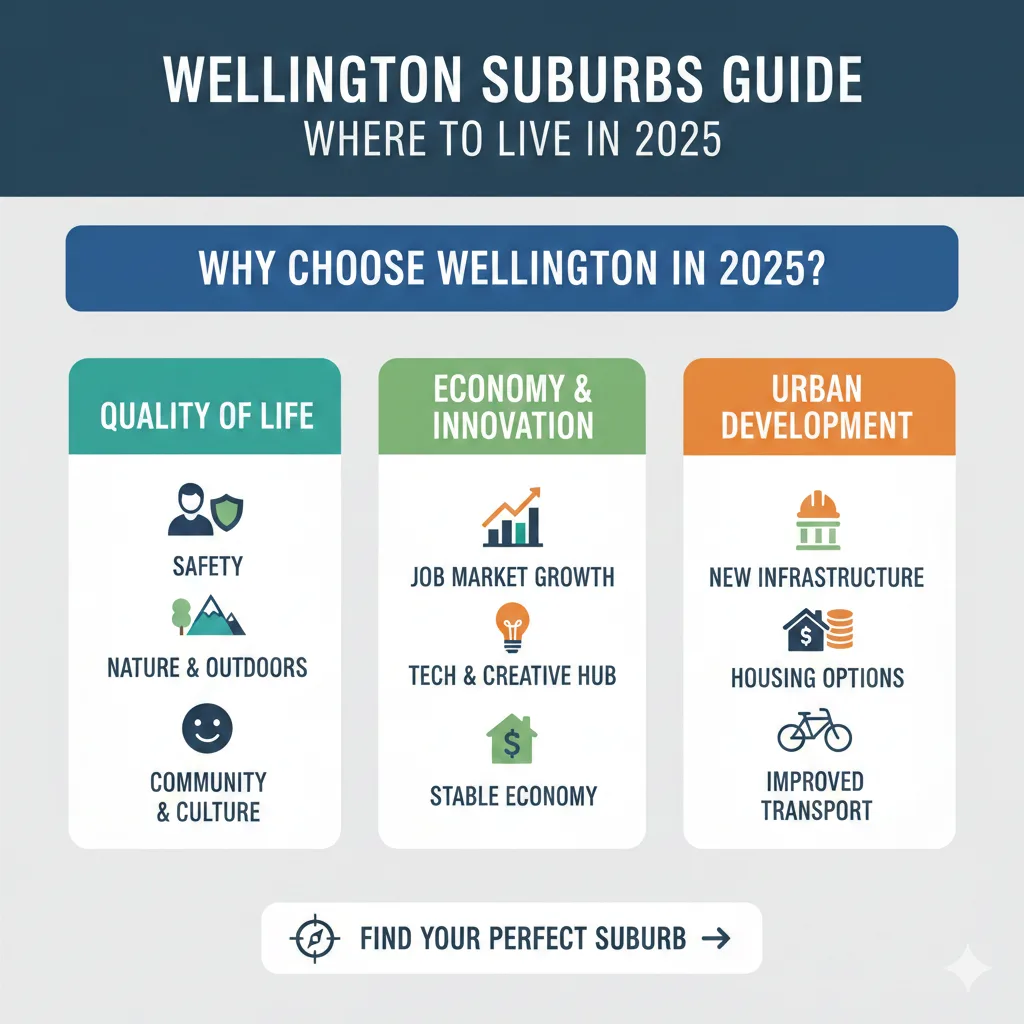
As New Zealand's capital, Wellington blends urban buzz with outdoor adventures, boasting the country's highest average salaries and a thriving creative scene in film, arts, and government jobs. Nearly half a million people live in the greater region, including Porirua, Upper Hutt, and Lower Hutt, offering diverse suburbs from bustling hubs to serene coastal escapes. With excellent public transport like buses, trains, and cycleways, getting around is straightforward—even for car-free Kiwis.
Housing remains more affordable than Auckland, though central spots command a premium. Expect $450–$550 weekly for a small central house or flat, dropping to $350–$450 in outer areas like Lower Hutt. Median property values hover around updated 2026 figures, influenced by steady demand and interest rate tweaks from the Reserve Bank. Factor in KiwiSaver contributions and IRD tax brackets when budgeting—use the IRD's property tax calculator for bright-line test impacts on sales.
For families, proximity to schools, parks, and ACC-covered sports facilities matters. Professionals value Metlink commuter links, while nature lovers flock to trails near Zealandia. Let's dive into the top suburbs.
Top Family-Friendly Suburbs
Families prioritise safety, schools, and green spaces. Wellington excels here, with many suburbs scoring high on community vibe and education access.
Kilbirnie and Miramar: Coastal Family Hubs
Kilbirnie buzzes as the eastern suburbs' commercial heart, with multicultural vibes, sports centres, shopping, and solid schools—perfect for active families. Nearby Miramar adds beaches, parks, and film industry flair (think Wētā Workshop tours), blending seaside relaxation with urban perks just 15 minutes from the CBD.
Practical tips:
- Rentals: $600–$800/week for a 3-bedroom family home.
- Schools: Kilbirnie School and Miramar Christian School rate highly on Education Review Office reports.
- Transport: Frequent buses to town; cycle to Lyall Bay beach.
- Family perks: ACC-subsidised swimming at Kilbirnie Pool.
These spots suit growing whānau who want community without isolation.
Johnsonville and Tawa: Northern Commuter Gems
Johnsonville thrives as a family and commercial hub with parks, shops, and top transport—trains zip you to the city in 20 minutes. Tawa, further north, offers affordable housing, strong community spirit, and heaps of open spaces for kids.
Key stats for 2025:
- Average house prices: Johnsonville $950,000; Tawa $850,000 (REINZ data).
- Schools: Multiple decile 9–10 options like Tawa College.
- Lifestyle: Weekly farmers' markets; easy WINZ-supported childcare access.
Ideal for double-income families balancing work and play.
Karori and Brooklyn: Nature and Neighbourhood Bliss
Karori, Wellington's largest suburb, delivers suburban calm with Zealandia eco-sanctuary on the doorstep—great for teaching tamariki about native birds. Brooklyn, just 3km south of the CBD, mixes heritage homes, green spaces, and tight-knit vibes with excellent schools.
Actionable advice: Check StudyLink for school donations if budgeting tightly; both areas have playgrounds and walking tracks covered by DOC passes.
Premium Suburbs for Professionals and Couples
Upscale living with harbour views and city proximity appeals to high-earners in government or tech.
Khandallah and Ngaio: Leafy Northern Retreats
Khandallah's lush streets and harbour panoramas attract professionals seeking peace. Ngaio echoes this with historic villas, bungalows, family-friendly parks, and train access.
Pros for pros:
- Commute: 15-minute train to Parliament.
- Amenities: Cafés, boutiques; KiwiSaver-friendly mortgage options via banks like ASB.
- Prices: $1.2m+ for views—use Opes Partners for first-home grants if eligible.
Seatoun: Secluded Coastal Luxury
Seatoun's sandy beach and harbour vistas make it Wellington's premium pick for a laid-back, sought-after lifestyle. Perfect for couples walking the waterfront or remote workers with harbour office views.
Affordable Outer Options: Hutt Valley and Porirua
Budget-conscious Kiwis head to Hutt Valley (15 minutes from CBD) for suburban charm, trails, and top schools. Porirua offers safe, cheaper living with easy motorway access.
2025 affordability snapshot:
| Suburb | Weekly Rent (3-bed) | Median Sale Price | Key Draw |
|---|---|---|---|
| Lower Hutt | $350–$450 | $750,000 | Schools & trails |
| Porirua | $400–$500 | $800,000 | Commute ease |
| Upper Hutt | $380–$480 | $780,000 | Affordable family homes |
Note: Prices based on 2026 market trends; verify with realestate.co.nz.
These areas stretch your dollar further, especially with IRD's working for families tax credits.
Financial Considerations for Moving in 2025
Relocating? Budget for moving costs ($2,000–$5,000 via firms like Grace Removals) and setup. Use KiwiSaver for deposits—first-home buyers get up to $10,000 withdrawal plus government top-up via Kāinga Ora.
Tax tips: Wellington's high salaries mean progressive IRD rates (10.5%–39%); track deductions for home office if WFH. Compare power providers like Contact Energy for suburb-specific bills—coastal spots like Seatoun may cost more in winter.
Disclaimer: This guide offers general info. Consult a financial adviser or visit ird.govt.nz for personalised advice on taxes, KiwiSaver, and mortgages.
Getting Around and Lifestyle Perks
Wellington's compact layout shines: Walk the CBD, bus suburbs, or train north. Metlink Snapper cards save 20–30% on fares. For cars, Mevo sharing suits occasional needs.
Lifestyle highlights: Te Papa museum, waterfront dining, and trails. Film buffs love Miramar's Wētā links.
FAQ
What are the cheapest Wellington suburbs in 2025?
Hutt Valley and Porirua offer the best value, with rents $350–$500/week and medians under $800,000.
Best suburbs for families with kids?
Johnsonville, Tawa, Karori, and Miramar top lists for schools, parks, and community facilities.
How's public transport from suburbs to CBD?
Excellent—trains from Johnsonville/Ngaio (15–20 mins), buses everywhere else.
Are Wellington suburbs safe?
Yes, most rank high on Stats NZ safety data; family areas like Tawa and Khandallah excel.
What's the average house price in Wellington 2025?
Around $950,000 region-wide, varying by suburb (e.g., Seatoun $1.5m+).
Pet-friendly suburbs?
Karori (Zealandia access) and Miramar beaches suit dogs; check council rules.
Next Steps: Find Your Wellington Suburb
Shortlist 2–3 suburbs matching your budget and vibe—visit via WellingtonNZ maps. Chat with locals on Facebook groups, run numbers on Trade Me Property, and book viewings. For finance, hit up a mortgage broker or ird.govt.nz tools. Wellington awaits—your perfect suburb is out there.
Related Articles

Working Multiple Jobs NZ: Tax and Legal Considerations
Juggling multiple jobs can boost your income, but it's crucial to understand the tax implications and legal requirements that come with working more than one role in Aotearoa. Whether you're a contrac...

Name Changes NZ: Legal Process and Costs
Considering a fresh start with a new name? Whether it's after marriage, divorce, or simply embracing a personal transformation, changing your name in New Zealand is straightforward but requires follow...

Holiday Home Tax Rules NZ: Private Use and Rental
Own a bach in Coromandel or a holiday home in Queenstown? You're not alone—many Kiwis cherish these escapes, but renting them out while enjoying personal use can trip you up on tax rules. Getting the...

Industry Bodies and Professional Associations NZ
Whether you're launching a business, advancing your career, or navigating financial regulations, industry bodies and professional associations in New Zealand offer invaluable support. These organisati...