Teenagers and Money NZ: Teaching Financial Literacy

Money conversations with teenagers can feel awkward, but they're absolutely essential. As a parent or caregiver, you're in the perfect position to help your teen develop financial skills that'll set t...
The Lifetimes NZ editorial team curates, fact-checks, and updates guides on personal finance, property, health, immigration, legal, business, and lifestyle topics relevant to Lifetimes NZ readers. Articles are produced with AI assistance and reviewed by the editorial team before publication.
Money conversations with teenagers can feel awkward, but they're absolutely essential. As a parent or caregiver, you're in the perfect position to help your teen develop financial skills that'll set them up for life. The good news? From 2026, New Zealand schools are now teaching financial literacy as a compulsory subject, which means your teen's learning about money at school too. This article will help you understand what they're learning, why it matters, and how you can reinforce these lessons at home.
Why Financial Education Matters for Kiwi Teenagers
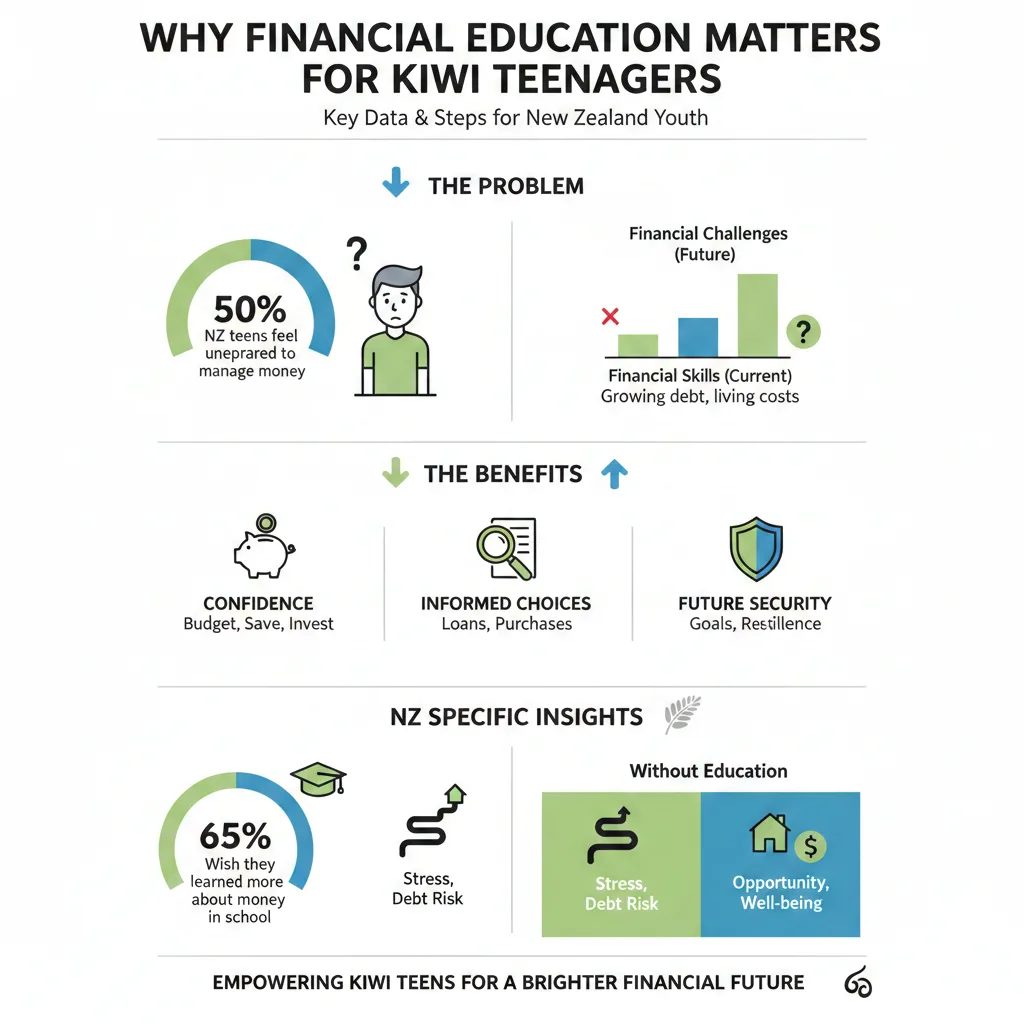
Financial literacy isn't just about knowing how to save money—it's about making informed decisions that affect your entire life. In New Zealand, research shows that only 25% of students previously received any formal financial education, which has contributed to poor debt management among young adults. Without proper knowledge, teenagers can easily fall into debt traps when they turn 18 and become eligible for phones on plans, buy now pay later loans, and car finance.
The stakes are real. When you turn 18 in New Zealand, you can legally sign up for various debt products, often without fully understanding the long-term costs. Teaching your teenager about compound interest, budgeting, and the difference between needs and wants now could save them thousands of dollars and years of financial stress later.
What's New in New Zealand Schools from 2026
The New Zealand Government has made a significant commitment to financial literacy. From 2026, all students from Years 1 to 10 must learn financial education, with schools implementing these changes by 2027. Education Minister Erica Stanford confirmed the subject will be part of the updated social sciences curriculum.
This isn't a one-size-fits-all approach. The curriculum is structured to match what teenagers can understand at different ages.
Years 1–5: Building the Basics
Younger students focus on foundational concepts:
- Earning and how people get money
- Spending wisely
- Saving for goals
- Understanding bank account basics
- Learning the difference between needs and wants
Years 6–10: Moving to More Complex Topics
As teenagers mature, the curriculum becomes more sophisticated. Students in Years 6–10 study:
- Taxation and how the tax system works
- Interest rates and how they affect borrowing and saving
- Budgeting and managing money
- Insurance and protecting yourself financially
- Investment concepts and building wealth
- Digital payment systems and cryptocurrency
Money skills and knowledge are being woven into subjects students already study—mainly maths from 2026 and social sciences from 2027. This means your teenager won't just learn theory; they'll apply these concepts to real-world situations like shopping, saving, and understanding debt.
Teaching Your Teenager About Money at Home
School is only part of the picture. Your conversations at home are equally important for reinforcing good financial habits. Here's how to get started.
Make Money Conversations Normal
Talking about money shouldn't be taboo in your household. When you're grocery shopping, point out prices and discuss how you make choices. When you're paying bills, explain what GST is and why it matters. When your teenager wants something, use it as a teaching moment to discuss needs versus wants.
Give Them Real Responsibility
Pocket money or an allowance is one of the best financial education tools available. Consider tying it to chores or responsibilities so they understand the connection between work and income. As they get older, let them manage their own money for specific categories—like their phone plan, entertainment, or clothing.
Help Them Set Goals
Whether it's saving for a new laptop, a holiday, or a car, help your teenager set realistic financial goals. Break down the goal into steps and track progress together. This teaches delayed gratification and shows them that planning actually works.
Introduce Them to Banking
Help your teenager open their own bank account if they haven't already. Walk them through how to check their balance, make transfers, and understand interest. If they're earning money, this becomes a natural next step.
Talk About Debt Before They Need It
At 18, your teenager can legally sign up for debt products. Before that happens, have honest conversations about how debt works, what interest means, and the real cost of borrowing. Use practical examples—like how a $1,000 car loan at a certain interest rate actually costs them more over time.
Teach Them to Spot Scams
The digital financial world has brought new risks. Help your teenager understand common scams, phishing attempts, and too-good-to-be-true investment offers. The school curriculum now includes learning how to spot scams, but your reinforcement matters.
Digital Money and Modern Financial Systems
The new curriculum includes digital currencies, blockchain technology, and modern payment systems. This reflects the reality that your teenager will navigate a very different financial world than previous generations.
Digital wallets, cryptocurrency, and online banking are already part of everyday life for many teenagers. Rather than ignoring these tools, the updated curriculum acknowledges them and teaches critical thinking about how they work and their risks.
At home, you can support this learning by:
- Discussing how digital payments work when you use them
- Explaining why security matters online
- Setting spending limits if your teenager uses digital wallets
- Monitoring their digital financial activities and using it as a discussion point
Supporting Your Teenager's Learning
As schools implement this new curriculum, here's how you can work alongside the system:
- Ask what they're learning: Get your teenager to explain what they've learned in their financial literacy lessons. Teaching others is one of the best ways to solidify knowledge.
- Use real-life examples: When you're making financial decisions, involve your teenager. Talk through your thinking about whether something is a need or want, how you're budgeting, or why you're choosing one option over another.
- Access resources: Look for New Zealand-specific financial education resources. The Ministry of Education is creating materials to support teachers, and many are available to parents too.
- Be a role model: Your teenager learns as much from watching you manage money as from any lesson. If you're anxious about money, that comes across. If you make thoughtful financial decisions, they'll notice that too.
Frequently Asked Questions
Q: Is financial literacy now mandatory in all New Zealand schools?
Yes. From 2026, financial literacy is a compulsory part of the curriculum for all students from Years 1 to 10. Schools must implement the changes by 2027.
Q: What if my teenager is already in Years 9 or 10?
They'll still benefit from the new curriculum. The financial education being introduced is designed for their age level, covering topics like compound interest, investments, and taxation that are directly relevant to teenagers preparing for adulthood.
Q: Should I be teaching my teenager about cryptocurrency and digital currencies?
The new curriculum includes digital currencies and blockchain technology, so your teenager will learn about these at school. You don't need to be an expert, but understanding the basics helps you have informed conversations. Focus on teaching critical thinking: What are the risks? How do they work? What makes them different from traditional money?
Q: My teenager says they're not interested in money. How do I make it relevant?
Connect it to what they care about. Want a new gaming console? That's a budgeting conversation. Thinking about university? That's a debt and student loan conversation. Planning to move out? That's a budgeting and rent conversation. Money affects everything teenagers care about—help them see the connection.
Q: What's the best age to start giving my child pocket money?
There's no perfect age, but primary school is a good starting point. Even small amounts teach the basics of earning, spending, and saving. By secondary school, teenagers can handle larger amounts and more complex financial decisions.
Q: Are there any New Zealand resources I can use to help teach my teenager?
Yes. The Retirement Commission and the Ministry of Education are creating resources to support this curriculum. Additionally, organisations like Sorted (sorted.org.nz) offer free financial education resources specifically designed for New Zealand audiences, including information about managing debt and understanding KiwiSaver.
Moving Forward
The introduction of compulsory financial literacy in New Zealand schools marks a turning point. Your teenager is growing up in an education system that finally prioritises money skills alongside maths and reading. That's genuinely positive.
But school is just the foundation. The real learning happens when you reinforce these lessons at home, answer their questions, and model good financial behaviour. Start the conversation today. Ask your teenager what they're learning about money at school. Share a financial decision you're making and walk them through your thinking. Help them set a savings goal.
By the time they turn 18 and can legally access debt products, they'll have years of knowledge and conversations behind them. That's the best protection you can give them.
Related Articles

Screen Time Guidelines for Kiwi Kids
Ever caught your little one glued to a tablet, eyes wide and fingers flying? In Aotearoa, where Kiwi kids spend more screen time than most—up to 42 hours a week for teens—it's time to hit pause and re...

School Zones NZ: How They Work and Why They Matter
Choosing the right school for your tamariki can feel like navigating a map of coloured zones—literally. In Aotearoa, **school zones NZ** dictate where your child is guaranteed a spot, helping prevent...

Best Playgrounds in Christchurch: Family Guide
Christchurch has some of the best family playgrounds in Aotearoa, offering everything from award-winning attractions to hidden gems perfect for a weekend adventure. Whether you're looking for thrillin...

Kids Sports NZ: Costs and Options by Age
Getting your kids active in sports is one of the best gifts you can give them as a Kiwi parent—building fitness, teamwork, and lifelong habits. But with rising costs biting into household budgets, und...