Pets in Rentals: What Are Your Rights?

Imagine coming home after a long day to the wagging tail of your faithful dog or the purring welcome of your cat—yet as a renter in New Zealand, you've probably worried about whether your rental allow...
James writes about the New Zealand property market, renting, home ownership, and housing costs. He breaks down complex property topics into practical advice for renters and buyers.
Imagine coming home after a long day to the wagging tail of your faithful dog or the purring welcome of your cat—yet as a renter in New Zealand, you've probably worried about whether your rental allows pets. With around a third of Kiwis renting their homes, pet ownership has long been a sticking point, but new rules from 1 December 2025 have changed the game, making it easier for tenants to enjoy furry companions while protecting landlords' interests.
These updates under the Residential Tenancies Amendment Act 2024 strike a balance: renters can now request written consent for pets, and landlords must respond reasonably. Whether you're a tenant dreaming of adopting or a landlord navigating these changes, here's everything you need to know about pets in rentals NZ in 2026.
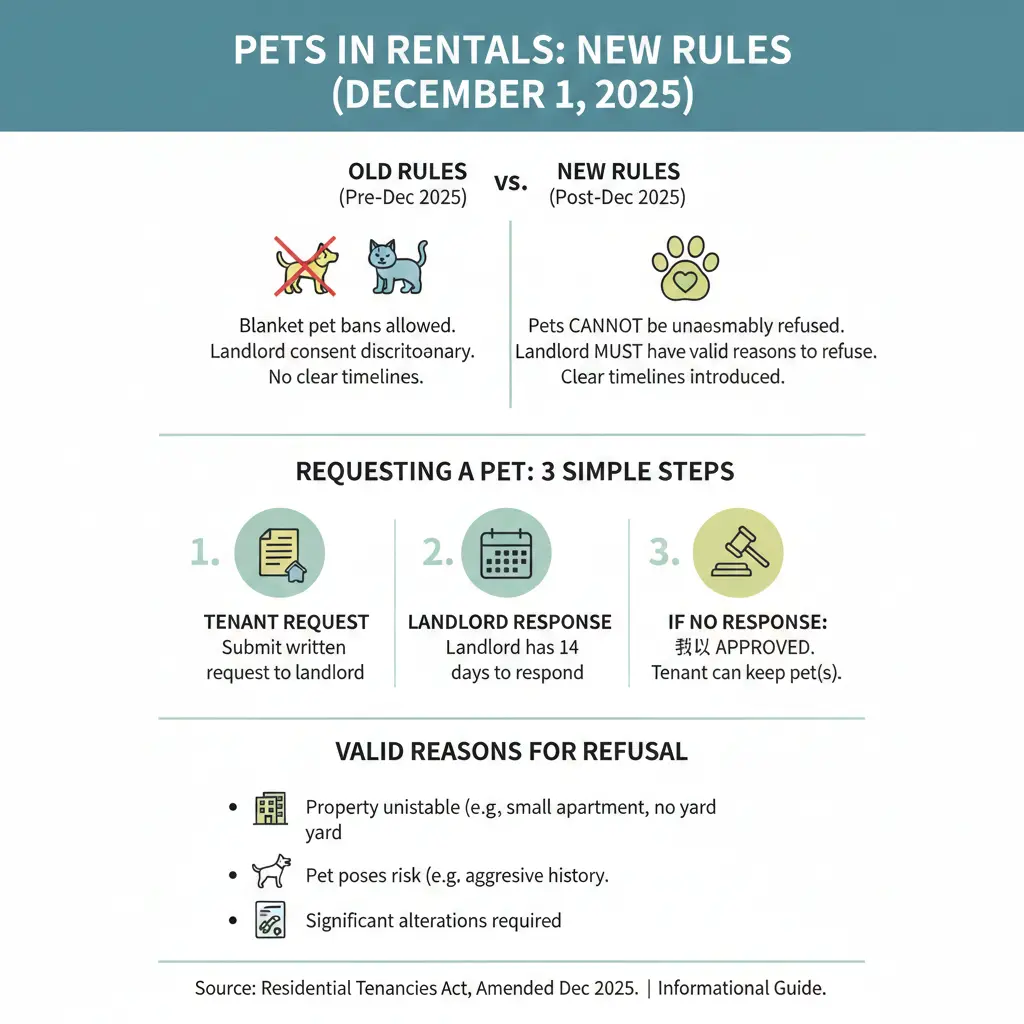
The New Pet Rules: What Changed on 1 December 2025?
Before these reforms, many rentals had blanket "no pets" clauses, blocking countless New Zealanders from adopting. Now, the rules prioritise pet-friendly renting without leaving property owners exposed. Key shifts include mandatory written consent processes, pet bonds, and clear guidelines on refusals—all designed as a "win-win" for tenants and landlords alike.
Key Changes at a Glance
- Written Consent Required: Tenants must get written approval from landlords to keep a pet, unless the tenancy agreement already permits it.
- No Blanket Bans: Landlords can't refuse just because they don't like pets—they need reasonable grounds.
- 21-Day Response Time: Landlords must reply in writing within 21 days, or face fines up to $1,500.
- Pet Bonds Introduced: Up to two weeks' rent extra, on top of the standard bond, but only one per household regardless of pet numbers.
- Tenant Liability: You're responsible for pet damage beyond fair wear and tear, and all tenants on the agreement share liability.
These apply to new tenancies from 1 December 2025 and existing ones without prior pets. Disability assist dogs remain exempt—no consent or bond needed.
Tenant Rights: How to Get Approval for Your Pet
As a renter, you're now empowered to ask for a pet without fear of automatic rejection. Start by putting your request in writing—many property managers offer pet application forms to streamline this. Include details like the pet's breed, age, size, and behaviour history to build a strong case.
Steps to Request Pet Consent
- Check Your Tenancy Agreement: If it already allows pets, you're set. Otherwise, submit a written request.
- Provide Pet Details: Share proof of vaccinations, desexing, and good behaviour (e.g., vet references).
- Wait for Response: Landlords have 21 days. No reply or unjustified "no" could lead to Tenancy Tribunal action.
- Agree to Conditions: Expect reasonable rules like keeping pets indoors or end-of-tenancy cleaning.
- Lodge the Pet Bond: If approved, pay up to two weeks' rent via Bond Centre—refundable if no damage.
Real-life example: In Wanaka, a household recently welcomed a dog after negotiating under the new rules, showing how it works in practice. Pro tip: Train your pet early and keep neighbourly relations sweet to avoid complaints that could jeopardise consent.
What If Your Landlord Says No?
Refusals must be on reasonable grounds, such as unsuitable fencing, council bylaws, or a history of aggressive behaviour. If you disagree, apply to the Tenancy Tribunal (tenancy.govt.nz) for a ruling—it's free and straightforward for Kiwis.
Landlord Responsibilities: Protecting Your Property
Landlords, these rules don't force pets on you, but they do require fair handling. Respond promptly to avoid fines, and use pet bonds wisely—they cover damage without needing ongoing payments.
Reasonable Grounds to Refuse a Pet
The Act lists examples like:
- No secure fencing or inadequate outdoor space.
- Body corporate or local council bans (e.g., some Auckland apartments).
- Pet breed risks or past incidents.
- Tenant history of breaching pet rules.
Setting Fair Conditions
Once approved, impose practical rules:
- Limit to two pets max.
- Mandatory flea treatments before move-out.
- Regular yard maintenance.
- Proof of microchipping and registrations.
All tenants are jointly liable, so specify this in writing. At tenancy end, deduct proven pet damage from bonds via Tenancy Services.
Special Cases: Existing Pets and Transitional Rules
Got a pet approved before 1 December 2025? No need for new consent or bonds—stick to original conditions, and landlords can't add extras like pet bonds retrospectively. If damage occurs, pursue it through standard bond claims.
For pets sneaked in without approval pre-2025, new rules don't grandfather them—landlords can still act on damage or nuisance.
Pets in Rentals: Practical Tips for Kiwi Renters and Owners
To make pets in rentals NZ work smoothly:
- For Tenants: Choose low-shedding, apartment-friendly breeds like cavoodles or British Shorthairs. Use pee pads indoors and hire professional cleaners for end-of-tenancy.
- For Landlords: Consider pet-friendly upgrades like turf mats or secure gates to attract quality tenants—community housing trusts like QLCHT already do this for wellbeing.
- Neighbour Nuisance: Barking dogs? Document and report to council under dog control bylaws (aucklandcouncil.govt.nz or your local).
- Insurance Check: Tenants, confirm your contents insurance covers pets; landlords, review landlord insurance for pet clauses.
In 2026, with rentals tight in cities like Auckland and Christchurch, pet-friendly listings stand out on Trade Me Property—boosting your appeal as a tenant or owner.
Next Steps: Making Pets in Rentals Work for You
Ready to bring home a pet? Tenants, draft that written request today and visit tenancy.govt.nz for templates. Landlords, update your processes and chat with property managers like Quinovic or Lodge Real Estate for guidance. These changes mean more Kiwi families can enjoy the wellbeing boost of pets—stress reduction, healthier routines, and endless joy—without rental worries. For disputes, head to the Tenancy Tribunal; for advice, contact Citizens Advice Bureau or SPCA. Happy renting with your mates!
Frequently Asked Questions
Sources & References
- 1
-
2
New rules for pets in rentals - The Wanaka App — wanakaapp.nz
- 3
-
4
New Pet Rules for NZ Rentals: Your Complete Guide — nzpif.co.nz
-
5
New Pet Rules NZ: Landlord Guide to Pet Bonds & Consent — taurangapropertymanagers.co.nz
-
6
New Pet Rules for NZ Rental Properties | Effective 1 December 2025 — www.quinovic.co.nz
-
7
Pet rules to 30 November 2025 - Tenancy Services — www.tenancy.govt.nz
-
8
New Pet Laws - Lodge Real Estate — lodge.co.nz
Related Articles

The Ultimate Rental Inspection Checklist for NZ Tenants
Moving into a rental in New Zealand can feel like a big step, but nothing prepares you quite like acing that first property inspection—or preparing for the regular ones that follow. As a tenant, knowi...

Healthy Homes Standards: A Guide for NZ Landlords & Renters
If you're renting or managing a property in Aotearoa, you've probably heard about the Healthy Homes Standards. These legal requirements aren't just bureaucratic boxes to tick—they're designed to ensur...

Renter's Rights in New Zealand: Know Your Protections
Imagine signing a lease only to face unexpected repairs, unfair rent hikes, or eviction threats—that's the reality too many Kiwis have faced. But with the Renters' Rights in New Zealand evolving throu...

Tenancy Law Changes 2025: What Renters Need to Know
If you're renting in New Zealand, the tenancy law changes kicking in from early 2025 could reshape your rights and responsibilities as a tenant. These updates to the Residential Tenancies Act (RTA) br...