Your Rights as a Tenant in New Zealand

Imagine coming home after a long day, only to find your landlord entering without notice or demanding an unreasonable rent hike. As a renter in New Zealand, knowing your tenant rights NZ empowers you...
The Lifetimes NZ editorial team curates, fact-checks, and updates guides on personal finance, property, health, immigration, legal, business, and lifestyle topics relevant to Lifetimes NZ readers. Articles are produced with AI assistance and reviewed by the editorial team before publication.
Imagine coming home after a long day, only to find your landlord entering without notice or demanding an unreasonable rent hike. As a renter in New Zealand, knowing your tenant rights NZ empowers you to stand up for fair treatment and live stress-free. With recent changes to tenancy laws in 2025, it's more important than ever to understand what protections you have under the Residential Tenancies Act 1986 (RTA).
Whether you're in a cosy Auckland flat or a family home in Christchurch, this guide breaks down your key rights, recent updates, and practical steps to protect yourself. We'll cover everything from healthy homes standards to ending a tenancy, so you can rent with confidence in 2026.
Your Fundamental Tenant Rights in New Zealand
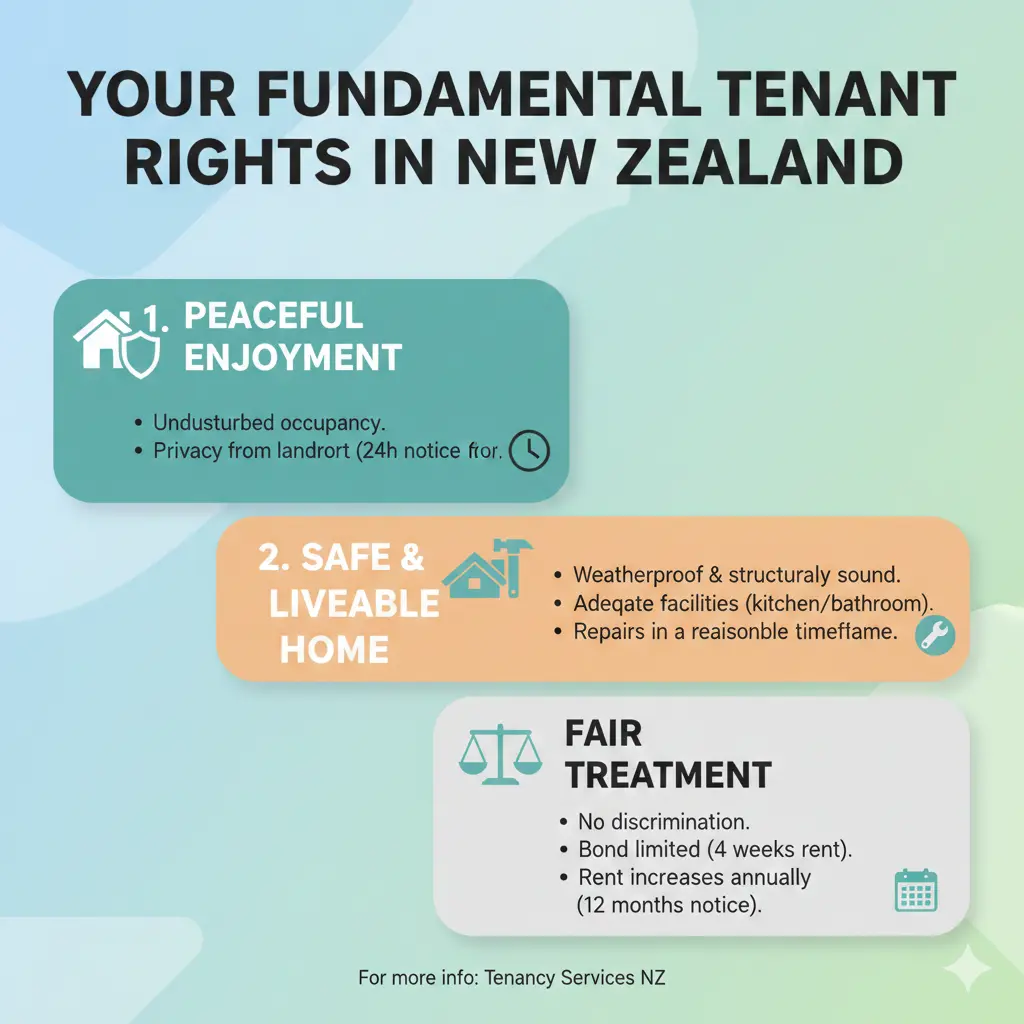
The RTA outlines clear rights and responsibilities for tenants and landlords, ensuring balanced relationships. At the core, you have the right to quiet enjoyment of your rental property. This means your landlord, their agents, or representatives can't interfere with your reasonable peace, comfort, or privacy. Harassment, like repeated unwanted visits, could lead to the Tenancy Tribunal ordering compensation up to $2,000.
Landlords must also provide a property that complies with healthy homes standards, including adequate insulation, ventilation, heating, draught stopping, moisture management, and working smoke alarms. These rules, introduced in 2019 and fully phased in by 2024, apply to most rentals—check your place meets them to avoid health issues during Kiwi winters.
Right to a Safe and Habitable Home
- Landlords must maintain the property in a reasonable state of repair, fixing issues like leaking roofs or faulty wiring promptly.
- You can notify them in writing about problems; if they don't act within a reasonable time, apply to the Tenancy Tribunal for orders and costs.
- Smoke alarms must be installed and maintained per the Residential Tenancies (Smoke Alarms and Insulation) Regulations 2016.
For example, if dampness causes mould in your Dunedin rental, document it with photos and request repairs—non-compliance breaches your right to a healthy home.
Tenancy Agreements: What to Watch For
Every rental starts with a written tenancy agreement, which must include standard terms set by the Ministry of Business, Innovation and Employment (MBIE). Read it carefully before signing—illegal clauses, like waiving your right to quiet enjoyment, are unenforceable.
Fixed-term agreements last a set period (e.g., 12 months), while periodic tenancies roll over weekly or monthly. From 30 January 2025, fixed-term tenancies automatically become periodic unless notice is given 90-21 days before expiry or both parties agree otherwise.
Bonds and Rent Payments
Your bond—up to 4 weeks' rent—must be lodged with Tenancy Services within 23 working days of receipt. Landlords can't deduct for fair wear and tear, only actual damage beyond normal use.
Rent increases require 60 days' written notice and can't happen more than once every 12 months. In 2026, with Auckland's median rent around $600/week, challenge unfair hikes via the Tribunal if they exceed market rates or lack notice.
Recent Changes to Tenancy Laws (2025 Updates)
The Residential Tenancies Amendment Act 2024, passed 17 December 2024, brought big shifts effective 30 January 2025. These balance landlord flexibility with tenant protections, responding to housing market pressures.
Ending a Tenancy: New Notice Periods
Key updates for periodic tenancies:
- Tenants: Give 21 days' notice to end (down from 28 days).
- Landlords: 90 days' no-cause termination, or 42 days' for specific reasons like own/family use (must occupy 90 days post-tenancy), unconditional sale, or employee needs.
Notes apply only to notices from 30 January 2025; earlier ones stand. Fixed-term endings need 90-21 days' notice without reason.
Retaliatory Evictions Now Illegal
If a landlord ends your tenancy because you exercised rights (e.g., requested repairs) or after Tenancy Services involvement, it's unlawful. Apply to the Tribunal within 12 months—within 28 working days, request cancellation.
Pets in Rentals: New Rules for 2026
Want a furry flatmate? From 2025, request written consent for pets—landlords can only refuse on reasonable grounds, like property damage history.
Consent can include conditions:
- Pet bond up to 2 weeks' rent (one per tenancy).
- Professional carpet cleaning at end.
- Pet restraints during landlord visits.
Tenants cover pet damage beyond fair wear and tear. In pet-friendly Wellington rentals, this makes keeping your dog easier—just get it in writing.
Family Violence Protections
If you or your child/dependent experience family violence, withdraw from the tenancy without penalty. Provide evidence like a police report to Tenancy Services. This joins existing rights, offering escape from unsafe situations.
Landlord Access and Your Privacy
Landlords need 48 hours' written notice for inspections (twice yearly max), repairs, or viewings (last 21 days of tenancy, reasonable times). Emergencies allow immediate entry. Always protect your privacy—change locks only with permission, providing keys.
Smoking Bans Allowed
Tenancy agreements can now ban indoor smoking or extend to other areas if it doesn't breach quiet enjoyment.
Resolving Disputes: Tenancy Tribunal
Most issues go to the Tenancy Tribunal—free, fast, no lawyers needed. From 2025, many cases (except terminations or entry rights) can be decided on papers, saving time.
File online at tenancy.govt.nz. Common wins: bond refunds (90% returned fully/partly), repair orders, or excess rent compensation.
Practical Tips for NZ Tenants
- Document everything: Photos, emails, receipts for issues or payments.
- Check in/out: Complete the 48-hour inspection form at start/end.
- Know resources: Tenancy Services helpline (0800 836 262), Community Law Centres for free advice.
- Market check: Use Trade Me Property or Tenancy.govt.nz for fair rents in your area like Hamilton or Tauranga.
- Winter prep: Ensure heating compliance—request fixed heaters if needed.
Next Steps to Protect Your Rights
Download a tenancy agreement checklist from tenancy.govt.nz and review yours today. If issues arise, contact Tenancy Services first—they mediate 80% of disputes without Tribunal. Stay informed on updates via govt.nz, and join renter groups on Facebook for local tips. Renting in NZ should be straightforward—know your tenant rights NZ, and you'll thrive in your home.
Frequently Asked Questions
Sources & References
-
1
Changes to tenancy terminations now in force — www.tenancy.govt.nz
-
2
Key Changes to Residential Tenancies in 2025 — duncancotterill.com
-
3
Tenancy law changes — www.tenancy.govt.nz
-
4
What changes landlords and tenants can expect in 2025 — www.wisemove.co.nz
-
5
Living in your house or flat: Rights and obligations — communitylaw.org.nz
-
6
How economic and regulatory shifts shaped property management in 2026 — www.propertybrokers.co.nz
-
7
Tenant Rights 2026 — www.artbeat.org.nz
-
8
Renting — www.govt.nz
Related Articles

The Ultimate Rental Inspection Checklist for NZ Tenants
Moving into a rental in New Zealand can feel like a big step, but nothing prepares you quite like acing that first property inspection—or preparing for the regular ones that follow. As a tenant, knowi...

Healthy Homes Standards: A Guide for NZ Landlords & Renters
If you're renting or managing a property in Aotearoa, you've probably heard about the Healthy Homes Standards. These legal requirements aren't just bureaucratic boxes to tick—they're designed to ensur...

Renter's Rights in New Zealand: Know Your Protections
Imagine signing a lease only to face unexpected repairs, unfair rent hikes, or eviction threats—that's the reality too many Kiwis have faced. But with the Renters' Rights in New Zealand evolving throu...

Tenancy Law Changes 2025: What Renters Need to Know
If you're renting in New Zealand, the tenancy law changes kicking in from early 2025 could reshape your rights and responsibilities as a tenant. These updates to the Residential Tenancies Act (RTA) br...