Credit Contracts NZ: Know Before You Sign

When you're considering borrowing money in New Zealand—whether it's a personal loan, mortgage, credit card, or Buy Now Pay Later arrangement—understanding your rights and obligations is crucial. The C...
The Lifetimes NZ editorial team curates, fact-checks, and updates guides on personal finance, property, health, immigration, legal, business, and lifestyle topics relevant to Lifetimes NZ readers. Articles are produced with AI assistance and reviewed by the editorial team before publication.
When you're considering borrowing money in New Zealand—whether it's a personal loan, mortgage, credit card, or Buy Now Pay Later arrangement—understanding your rights and obligations is crucial. The Credit Contracts and Consumer Finance Act (CCCFA) exists to protect you as a consumer, but knowing what it covers and what it doesn't can save you from costly mistakes. This guide walks you through everything you need to know before signing on the dotted line.
What is the Credit Contracts and Consumer Finance Act?
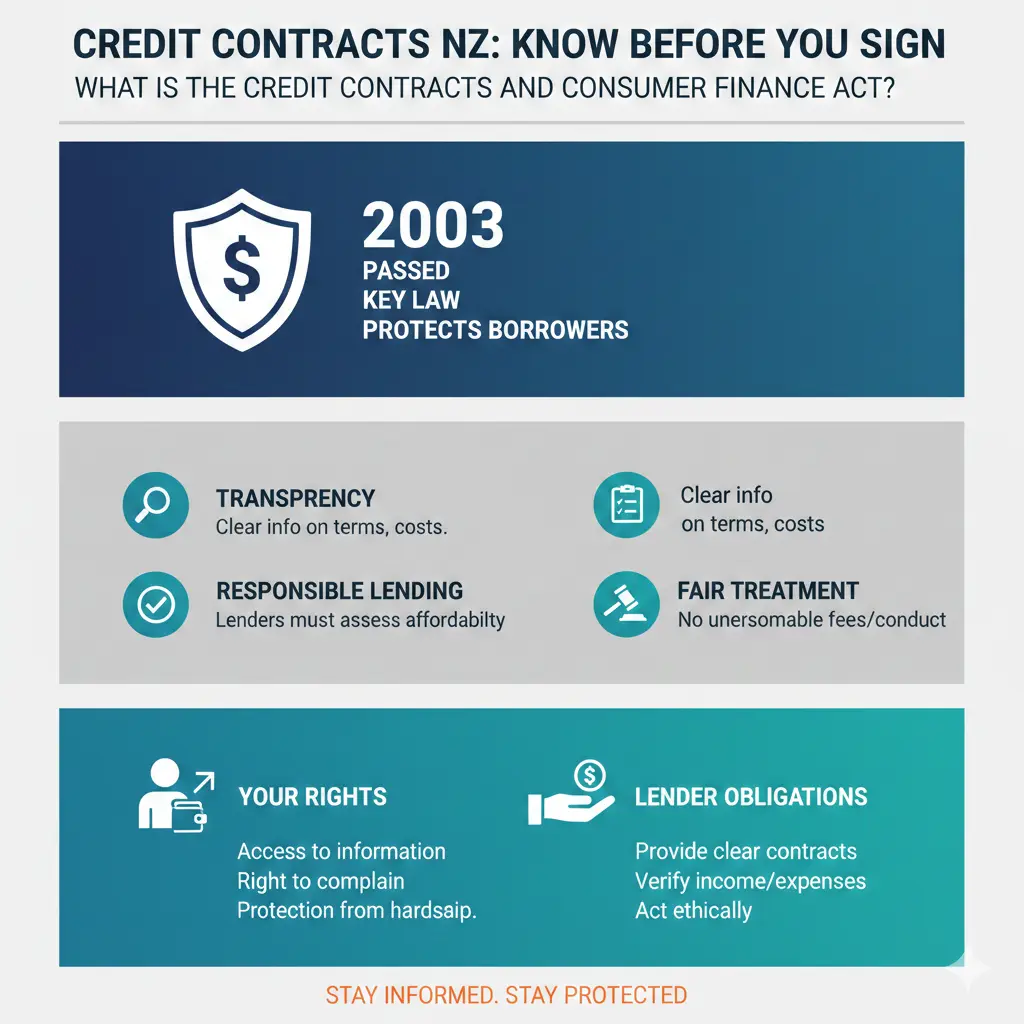
The CCCFA is New Zealand's primary law protecting consumers when borrowing money. Its core purpose is straightforward: to ensure you can make informed choices, understand what you're agreeing to, and keep track of your debts. The Act applies when you take out a personal loan or mortgage, use a credit card, borrow on an agreed overdraft, or buy products and services on credit such as hire purchase or Buy Now Pay Later arrangements.
The CCCFA requires lenders to always act responsibly. This means they can't just lend you money without considering whether you can actually afford to repay it. They must be transparent about costs, provide clear information before you sign, and follow strict rules about how they calculate interest and fees.
Major Changes Coming in 2026
New Zealand's credit regulation landscape is undergoing significant reform. On 31 March 2025, the government introduced the Credit Contracts and Consumer Finance Amendment Bill, which proposes major changes to modernise and improve the regulation of financial services.
Regulatory Responsibility Transfer
One of the most significant changes is the shift in who oversees consumer credit. The bill proposes to transfer enforcement responsibility from the Commerce Commission to the Financial Markets Authority (FMA). This centralises financial regulation under one regulator, creating a more cohesive and efficient regulatory environment. Until this transfer is complete, lenders continue to work with the Commerce Commission on CCCFA matters.
New Licensing Regime for Lenders
The bill introduces a licensing regime for lenders under the FMA. This replaces the current certification system, where lenders must be certified by the Commerce Commission. The new licensing process involves more stringent checks and ongoing compliance requirements, intended to improve the quality and reliability of lenders.
Simplified Disclosure Requirements
The reforms also address disclosure requirements. Currently, if a lender fails to make required disclosures, you're not liable for borrowing costs. The amendment aims to balance transparency with practical compliance, ensuring you're adequately informed without imposing disproportionate burdens on lenders. These changes are designed to offer relief to lenders while maintaining consumer protections.
What Credit Contracts Does the CCCFA Cover?
Not all credit arrangements are covered by the CCCFA. To qualify as a "consumer credit contract" under the Act, all of the following conditions must apply:
- You're getting the credit as an individual (not as a company or organisation)
- You're getting the credit mainly for personal, domestic, or household use
- You're being charged interest or credit fees (such as an establishment fee or insurance fee), or you've put up property as security for the loan
- The lender provides credit in the course of their business, or you and the lender were introduced by a paid adviser or broker
This means that if you're borrowing for business or investment purposes, the CCCFA won't protect you in the same way. Similarly, student loans under the Student Loan Scheme and targeted rate schemes administered by local authorities are exempt.
Your Rights as a Borrower
Right to Clear Information
Lenders must tell you certain things before you borrow. They must make standard terms and costs publicly available via their website or clearly displayed notices at their premises, helping you compare options and shop around. Before you sign an agreement, they must give you important information in writing, including the annual interest rate, all fees, how you can cancel, and details of their dispute resolution scheme.
Lenders must make these disclosures:
- Before the credit contract is signed
- When guarantors sign
- If the interest rate or contract changes
- Every 45 days for revolving credit contracts (like credit cards)
- At least every six months for all other credit contracts
- Whenever you ask for it
All disclosure information must be clear, concise, likely to be noticed by a reasonable person, and not misleading or deceptive.
Protection Against Excessive Interest and Fees
For high-cost loans (those with interest rates of 50% or more), the CCCFA sets strict limits:
- Lenders cannot ask you to pay back more than twice the amount borrowed (the principal)
- They cannot charge compound interest
- They cannot charge more than 0.8% of the unpaid loan balance in interest and fees per day when averaged across the loan term
- Default fees for missed payments must be $30 or less
These protections are particularly important if you're dealing with truck shops or other mobile traders, which are now covered by the CCCFA and must follow the same responsible lending rules.
Right to Request Changes
If you're struggling to repay, you can ask your lender for one of these changes:
- Extend the contract term by reducing the amount of each payment
- Postpone payments for a set period (payment holiday)
- Extend the term and postpone debt repayments for a specified period
Your lender must consider your request, though they're not obliged to agree in all circumstances.
What Lenders Must Do
If you provide credit in the course of your business—whether you're a bank, finance company, or even a truck shop—you must comply with the CCCFA. Your responsibilities include:
- Acting responsibly when lending
- Making disclosure information clear and accessible
- Following rules about interest and fees
- Respecting consumer rights and dispute resolution processes
- Ensuring consumers are aware of their rights and how to enforce them
Non-compliance can result in serious consequences, including the inability to enforce contracts until proper disclosures are made.
Common Questions About Credit Contracts in NZ
Does the CCCFA apply to my student loan?
No. Student loans under the Student Loan Scheme are specifically exempt from the CCCFA. However, you should familiarize yourself with StudyLink's terms and conditions, which govern your repayment obligations.
What if my lender doesn't give me proper disclosure?
If a lender fails to make required initial or variation disclosures, they cannot enforce the contract until proper disclosure is made. This is a significant protection for you as a consumer. If you believe a lender has breached the CCCFA, you can lodge a complaint with their dispute resolution scheme or contact the Commerce Commission (until the transfer to the FMA is complete).
Can I buy something on a payment plan without CCCFA protection?
It depends. If you're buying products or services on credit and being charged interest or fees, the CCCFA applies. However, if the total amount is due within two months and equals the sale price, you won't be covered. Always ask your retailer whether the CCCFA applies to your arrangement.
Are Buy Now Pay Later services covered by the CCCFA?
Yes. Buy Now Pay Later arrangements are specifically mentioned as transactions covered by the CCCFA. This means you have consumer protections when using these services, though you should still read the terms carefully.
What happens if I'm acting as a guarantor?
If you're agreeing to meet the borrower's obligations if they don't pay, you're a guarantor and have rights under the CCCFA. Your lender must give you proper disclosure before you sign, and you should understand your obligations fully before agreeing.
How do the 2026 reforms affect me as a borrower?
The reforms are designed to simplify the regulatory environment and reduce compliance burdens on lenders, which should ultimately benefit you through more efficient lending practices. The shift to FMA oversight will centralise financial regulation, making it easier to understand who to contact with complaints. However, your core protections under the CCCFA remain in place.
Practical Steps Before You Sign
When you're considering a credit contract, take these steps to protect yourself:
- Ask for all information in writing. Don't rely on verbal explanations. Request clear disclosure of the annual interest rate, all fees, contract terms, and how to cancel.
- Compare costs across lenders. Use the publicly available information lenders must provide to shop around and find the best deal.
- Read the fine print. Understand what you're agreeing to, including what happens if you miss a payment.
- Check if the CCCFA applies. Confirm that your credit arrangement is covered by consumer protections.
- Ask about dispute resolution. Know how to lodge a complaint if something goes wrong.
- Consider your ability to repay. Responsible lenders will assess this, but you should be honest about your financial situation.
- Keep all documents. Store your disclosure documents and correspondence with your lender for your records.
Where to Get Help
If you have questions about your credit contract or believe a lender has breached the CCCFA, several resources can help:
- Consumer Protection (consumerprotection.govt.nz) — Official government resource with information about your rights under the CCCFA
- Commerce Commission (comcom.govt.nz) — Currently enforces the CCCFA; handles complaints about lender conduct
- Financial Markets Authority (fma.govt.nz) — Will take over CCCFA enforcement; provides information about the transition
- Community Law (communitylaw.org.nz) — Free legal information and advice about credit contracts
- Citizens Advice Bureau — Local services offering free, independent advice about financial matters
Moving Forward with Confidence
Understanding the CCCFA empowers you to make better borrowing decisions. Whether you're taking out your first personal loan, refinancing a mortgage, or using a Buy Now Pay Later service, knowing your rights and responsibilities protects you from predatory lending practices and unexpected costs. The upcoming reforms will further strengthen the regulatory environment, making New Zealand's credit market fairer and more transparent for everyone.
Before you sign any credit contract, take time to read the disclosure documents, ask questions, and ensure you understand what you're agreeing to. If something doesn't make sense, ask your lender to explain it clearly—they're legally required to do so. Your financial wellbeing depends on making informed choices, and the CCCFA is there to help you do exactly that.
Related Articles

Industry Bodies and Professional Associations NZ
Whether you're launching a business, advancing your career, or navigating financial regulations, industry bodies and professional associations in New Zealand offer invaluable support. These organisati...

Emergency Benefit NZ: When You Have No Other Options
When you're struggling financially and don't qualify for other benefits, the Emergency Benefit might be your lifeline. It's a discretionary payment designed for Kiwis in genuine hardship who've exhaus...

Unpaid Internships NZ: Are They Legal?
Unpaid internships are a common pathway for students and graduates to gain work experience in New Zealand, but there's often confusion about whether they're actually legal. The short answer is: unpaid...

Estate Administration NZ: Managing Someone's Affairs After Death
Losing a loved one is one of life's toughest challenges, and stepping in to manage their estate can feel overwhelming. In New Zealand, estate administration—the process of handling someone's affairs a...