Employment Agreements NZ: What Must Be Included
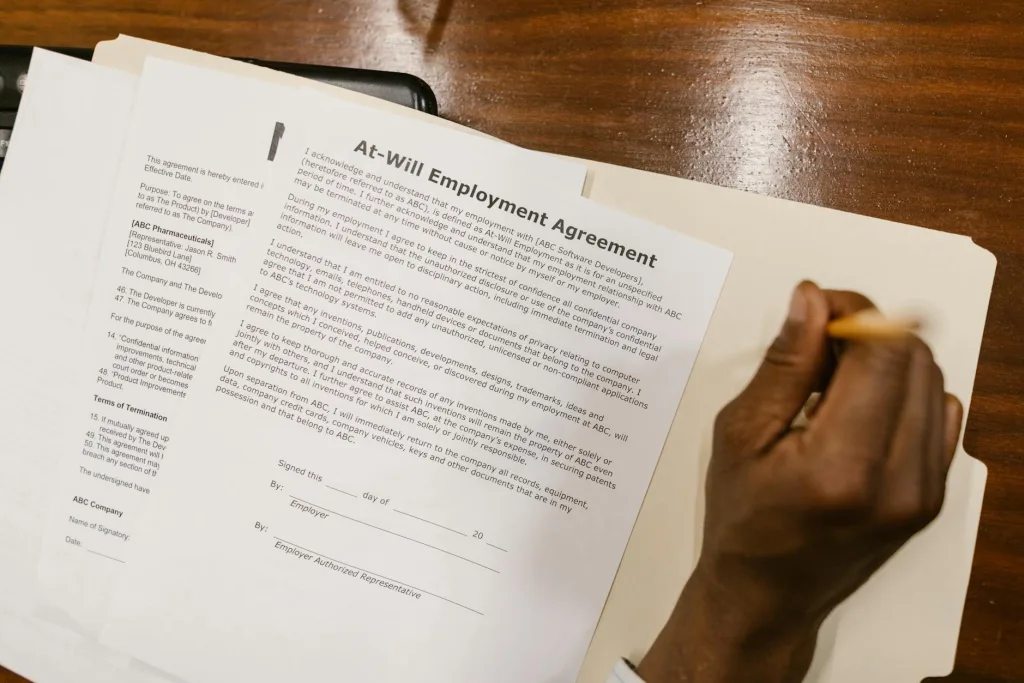
Getting an employment agreement right from the start sets the tone for a healthy working relationship. Whether you're an employer crafting your first agreement or an employee wanting to understand wha...
The Lifetimes NZ editorial team curates, fact-checks, and updates guides on personal finance, property, health, immigration, legal, business, and lifestyle topics relevant to Lifetimes NZ readers. Articles are produced with AI assistance and reviewed by the editorial team before publication.
Getting an employment agreement right from the start sets the tone for a healthy working relationship. Whether you're an employer crafting your first agreement or an employee wanting to understand what should be included, knowing the legal requirements protects everyone involved. In New Zealand, employment agreements aren't just paperwork—they're a legal requirement that must meet specific standards under the Employment Relations Act 2000.
Why Employment Agreements Matter in New Zealand
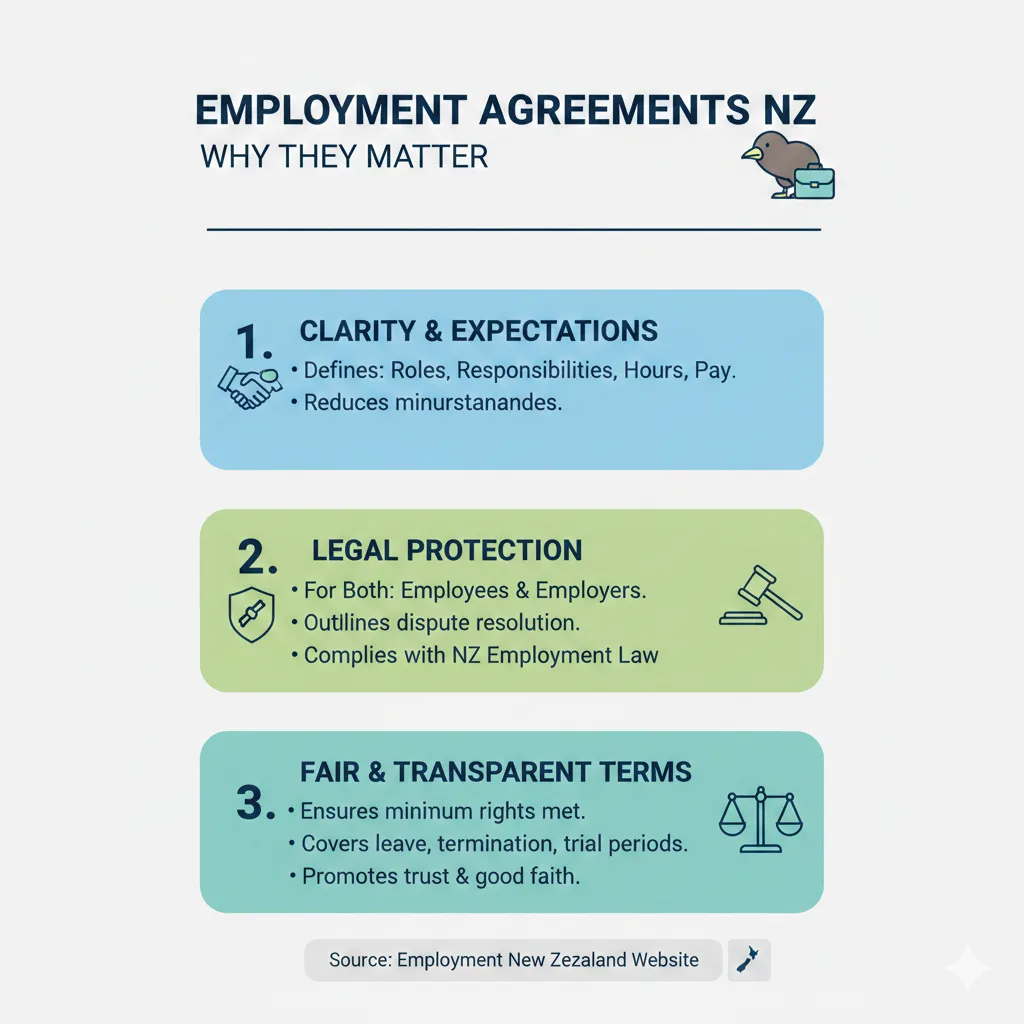
Every employee in New Zealand must have a written employment agreement before they start work. This isn't optional—it's a legal requirement for employers. The agreement sets out what's expected from both parties and ensures clarity about pay, hours, responsibilities, and workplace rights. Even if certain terms aren't written down, employees still have minimum legal rights that apply automatically, such as the minimum wage, paid annual leave, and protection against unjustified dismissal.
Beyond legal compliance, a well-drafted employment agreement reduces disputes, protects both parties, and creates a clear reference point if problems arise. With significant employment law changes coming into effect in 2026, now's the time to ensure your agreements are up to date.
What Must Be Included in an Employment Agreement
The Employment Relations Act sets out mandatory information that every employment agreement must contain. Here's what you need to include:
Essential Details
- Names of both parties — the employer and employee must be clearly identified
- Description of work — a clear outline of what the employee will be doing and their main responsibilities
- Place of work — where the employee will be working (this is especially important now, given the rise of hybrid and remote arrangements)
- Hours of work — either the number of hours, start and finish times, days of the week, or a combination of these
Pay and Remuneration
- Wage rate or salary — the amount must be at least the relevant minimum wage and clearly state how it will be paid
- Payment method — whether it's cash, bank transfer, or another arrangement
If you're unsure about current minimum wage rates, the Government sets these annually. From April 2026, there will be a new minimum wage rate, so employers should check the latest rates on the Employment New Zealand website.
Employment Type
Your agreement must specify the type of employment:
- Permanent employment — ongoing with no set end date
- Fixed-term employment — ending on a specified date or when a particular event occurs (e.g., covering parental leave or seasonal work). The agreement must record this and provide a genuine reason
- Casual employment — work on an as-needed basis with no guaranteed hours
Dispute Resolution and Personal Grievances
Your agreement must include a clear and plain explanation of how to resolve employment problems. This should cover:
- A statement that most personal grievances must be raised within 90 days
- A statement that sexual harassment personal grievances must be raised within 12 months
- Information about the process for raising concerns and attempting to resolve them
Other Mandatory Information
- Minimum entitlements — a reference to statutory minimum rights, including annual leave, public holidays, bereavement leave, and sick leave
- Notice periods — for both resignation and termination (if agreed upon)
- Any conditions contrary to law — the agreement must not contain terms that breach employment law
What You Can (and Should) Add
Beyond the mandatory requirements, employment agreements can include additional terms that both parties agree to. These might include:
- Confidentiality and intellectual property clauses
- Performance expectations and KPIs
- Professional development opportunities
- Flexible working arrangements (especially relevant in 2026, with more hybrid and remote roles)
- Notice periods longer than the legal minimum
- Redundancy provisions
- Health and safety responsibilities
If you offer better conditions than the legal minimum—such as more than four weeks' annual leave—these should be recorded in the agreement to avoid confusion later.
2026 Employment Law Changes Affecting Agreements
Several significant changes are coming into effect in 2026 that will impact employment agreements:
The 30-Day Rule Is Being Scrapped
Currently, new employees in unionised workplaces must be on the terms of the applicable collective agreement for their first 30 days. From 2026, this rule will be removed, allowing employers and new employees to negotiate individual employment agreements from the start. This gives more flexibility but requires clearer documentation upfront.
Pre-Termination Negotiations
New 2026 changes introduce a formal process for pre-termination negotiations. If both parties agree to end the employment relationship, a written termination agreement is required, signed by both parties. This agreement must include:
- The amount the employer will pay the employee for agreeing to end the employment relationship
- A statement that the employee has the right to seek independent advice
- Reasonable time for the employee to obtain that advice
Employers must also follow strict rules when requesting pre-termination negotiations, including limiting requests to no more than one per employee every six months (in most circumstances) and keeping records of the request and response.
Worker Status Classifications
Changes to how worker status is determined are also coming in 2026. The definition of an "independent contractor" or "specified contractor" is being clarified, making it easier for workers to be classified correctly. If you have contractors or use subcontractors, you'll want to review these provisions.
How to Create a Compliant Employment Agreement
Use the Employment Agreement Builder
The easiest way to ensure your agreement meets all legal requirements is to use the free Employment Agreement Builder on the Business.govt.nz website. This tool guides you through each mandatory section, points out common mistakes, and helps you avoid unintended exposure.
Negotiate in Good Faith
Employment agreements must be negotiated in good faith between you and the employee. This means being honest, transparent, and fair in your discussions. Both parties should have the opportunity to understand the terms before signing.
Get Professional Advice
If you're unsure about specific clauses or how new 2026 changes apply to your business, it's worth consulting an employment lawyer. The cost of getting it right upfront is far less than dealing with disputes later.
Keep Records
Once signed, keep a copy of the employment agreement handy and be ready to provide a copy to the employee if they request it. If changes are made, ensure both parties sign off on the updated version.
Common Mistakes to Avoid
- Vague job descriptions — be specific about what the employee will do
- Unclear pay terms — always state the wage rate and payment method clearly
- Missing dispute resolution procedures — this is a legal requirement, not optional
- Illegal clauses — don't include terms that contradict employment law (e.g., waiving minimum entitlements)
- Outdated templates — review your agreements regularly, especially with 2026 changes coming into effect
- Not giving employees time to review — allow reasonable time for the employee to understand and seek advice before signing
Frequently Asked Questions
Do I need an employment agreement for casual workers?
Yes. Every employee, regardless of whether they're permanent, fixed-term, or casual, must have a written employment agreement. For casual workers, you should clearly specify that the role is casual and that there are no guaranteed hours.
What happens if an employee refuses to sign an employment agreement?
You cannot legally employ someone without a written agreement. If an employee refuses to sign, you cannot proceed with employment. However, this is rare—most disputes arise from poorly drafted or unclear agreements rather than refusal to sign.
Can I change an employment agreement after it's been signed?
Yes, but only with the employee's agreement. Any changes must be negotiated in good faith and signed by both parties. Unilateral changes imposed by the employer could lead to personal grievance claims.
Do I need to include reference to all employment laws in the agreement?
No. Even if not listed in the employment agreement, employees are automatically entitled to minimum legal rights such as the minimum wage, paid annual leave, and protection against unjustified dismissal. However, it's good practice to reference these rights clearly so there's no confusion.
What's the difference between an individual and collective employment agreement?
An individual employment agreement is between one employer and one employee. A collective employment agreement is between one or more unions and one or more employers covering two or more employees. Collective agreements typically apply in unionised workplaces.
How often should I review employment agreements?
With employment law changes happening regularly—especially in 2026—it's wise to review your agreements annually or whenever there are significant changes to the role, pay, or workplace arrangements. This ensures they remain compliant and reflect current workplace realities.
Key Takeaways
A solid employment agreement is the foundation of a good employment relationship. It protects both you and your employee by setting clear expectations and ensuring legal compliance. Remember that employment agreements must include specific mandatory information, be negotiated in good faith, and comply with New Zealand employment law.
With 2026 bringing changes to pre-termination negotiations, the 30-day rule, and worker status classifications, now's the time to review your agreements. Use the free Employment Agreement Builder to ensure you're meeting all requirements, and consider seeking professional advice if you're uncertain about how new changes affect your business.
Whether you're an employer creating agreements or an employee wanting to understand your rights, getting this right from the start saves time, money, and stress down the track.
Related Articles

Industry Bodies and Professional Associations NZ
Whether you're launching a business, advancing your career, or navigating financial regulations, industry bodies and professional associations in New Zealand offer invaluable support. These organisati...

Emergency Benefit NZ: When You Have No Other Options
When you're struggling financially and don't qualify for other benefits, the Emergency Benefit might be your lifeline. It's a discretionary payment designed for Kiwis in genuine hardship who've exhaus...

Unpaid Internships NZ: Are They Legal?
Unpaid internships are a common pathway for students and graduates to gain work experience in New Zealand, but there's often confusion about whether they're actually legal. The short answer is: unpaid...

Estate Administration NZ: Managing Someone's Affairs After Death
Losing a loved one is one of life's toughest challenges, and stepping in to manage their estate can feel overwhelming. In New Zealand, estate administration—the process of handling someone's affairs a...