Hiring Your First Employee: Complete NZ Guide

Bringing on your first employee marks a pivotal moment for your Kiwi business—it's the start of scaling up, but it comes with responsibilities you can't afford to overlook. Get it right from the outse...
Sarah covers personal finance, tax, and KiwiSaver topics for Lifetimes NZ. She focuses on making money management straightforward and practical for everyday Kiwis.
Bringing on your first employee marks a pivotal moment for your Kiwi business—it's the start of scaling up, but it comes with responsibilities you can't afford to overlook. Get it right from the outset, and you'll build a strong foundation compliant with New Zealand law, avoiding costly mistakes that could trip up even the savviest entrepreneurs.
Why Hiring Your First Employee Matters for Your Business
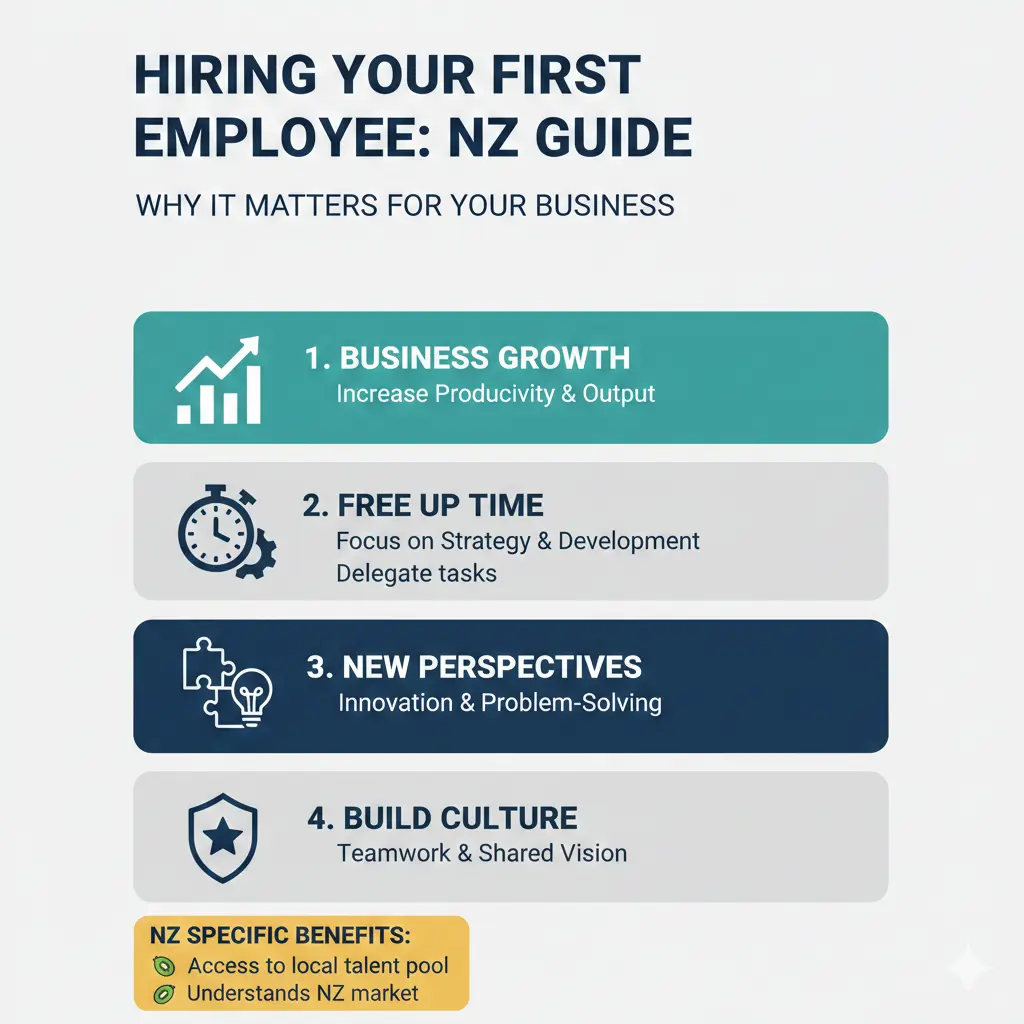
As a small business owner in New Zealand, hiring your first team member isn't just about filling a gap—it's about growth. Whether you're in Auckland running a café, a Wellington tech startup, or a rural tradie service, that extra pair of hands can free you up to focus on what you do best. But with great opportunity comes great accountability: from IRD registrations to health and safety obligations, missing a step could lead to penalties or disputes. In 2026, with minimum wages under review and KiwiSaver contributions mandatory for most, staying compliant keeps your business thriving.
Assess Your Needs: Is Now the Right Time?
Before diving in, pinpoint exactly what you need. Ask: What tasks are bottlenecking your growth? A part-time admin helper, full-time tradesperson, or casual seasonal worker? Defining the role clearly—job title, duties, hours—ensures you attract the right fit and craft a compliant employment agreement.
- Full-time: 30+ hours/week, entitled to full benefits like 4 weeks' annual leave.
- Part-time: Fewer hours, pro-rated entitlements.
- Casual/Fixed-term: Flexible, but specify end dates or conditions to avoid permanent status claims.
Pro tip: Use tools like the Employment Agreement Builder on business.govt.nz to trial different setups.
Step 1: Register as an Employer with IRD
Your very first action? Register for an employer number with Inland Revenue (IRD) via myIR—it's quick and essential for PAYE (Pay As You Earn). Under the Income Tax Act 2007, you'll deduct tax from wages and pay it to IRD, plus handle ACC levies and KiwiSaver. Do this before your employee starts, or risk fines.
Key Registrations Checklist
- Get your IRD number if you don't have one (businesses usually do).
- Register as an employer online—takes minutes.
- Set up PAYE, ACC, and KiwiSaver systems.
- Expect your unique employer number within days.
Once registered, you're ready for payroll. Many first-timers outsource to bureaus for accuracy—consider calling pros like Paymasters at 0800 399 729.
Step 2: Craft a Compliant Employment Agreement
Every employee needs a signed written agreement before day one—it's the law. This document outlines rights, duties, and protections under the Employment Relations Act, preventing disputes.
Essential Elements to Include
Your agreement must cover:
- Names of both parties and job description.
- Workplace location and hours (or variability).
- Wage/salary, pay frequency, and method.
- Leave: 4 weeks annual (Holidays Act 2003), 10 days sick leave after 6 months.
- Public holidays, notice periods, and termination.
- KiwiSaver opt-out info and enrolment.
- Plain language note: Employees can seek independent advice.
Include extras like overtime, confidentiality, and IP clauses. Use Employment New Zealand's free builder for templates. Have a lawyer review for your industry—it's worth the one-off cost.
"Employment agreements protect you and your employees by making things like hours of work and pay clear."
Step 3: Understand Pay, Taxes, and Minimum Wage (2026 Rates)
Pay at least the adult minimum wage—check current rates on employment.govt.nz, as they're reviewed annually. For 2026, ensure you're across adult, starting-out, and training wages.
Payroll Obligations Breakdown
| Obligation | Details | Legal Basis |
|---|---|---|
| PAYE | Deduct income tax from gross pay | Income Tax Act 2007 |
| ACC Levies | Industry-rated, pay to IRD | Accident Compensation Act 2001 |
| KiwiSaver | 3% employee (opt-out possible), 3% employer match | KiwiSaver Act 2006 |
| Holiday Pay | 8% on gross earnings or averaged | Holidays Act 2003 |
Process payslips with all deductions itemised, file to IRD monthly/fortnightly. Tools like Xero simplify this; always get written approval for non-statutory deductions.
Step 4: Navigate Recruitment and Interviews Fairly
Advertise on Trade Me Jobs, Seek, or local Facebook groups. Craft a job ad mirroring your agreement details to attract compliant candidates.
Interview Best Practices
- Focus on skills and experience—avoid questions on age, marital status, religion, or ethnicity.
- Use practical tasks: "Show me how you'd handle a customer query."
- Verify eligibility: Check visas via Immigration NZ for non-residents.
- Reference checks: Contact two previous employers.
For migrants, confirm status, keep records, and treat equally—same rights as Kiwis.
Step 5: Health, Safety, and Workplace Policies
Under health and safety laws, provide a safe environment: training, equipment, facilities like toilets and rest areas. If 20+ employees later, elect reps or committees.
Onboarding Essentials
Put policies in writing early: code of conduct, bullying, social media. Use WorkSafe guides for templates.
Supply job gear (e.g., computer, PPE) and privacy notices.
Your First-Week Checklist: Smooth Onboarding
Make day one welcoming to retain talent.
Before They Start
- ☐ IRD employer registration.
- ☐ Payroll setup.
- ☐ Signed agreement and IR330 tax form.
- ☐ KiwiSaver forms.
- ☐ Health and safety induction prep.
Day One
- ☐ Welcome tour and intros.
- ☐ Sign docs, explain policies.
- ☐ Induction and essentials kit (logins, contacts).
First Pay and Beyond
- ☐ Process pay, issue payslip.
- ☐ File to IRD, set up employee file.
Common Pitfalls and How to Avoid Them
First-timers often trip on leave calculations (use Ordinary Weekly Pay vs. Average), visa oversights, or verbal agreements. Always document everything, understand payment interactions (overtime, bonuses), and review annually. Outsource payroll if calculations daunt you.
Disclaimer: This guide provides general info—seek professional advice from IRD, Employment NZ, or an adviser for your situation. Tax laws change; check ird.govt.nz for latest.
Next Steps: Get Started Today
Register with IRD now via myIR, draft your agreement using official builders, and plan that first-week welcome. Your business's future team member is out there—hire smart, comply fully, and watch your Kiwi enterprise grow. For tailored advice, contact Employment NZ or a local payroll expert. Solid foundations today mean success tomorrow.
Frequently Asked Questions
Sources & References
-
1
Hiring Your First Employee in New Zealand - What You Need to Know — paymasters.co.nz
-
2
How to Hire Your First Employee: Essential Guide for Small Business — businesslike.co.nz
-
3
Hiring your first employee - Employment New Zealand — www.employment.govt.nz
-
4
Hiring for the first time - Business.govt.nz — www.business.govt.nz
Related Articles

Industry Bodies and Professional Associations NZ
Whether you're launching a business, advancing your career, or navigating financial regulations, industry bodies and professional associations in New Zealand offer invaluable support. These organisati...

Emergency Benefit NZ: When You Have No Other Options
When you're struggling financially and don't qualify for other benefits, the Emergency Benefit might be your lifeline. It's a discretionary payment designed for Kiwis in genuine hardship who've exhaus...

Unpaid Internships NZ: Are They Legal?
Unpaid internships are a common pathway for students and graduates to gain work experience in New Zealand, but there's often confusion about whether they're actually legal. The short answer is: unpaid...

Estate Administration NZ: Managing Someone's Affairs After Death
Losing a loved one is one of life's toughest challenges, and stepping in to manage their estate can feel overwhelming. In New Zealand, estate administration—the process of handling someone's affairs a...