Therapy and Counselling NZ: Costs and How to Access

Finding the right therapist or counsellor in New Zealand doesn't have to be overwhelming, but understanding the costs and funding options available is essential. Whether you're dealing with anxiety, r...
The Lifetimes NZ editorial team curates, fact-checks, and updates guides on personal finance, property, health, immigration, legal, business, and lifestyle topics relevant to Lifetimes NZ readers. Articles are produced with AI assistance and reviewed by the editorial team before publication.
Finding the right therapist or counsellor in New Zealand doesn't have to be overwhelming, but understanding the costs and funding options available is essential. Whether you're dealing with anxiety, relationship issues, or just need someone to talk to, we'll walk you through what therapy costs, where to find affordable options, and how government support might help you access the care you need.
How Much Does Therapy Cost in New Zealand?
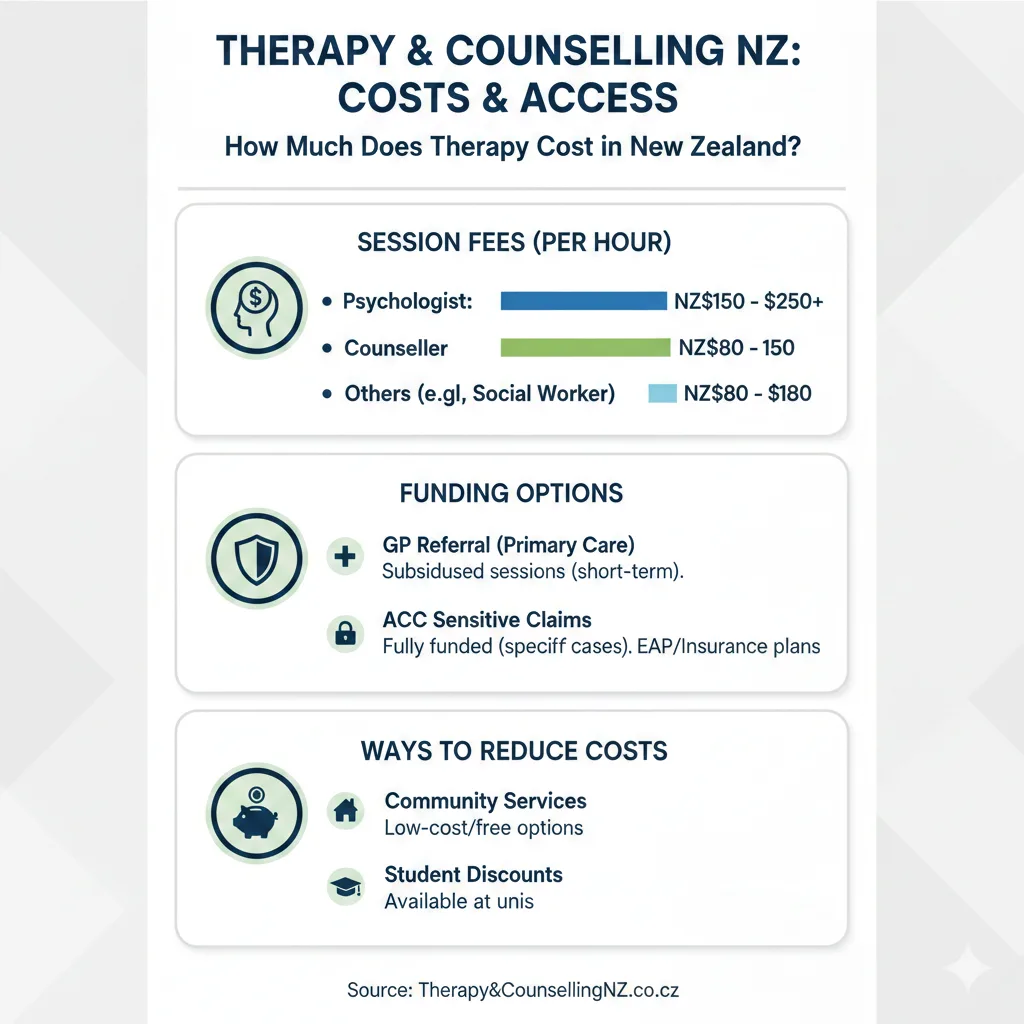
Therapy costs in Aotearoa vary depending on the therapist's qualifications, experience, and location. Here's what you can typically expect to pay:
- Individual counselling or therapy: $130–$160 per 60-minute session for online appointments, or $135–$160 for in-person sessions
- Couple or relationship therapy: $165–$175 per 60-minute session, with longer sessions (90 minutes) costing around $265
- Clinical psychologists: $185–$250 per 50-minute session
- Student counsellors or intern psychotherapists: $78 per 50-minute session for more affordable options
- Group programmes and coaching: $75–$180 per session depending on format and duration
The variation in pricing reflects differences in therapist training, registration status, and whether they're based in major cities or regional areas. Some therapists offer reduced fees for longer-term commitments, so it's worth asking about this when you first contact them.
Types of Therapy Available
Individual Counselling and Therapy
Individual therapy is the most common type of mental health support. It covers a wide range of issues including anxiety, depression, trauma, and life transitions. Sessions typically last 60 minutes, though some providers offer shorter 30-minute check-ins or longer 90-minute sessions.
Couple and Relationship Therapy
If you're working through relationship challenges—whether you're married, in a de facto relationship, or even working through friendship or family dynamics—couple therapy can help. Many therapists now offer support for various relationship structures, including polycules and work relationships.
Discernment Counselling
For relationships on the brink of separation, discernment counselling helps couples explore whether to stay together or separate with clarity and support.
Group Programmes and Psychoeducation
Group-based therapy programmes typically run for 4–12 weeks and are often more affordable than one-on-one sessions. These are useful for learning specific skills or connecting with others facing similar challenges.
Government Funding and Support for Therapy
WINZ Disability Allowance
If you're on a benefit or hold a Community Services Card, you may be eligible for WINZ Disability Allowance that can help cover counselling and psychotherapy costs. WINZ may provide up to $60 per week towards these services. Contact your local WINZ office or check the WINZ website to see if you qualify.
Anxiety NZ Funded Appointments
Children, students, and low-income earners may access up to 30 funded appointments with a psychologist through Anxiety NZ. This is a significant support if you meet their criteria, as it can substantially reduce your out-of-pocket costs.
Victim Support
If you've been a witness or victim of serious crime, Victim Support may provide free counselling services to help you process your experience.
Private Health Insurance
Many private health insurance providers now offer rebates for psychological services. Check with your health fund to see what you're eligible for—this varies depending on your level of cover.
Workplace or Organisational Support
Some employers offer Employee Assistance Programmes (EAPs) that provide free or subsidised counselling. Check with your HR department to see what's available to you.
How to Find and Access Therapy in New Zealand
Online vs. In-Person Therapy
Most New Zealand therapists now offer both online and in-person options. Online therapy is often slightly cheaper and more convenient if you can't travel to appointments. Many providers can see you within 48 hours for online sessions. However, some people prefer the face-to-face connection of in-person therapy.
Finding a Therapist
You can find registered therapists through:
- Therapy provider websites that list therapists and their specialties
- Recommendations from your GP or healthcare provider
- Online directories that let you search by location, issue, and approach
- Community mental health services through your local District Health Board
When you contact a therapist, it's fine to ask about their experience with your specific issue, their approach, and whether they offer any discounts for longer-term work.
Response Times
Most therapy providers monitor contact requests daily, though responses are typically sent on the next working day (Monday–Friday), excluding public holidays. If you need urgent crisis support, contact the Mental Health Foundation of New Zealand or call a crisis helpline rather than waiting for a therapy appointment.
Reducing Therapy Costs
Lower-Cost Counselling Options
If standard therapy fees are out of reach, several organisations offer more affordable counselling:
- Student or intern therapists: These professionals are still training but are supervised and cost significantly less—often around $78 per session
- Community counselling services: Some charge on a sliding scale based on your income
- Group programmes: These are typically cheaper per session than one-on-one therapy and offer the added benefit of peer support
Negotiating Fees
Don't be afraid to discuss fees with your therapist. Many are willing to negotiate reduced rates for longer-term work or discuss payment plans.
Using Your Health Insurance
If your private health fund offers rebates, use them. Even a partial rebate can make a real difference to your out-of-pocket costs.
What to Expect When Starting Therapy
Your first session is typically an assessment where you and your therapist discuss your concerns, goals, and what you hope to achieve. They'll explain their approach and answer any questions you have about fees, cancellation policies, and confidentiality.
Most therapists require at least 24 hours' notice if you need to cancel or reschedule an appointment—otherwise, a cancellation fee may apply. This policy exists because the therapist has set aside time specifically for you.
Frequently Asked Questions
Is therapy covered by ACC?
ACC (Accident Compensation Corporation) may cover counselling for injuries caused by accidents, but not for mental health conditions that aren't accident-related. Check with ACC directly to see if your situation qualifies for coverage.
Can I claim therapy costs on my tax return?
Personal therapy costs are generally not tax-deductible in New Zealand unless they're specifically required for work-related reasons. However, if your employer is paying for therapy through an EAP, that's not taxable income for you.
How long does therapy typically take?
This varies greatly depending on your needs and the issues you're addressing. Some people benefit from short-term therapy (6–12 sessions), while others work with a therapist long-term. Your therapist will discuss this with you and help you set realistic goals.
What's the difference between a counsellor, psychotherapist, and psychologist?
In New Zealand, these titles aren't always strictly regulated, but generally: counsellors provide support for life issues and emotional wellbeing; psychotherapists use various therapeutic techniques to help with deeper psychological issues; and psychologists have formal university qualifications and can diagnose mental health conditions. Always check a therapist's qualifications and registration status.
Do I need a GP referral to see a therapist?
No, you don't need a GP referral to access private therapy. However, your GP can provide a referral if you want to access publicly funded mental health services through your District Health Board, or if you want to claim on your health insurance.
What if I can't afford therapy?
Several options are available: check if you qualify for WINZ support, look into Anxiety NZ's funded appointments if you're a student or low-income earner, ask about student or intern therapists (who charge less), explore community counselling services, or discuss payment plans with private therapists. Don't let cost prevent you from seeking help—there are always options.
Taking the First Step
Starting therapy is a significant decision, and it's natural to feel nervous about reaching out. Remember that finding the right therapist might take a bit of trial and error—it's okay to try a few sessions with someone and decide they're not the right fit.
Start by identifying what you'd like support with, then research therapists in your area or online. Check their qualifications, read reviews if available, and don't hesitate to ask questions before booking. Many therapists offer free initial consultations or brief phone calls to see if you're a good match.
Whether you're dealing with anxiety, relationship issues, grief, or just need someone to talk to, therapy can be a valuable investment in your mental health and wellbeing. With the range of costs, funding options, and delivery methods available in Aotearoa, there's likely an option that works for your budget and lifestyle.
Related Articles

Working Multiple Jobs NZ: Tax and Legal Considerations
Juggling multiple jobs can boost your income, but it's crucial to understand the tax implications and legal requirements that come with working more than one role in Aotearoa. Whether you're a contrac...

Name Changes NZ: Legal Process and Costs
Considering a fresh start with a new name? Whether it's after marriage, divorce, or simply embracing a personal transformation, changing your name in New Zealand is straightforward but requires follow...

Holiday Home Tax Rules NZ: Private Use and Rental
Own a bach in Coromandel or a holiday home in Queenstown? You're not alone—many Kiwis cherish these escapes, but renting them out while enjoying personal use can trip you up on tax rules. Getting the...

Industry Bodies and Professional Associations NZ
Whether you're launching a business, advancing your career, or navigating financial regulations, industry bodies and professional associations in New Zealand offer invaluable support. These organisati...