Being a Landlord in NZ: Complete Legal Guide

Ever wondered if property investment could be your ticket to financial freedom, but the legal maze of being a landlord in New Zealand has you hesitating? You're not alone—thousands of Kiwis dip their...
The Lifetimes NZ editorial team curates, fact-checks, and updates guides on personal finance, property, health, immigration, legal, business, and lifestyle topics relevant to Lifetimes NZ readers. Articles are produced with AI assistance and reviewed by the editorial team before publication.
Ever wondered if property investment could be your ticket to financial freedom, but the legal maze of being a landlord in New Zealand has you hesitating? You're not alone—thousands of Kiwis dip their toes into landlording each year, balancing rewarding returns with strict rules designed to keep tenants safe and properties top-notch. This complete guide unpacks everything you need to know in 2026, from Healthy Homes compliance to pet policies and beyond, so you can invest confidently without nasty surprises.
Understanding Your Core Responsibilities as a Landlord
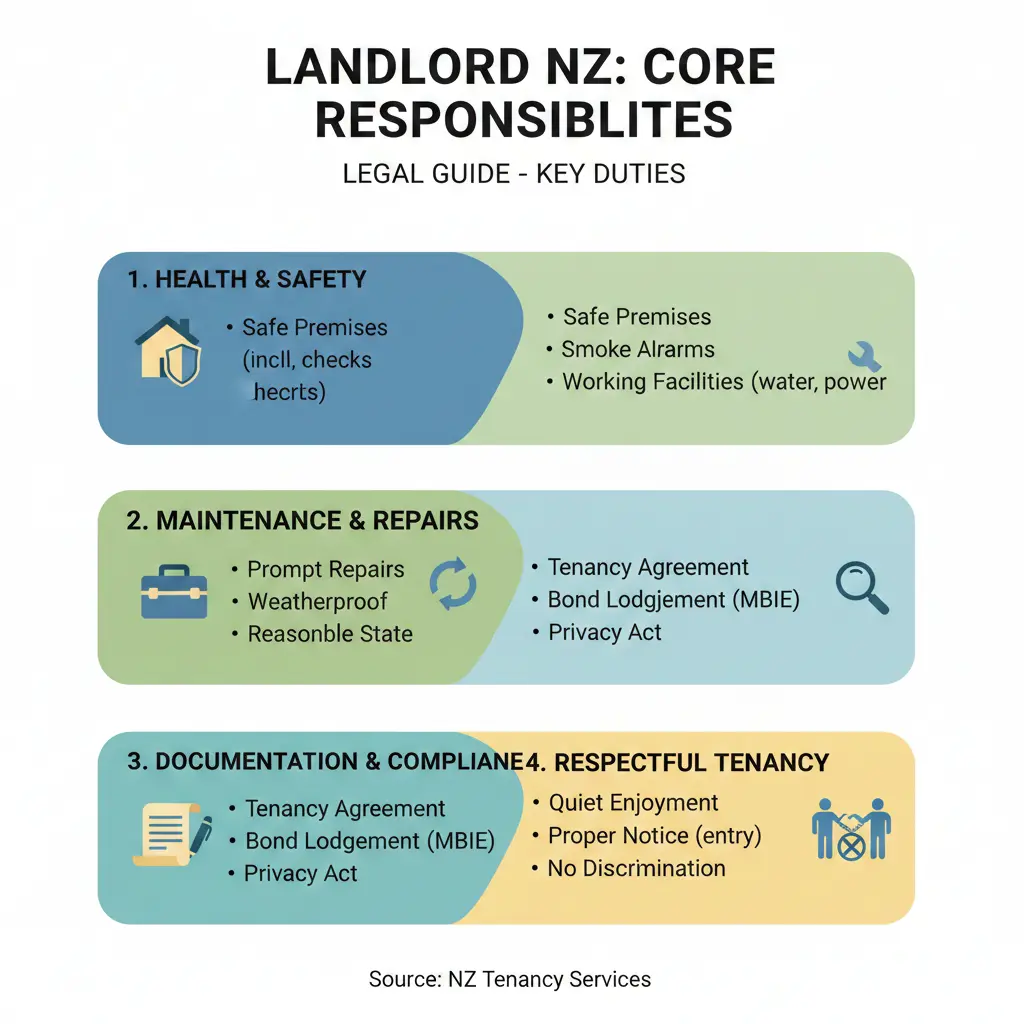
Before listing your property or signing that first tenancy agreement, grasp the basics: as a landlord, you're legally bound to provide a safe, habitable home. Under the Residential Tenancies Act 1986, this covers everything from structural integrity to health and safety features like working smoke alarms. Fail to meet these, and you risk Tenancy Tribunal orders to repay rent, pay compensation, or face fines—properties deemed unlawful for renting could even lead to penalties up to $7200 per breach.
Start by inspecting your property thoroughly. Ensure all maintenance and repairs are done pre-tenancy. All rentals must have ceiling and underfloor insulation, plus compliant smoke alarms. It's practical advice: get a professional assessment early to sidestep disputes.
Key Legal Must-Dos Before Renting Out
- Buildings, health, and safety checks: Verify compliance with council building codes and any resource consents.
- Smoke alarms and insulation: Mandatory and must be functioning.
- Healthy Homes Standards (HHS): Non-negotiable minimums—more on this below.
Pro tip for Kiwi landlords: Use Tenancy Services' free resources to checklist your setup. It's a small step that saves big headaches later.
Healthy Homes Standards: Your 2026 Compliance Checklist
The Healthy Homes Standards, introduced via the Residential Tenancies (Healthy Homes Standards) Regulations 2019, set minimum benchmarks across five areas: insulation, heating, ventilation, moisture ingress and drainage, and draught stopping. By 1 July 2025, every private rental in New Zealand must fully comply—no exceptions for most properties. In 2026, expect stricter enforcement, so if you're yet to upgrade, act now to avoid fines up to $7200 per breach.
Breakdown of the Five Standards
| Standard | Requirements | Why It Matters |
|---|---|---|
| Insulation | Ceiling and floor to 2008 R-value standards | Boosts energy efficiency, cuts bills |
| Heating | Approved appliance in main living room (e.g., fixed electric heater, not just a plug point); sized for room | Keeps tenants warm, prevents mould |
| Ventilation | Extractor fans in kitchen/bathroom, openable windows | Reduces dampness and health risks |
| Moisture Ingress & Drainage | Effective gutters, downpipes, ground slope away from foundations | Prevents water damage and structural issues |
| Draught Stopping | Seal gaps around doors, windows, chimneys | Improves comfort and efficiency |
Landlords must include a compliance statement in every new or renewed tenancy agreement from 1 December 2020, detailing each standard's status. Keep records handy—tenants can request proof, and an official HHS Compliance Certificate from an accredited assessor is gold. Download Tenancy Services' Healthy Homes toolkit for step-by-step guidance.
"Preventing mould is a dual obligation: tenants heat and ventilate daily, but landlords must provide a mould-prone-free house with proper means."
Tenancy Agreements: Getting It Right in 2026
Your tenancy agreement is your shield. It must outline rights, responsibilities, and specifics like rent, bond, and Healthy Homes compliance. Use the official Tenancy Services form to stay compliant—custom clauses are fine if they don't contradict the Residential Tenancies Act.
Essential Clauses for New Landlords
- Compliance statements: HHS details, fireplace/chimney status, drainage efficiency.
- Rent and bond: Fixed-term or periodic; bonds lodged with Tenancy Services (max 4 weeks' rent).
- Maintenance: You're responsible for fair wear and tear fixes; tenants handle minor upkeep.
- Entry rights: 48 hours' notice for inspections, except emergencies.
In 2026, the reintroduced "no cause" termination for periodic tenancies gives flexibility: 90 days' notice without reason. Always document everything—photos, emails—to protect against Tribunal claims.
Pets in Rentals: Navigating the 2026 Changes
Pets are now a hot topic. Recent amendments require landlords to consider pet requests case-by-case—you can't blanket ban them anymore. Update agreements to include a pet approval process, definitions (e.g., what counts as a pet), and liability clauses.
Pet Bonds and Approval Rules
- Pet bond: Up to 2 weeks' rent, per tenancy (not per pet), lodged with Tenancy Services. Exempt for assistance dogs or pre-existing pets.
- Decline reasonably: Body corporate rules, property risks (no fencing), safety (aggressive breeds), overcrowding, or tenant history.
- No surcharges: Weekly pet rent is unlawful—stick to bonds.
Action step: Set decision criteria now. For example, approve a small cat in a fenced yard but decline two large dogs in a unit. If managing multiple properties, services like property managers can handle updates seamlessly.
Insurance Essentials for Landlords
Don't overlook insurance—it's your safety net. Landlord insurance covers more than standard home policies: loss of rent, tenant damage, and public liability up to $20 million.
Handling Vacant Properties in 2026
Insurers like AMP, Tower, and Initio enforce strict occupancy clauses. Vacant over 60 days? Notify immediately or risk policy voidance for misrepresentation under the Contracts of Insurance Act 2024. Frequency checks: every 3-6 months depending on provider. Update cover before status changes to keep liability protection intact.
Kiwi tip: Shop around for landlord-specific policies via brokers. Combine with contents insurance for appliances you supply.
Recent Law Changes Impacting 2026 Landlords
The rental market evolves fast. Key 2026-relevant updates include pet bonds for certainty, "no cause" notices for flexibility, and ongoing HHS enforcement. Watch infrastructure like Penlink (opening 2028) boosting property values in affected areas—compliant rentals capture max appreciation. Stay informed via govt.nz and Tenancy Services for amendments.
Next Steps: Start Your Landlord Journey Right
Ready to dive in? Audit your property against Healthy Homes today, update tenancy templates for pets, secure insurance, and lodge bonds properly. Connect with Tenancy Services for free advice, or hire a property manager for hands-off compliance. With rental demand steady in 2026, compliant Kiwis are poised for solid returns. Check resources like tenancy.govt.nz weekly—knowledge is your best investment.
Frequently Asked Questions
Sources & References
-
1
Healthy Homes Standards: What Landlords Must Do Before 2026 — rwsilverdale.co.nz
-
2
Information for new landlords - Tenancy Services — www.tenancy.govt.nz
-
3
NZ Landlord Guide 2026: Navigating Vacant Property Insurance — quashed.co.nz
-
4
The 2026 Pet Law Change: What NZ Landlords Should Be Doing — 360propertymanagement.co.nz
-
5
Keeping your home warm and dry: What your landlord has to provide — communitylaw.org.nz
-
6
Rental Market Outlook 2026: What NZ Landlords Should Expect — www.xclusive.co.nz
- 7
Related Articles

Buying Off-Plan: How to Avoid the Common 2026 Construction Pitfalls
Picture this: you've spotted the perfect off-plan apartment in Auckland's bustling Wynyard Quarter, visions of harbour views and modern living dancing in your head. But months turn into years, costs b...
Property Investment 2026: Is Negative Gearing Still a Valid Strategy?
Imagine pouring your hard-earned KiwiSaver savings into a rental property, only to watch interest rates climb and rents lag behind. For years, negative gearing offered a tax lifeline, letting you offs...

Bright-Line Test Explained: Tax on Property Sales
Ever flipped a property for a quick profit or held onto an investment longer than planned? In New Zealand, the Bright-Line Test could mean the difference between keeping your gains or handing a chunk...

Interest Deductibility for Rental Properties NZ
Imagine pouring your hard-earned cash into a rental property, only to watch a big chunk of your mortgage interest payments get clawed back by the IRD come tax time. For years, that's been the reality...