Buying Off the Plans in NZ: Risks and Rewards

Picture this: you're scrolling through real estate listings, and a shiny new development catches your eye—modern apartments or townhouses in a prime Kiwi location, priced lower than comparable complet...
James writes about the New Zealand property market, renting, home ownership, and housing costs. He breaks down complex property topics into practical advice for renters and buyers.
Picture this: you're scrolling through real estate listings, and a shiny new development catches your eye—modern apartments or townhouses in a prime Kiwi location, priced lower than comparable completed homes. It's tempting, right? Buying off the plans in New Zealand lets you secure your dream home before it's built, but like any big decision, it comes with both exciting rewards and potential pitfalls. Whether you're a first-home buyer eyeing KiwiSaver withdrawals or an investor locking in today's prices, understanding the full picture is key to making a smart move.
What Does Buying Off the Plans Mean in NZ?
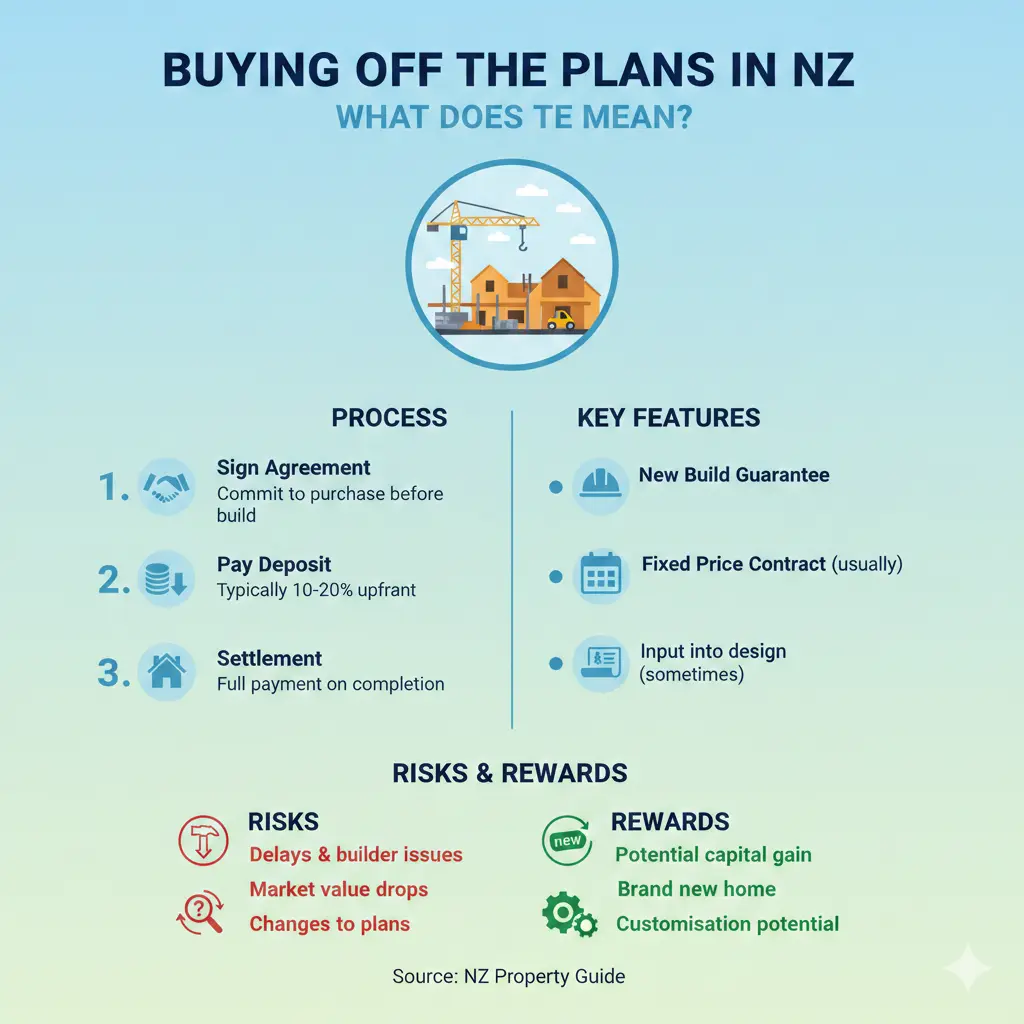
Buying off the plans means signing a contract for a property that's yet to be built, often under a turn-key contract. You pay an initial deposit—typically 10% of the purchase price—held safely in your lawyer's trust account. The developer then constructs the home, including land, dwelling, plumbing, kitchen, and landscaping. Once it passes final inspection and receives its Code of Compliance Certificate (CCC), you settle the balance and move in.
This process suits Kiwi buyers who want new builds compliant with the latest Building Code, complete with 10-year warranties under the Building Act 2004. It's common in high-demand areas like Auckland, Wellington, and Christchurch, where developments promise modern features without the premium of established properties.
The Standard Off-the-Plans Process
- Get pre-approved for finance: Lenders offer conditional approval, but final sign-off depends on completion. Factor in potential interest rate changes.
- Review plans and specs: Study architectural drawings, 3D models, and visit display homes to visualise your future pad.
- Sign the agreement: Pay the 10% deposit (or 5% with Kāinga Ora First Home Loan if eligible).
- Construction phase: No repayments until settlement—use this time to save via KiwiSaver or extra shifts.
- Settlement: Inspect, get the CCC, pay the balance, and turn the key.
Rewards of Buying Off the Plans
Despite the unknowns, off-the-plans purchases offer compelling upsides, especially in NZ's competitive market. Here's why many Kiwis jump in:
- Lock in today's price: Secure a home at current rates; if values rise during construction (as seen in past booms), you're quids in.
- Lower deposit: Just 10% upfront, or 5% via Kāinga Ora schemes—perfect for first-home buyers tapping KiwiSaver.
- No repayments during build: Gives breathing room to save, with no interest accruing on your mortgage yet.
- Brand new with warranties: Built to modern standards, backed by 10-year master builder guarantees under the Building Act.
- Incentives: Councils like Wellington offer up to $5,000 rates remission for first-home buyers on off-the-plans buys.
- Easier lending: Banks often prefer fixed-price new builds over speculative land-and-build contracts.
For investors or families, it's a chance to enter hot suburbs without competing at auctions. In 2026, with steady market recovery, these perks shine brighter.
Risks and How to Mitigate Them
Off-the-plans isn't risk-free—construction delays, market shifts, and developer woes can trip you up. But with due diligence, you can protect yourself.
Key Risks
- Market fluctuations: If prices drop by settlement, you're locked into the original price—no backing out without penalties.
- Interest rate uncertainty: Can't fix rates until near completion; rising OCR in 2026 could hike costs.
- Construction blowouts: Rising material costs might strain developers, risking incompletion.
- Sunset clauses: Allow either party to cancel if delayed—ensure yours protects you, not just the developer.
- Plan changes: Developer might alter specs (e.g., smaller lot, no carpark) or hike prices—check lender approval for variations.
- Developer reliability: Research track record; leaky builds haunt NZ history.
- Title issues: Review parent titles, resource consents, and covenants for hidden easements.
Practical Tips to Minimise Risks
Arm yourself with these steps:
- Hire a specialist lawyer: Scrutinise sunset clauses, deposit protections, and variation rights. Limit lot size changes with compensation triggers.
- Check developer and builder: Google past projects, read reviews, confirm builder's warranty.
- Secure finance early: Get pre-approval covering completion date and rate rises. Chat to a mortgage adviser experienced in new builds.
- Visualise thoroughly: Probe plans for sunlight, layout, laundry access. Visit similar developments.
- For foreigners: Confirm OIO eligibility—new builds in exempt large developments (20+ units) often okay, but resale bans apply.
- Budget extras: Factor legal fees, inspections, and potential NZD volatility if exchanging currency.
"Before accepting any proposal in relation to changes, ensure your lender is still willing to offer the required lending."
New Zealand-Specific Considerations for 2026
Our property scene has unique quirks. Off-the-plans sidesteps some Overseas Investment Act hurdles—Aussies and Singaporeans buy freely if resident; others need OIO consent or exemptions for new builds. First-home buyers, leverage Kāinga Ora's low-deposit options and KiwiBuild-inspired developments.
Watch building regulations: Post-2024 updates emphasise healthy homes standards, insulation, and earthquake resilience. Rates relief varies—check your council (e.g., Wellington's $5k rebate). In 2026, with moderating inflation, construction timelines might shorten, but supply chain hiccups linger.
Real Kiwi Examples
Take Auckland's Wynyard Quarter apartments: Buyers locked in 2023 prices, settling in 2025 amid rising values—big wins. Contrast with Christchurch's delayed townhouse project in 2022, where sunset clauses let buyers walk amid cost overruns. Lessons? Vet developers like you'd check a tradie's refs.
FAQ
Can first-home buyers get lower deposits for off-the-plans?
Yes, Kāinga Ora First Home Loans allow 5% deposits if criteria met—ideal for new builds.
What if the build is delayed?
Sunset clauses kick in; negotiate yours to allow exit without losing deposit. Lawyer review essential.
Are off-the-plans good investments in 2026?
Potentially yes, locking prices amid steady growth, but assess market cycles and yields.
Do I need OIO approval as a non-resident?
Often not for exempt new builds in large developments, but check eligibility first.
What warranties come with new builds?
10-year coverage under Building Act for structural issues, plus developer guarantees.
Can I back out if plans change?
Depends on contract—insist on consultation rights and lender re-approval for variations.
Next Steps to Buy Off the Plans Confidently
Ready to dive in? Start with pre-approval from your bank or adviser, then scout reputable developers via realestate.co.nz or Trade Me Property. Engage a property-savvy lawyer early—don't skip this. Visit display suites, crunch numbers with a mortgage broker, and run scenarios for rates and market shifts. For first-timers, contact Kāinga Ora or WINZ for grants. With eyes wide open, buying off the plans could be your ticket to homeownership in Aotearoa.
Sources & References
-
1
The ultimate guide to buying a new build off-plan in NZ - Squirrel — www.squirrel.co.nz
-
2
Buying property in New Zealand in 2026 - Smart Currency Exchange — www.smartcurrencyexchange.com
-
3
The Main Risks of Buying Off The Plans | FHBC NZ — www.thefirsthomebuyersclub.co.nz
-
4
HOME BUYERS GUIDE - Buying off the plans (Part 1) - Gibson Sheat — www.gibsonsheat.com
-
5
Tips for Buying a Property Off the Plans — www.mortgageadvicecompany.nz
-
6
Future-Proof Your Investment: Our Guide to Off the Plan Purchases — www.franklinlaw.co.nz
-
7
Buying Off the Plans: Pros and Cons You Need to Know — www.opespartners.co.nz
-
8
The Beginner's Guide to Property Investing in 2026 - YouTube — www.youtube.com
Related Articles

First Home Grant NZ: How to Get Up to $10000
Buying your first home is one of the biggest financial decisions you'll make, and the New Zealand government wants to help. The First Home Grant puts up to $10,000 directly towards your deposit, makin...

Why 2026 is the Hardest Year to Buy a Home (and How to Beat the Odds)
Imagine standing at the edge of the property ladder in 2026, eyeing your dream home while prices hover stubbornly high, listings pile up, and buyer confidence wavers. For Kiwis, this year feels toughe...

Buying Your First Home in 2026: A Step-by-Step NZ Checklist
Imagine standing in your own Kiwi bach or cosy family home, keys in hand, after years of renting. In 2026, with interest rates stabilising and first-home schemes still strong, buying your first home i...

Selling Your Home? 10 Low-Cost Renovations That Add $50k in Value
If you're planning to sell your home in New Zealand, you don't need to break the bank with a complete renovation to attract buyers and boost your sale price. The good news? Some of the most effective...