The "Granny Flat" Revolution: Everything You Need to Know About the New Building Rules
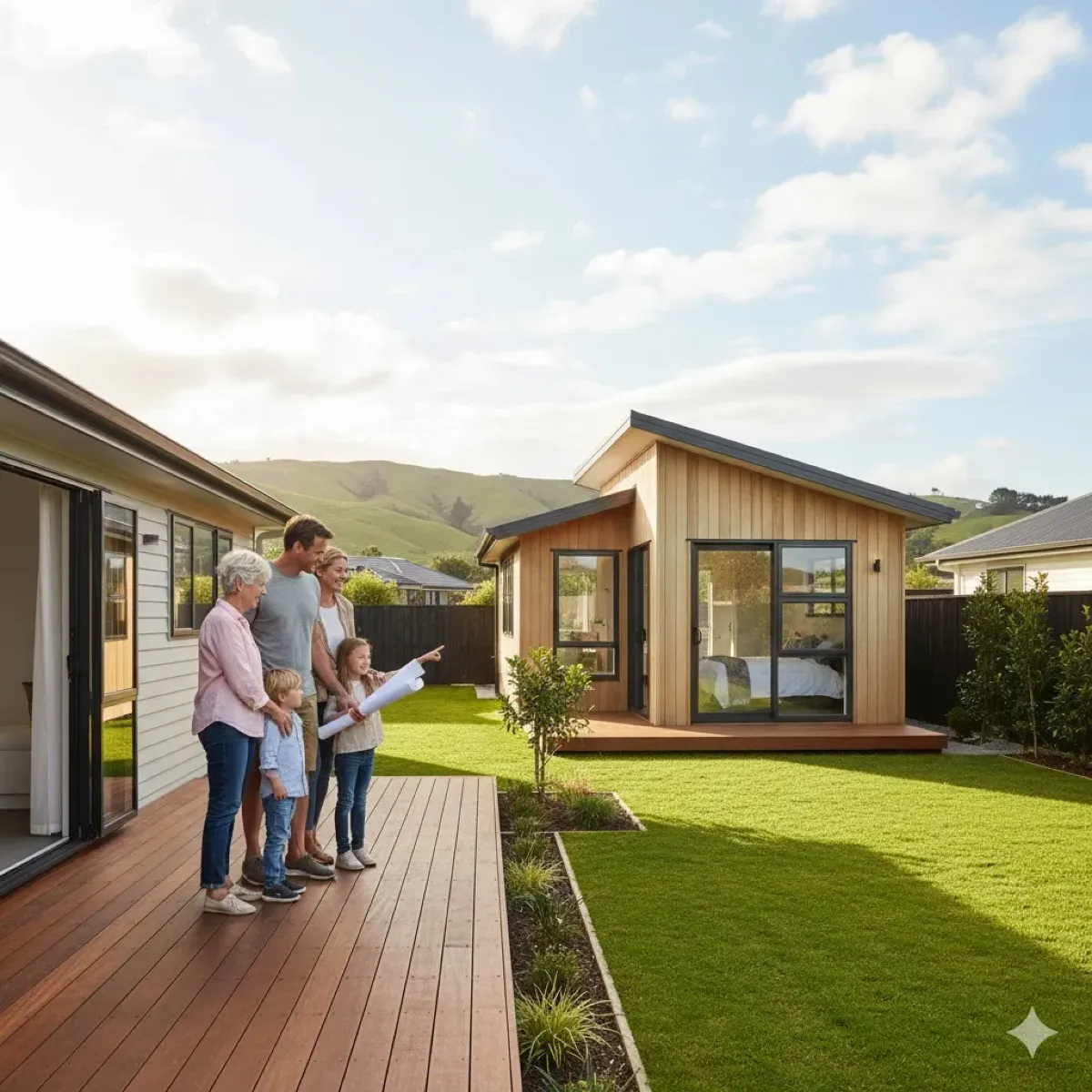
Imagine unlocking extra space on your section without the endless paperwork and delays of council consents. That's the promise of New Zealand's new granny flat rules, kicking in from 15 January 2026,...
James writes about the New Zealand property market, renting, home ownership, and housing costs. He breaks down complex property topics into practical advice for renters and buyers.
Imagine unlocking extra space on your section without the endless paperwork and delays of council consents. That's the promise of New Zealand's new granny flat rules, kicking in from 15 January 2026, letting Kiwis build standalone units up to 70sqm with far less hassle.
Whether you're housing whānau, generating rental income, or creating a home office, this change is set to revolutionise how we use our properties. But it's not a free-for-all – strict rules ensure safety and compliance. Here's everything you need to know to get started right.
What Are the New Granny Flat Rules?
From 15 January 2026, homeowners can build a detached, self-contained granny flat up to 70 square metres without needing a building consent or resource consent, provided it meets specific criteria. This reform, passed unanimously by Parliament in October 2025, aims to boost housing supply, support multigenerational living, and cut costs for families.
A granny flat is a small, independent dwelling on the same property as your main house, complete with kitchen, bathroom, and living/sleeping areas. It's perfect for ageing parents, grown kids, tenants, or even Airbnb guests.
Key Eligibility Criteria
To qualify for the exemption, your granny flat must tick these boxes:
- Size: Maximum 70sqm net floor area (single-storey, no mezzanines).
- Detached: Standalone structure, not attached to the main house.
- Self-contained: Full kitchen, bathroom, and living space for one household.
- Building Code compliant: Must meet all NZ Building Code standards for structure, insulation (like H1 standards), weather-tightness, and habitability – consent-free doesn't mean standard-free.
- No DIY: Work must be done or supervised by licensed building practitioners (LBPs) who issue compliance certificates.
You still need to notify your local council before starting and upon completion, even without formal consents.
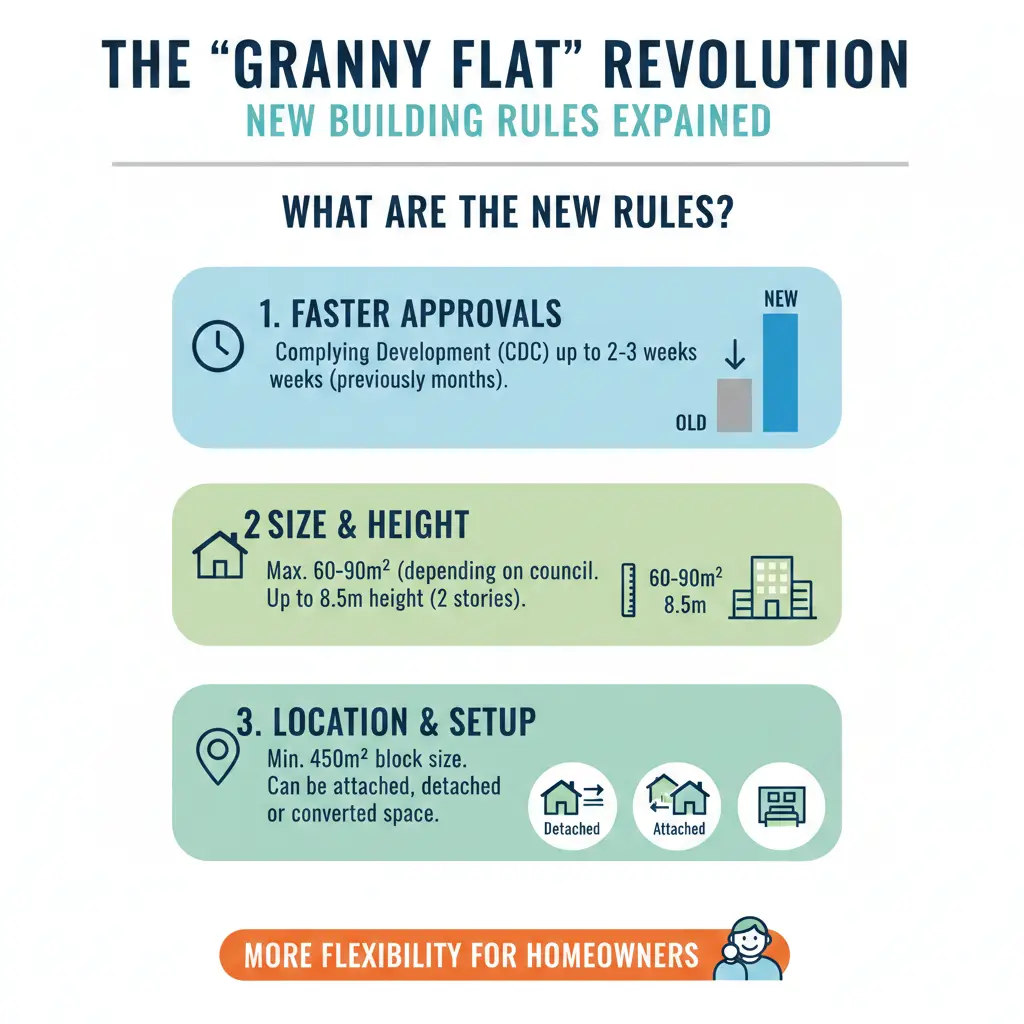
Site Rules and Placement Requirements
Placement is crucial – get it wrong, and you could lose the exemption. Your granny flat must comply with district plan rules on boundaries, height, and coverage.
Boundary Setbacks and Height Limits
- Adhere to your council's minimum distances from boundaries, roads, and other buildings (often 1.5m from sides/rear, more from the street).
- Height caps typically apply – usually under 4.5m to the ridge.
- Site coverage limits (e.g., no more than 50% of your section covered by buildings).
Check your local district plan first via your council's website or GIS mapping tool. For example, in Auckland, use the Auckland Council Unitary Plan viewer; in Christchurch, the District Plan online.
Other Site Considerations
- No building over sewers, power lines, or flood-prone areas without checks.
- Councils might charge development contributions based on location.
- Ensure access to power, water, and wastewater – connections often need separate approvals.
Step-by-Step Guide to Building Your Granny Flat
Planning ahead is key. Here's a practical roadmap for Kiwis ready to act.
Step 1: Research and Design (Now – Pre-2026)
Start designing today. Engage an architect, designer, or LBP to create code-compliant plans. Use tools like free checklists from builders to cover net floor area, insulation, and ventilation. Expect costs from $150,000–$250,000 for a quality 70sqm build, depending on finishes and location.
Step 2: Notify Council and Prep Paperwork
- Confirm your site complies with district plan rules – no resource consent needed if it does.
- Notify council of intent to build under the exemption.
- Gather producer statements from designers and engineers for code compliance.
Step 3: Build with Licensed Pros
Hire LBPs for all work. No council inspections during construction, but pros must certify each stage. Document everything – photos, receipts, certificates – for your records.
Step 4: Completion and Final Notification
Notify council on finish. Submit LBP certificates and as-built plans. You're good to occupy or rent – but inform tenants of any rates implications via IRD.
Costs, Savings, and Real Kiwi Examples
Skipping consents saves $10,000–$30,000 in fees and 3–6 months in delays. Total build costs? Budget $2,000–$3,500 per sqm for a turnkey granny flat.
In Canterbury, families are already queuing up to house extended whānau amid high demand. Aucklanders eye rentals to offset mortgages, while rural Kiwis create space for farm workers. One early adopter in the YouTube explainer built a compliant 70sqm unit for whānau, stressing designer involvement from day one.
| Cost Breakdown (70sqm Granny Flat) | Estimated Range |
|---|---|
| Design & Plans | $5,000–$10,000 |
| Materials & Labour | $140,000–$210,000 |
| Connections (Power/Water) | $5,000–$15,000 |
| Saved: Consents | $10,000–$30,000 |
Common Pitfalls and How to Avoid Them
- Oversizing: Stick to 70sqm net – garages or decks don't count, but watch total footprint.
- Non-Compliance: Skimping on insulation or structure risks fines or demolition.
- Site Errors: Measure setbacks precisely; use a surveyor if unsure.
- Rental Rules: Comply with Healthy Homes Standards for tenants; register with IRD for income tax.
Tip: Partner with reputable Kiwi builders experienced in exemptions – they'll handle LBP certs and paperwork seamlessly.
Ready to Join the Granny Flat Revolution?
These rules make it easier than ever for Kiwis to maximise their sections. Start by checking your district plan, sketching ideas, and chatting with local LBPs. With demand spiking, lock in builders now to avoid queues.
Next steps: Download a free compliance checklist, contact your council, and get quotes. Your dream granny flat could be reality by winter 2026 – safe, compliant, and consent-free.
Frequently Asked Questions
Sources & References
-
1
NZ Granny Flat Law 2026: Build Without Consent Explained — addvaluerenovations.co.nz
-
2
New Granny Flat Regs - Sheds4U — sheds4u.co.nz
-
3
2026 Building Code Changes: What NZ Homeowners Should Know — www.ariesbuildersnz.com
-
4
Granny Flats Without Consent? NZ's New Rules Fully Explained 2026 — www.youtube.com
-
5
New Granny Flat Rules Make It Easier for Kiwis to Build at Home — rwmarshland.co.nz
-
6
Watch: Ministers mark start of new granny flats rules | RNZ News — www.rnz.co.nz
-
7
2026 Granny Flat Rules NZ | Free 70m² Checklist — www.thelittlebigtinyhouse.nz
Related Articles
First Home Grant NZ: How to Get Up to $10000
Buying your first home is one of the biggest financial decisions you'll make, and the New Zealand government wants to help. The First Home Grant puts up to $10,000 directly towards your deposit, makin...

Why 2026 is the Hardest Year to Buy a Home (and How to Beat the Odds)
Imagine standing at the edge of the property ladder in 2026, eyeing your dream home while prices hover stubbornly high, listings pile up, and buyer confidence wavers. For Kiwis, this year feels toughe...

Buying Your First Home in 2026: A Step-by-Step NZ Checklist
Imagine standing in your own Kiwi bach or cosy family home, keys in hand, after years of renting. In 2026, with interest rates stabilising and first-home schemes still strong, buying your first home i...
Selling Your Home? 10 Low-Cost Renovations That Add $50k in Value
If you're planning to sell your home in New Zealand, you don't need to break the bank with a complete renovation to attract buyers and boost your sale price. The good news? Some of the most effective...