Rest and Meal Breaks NZ: What You're Entitled To

Ever started your shift buzzing with energy, only to hit a wall by mid-afternoon because you couldn't grab a proper break? You're not alone—many Kiwis juggle long hours without knowing their full righ...
The Lifetimes NZ editorial team curates, fact-checks, and updates guides on personal finance, property, health, immigration, legal, business, and lifestyle topics relevant to Lifetimes NZ readers. Articles are produced with AI assistance and reviewed by the editorial team before publication.
Ever started your shift buzzing with energy, only to hit a wall by mid-afternoon because you couldn't grab a proper break? You're not alone—many Kiwis juggle long hours without knowing their full rights to rest and meal breaks under New Zealand law. These entitlements aren't just nice-to-haves; they're protected by the Employment Relations Act 2000 to keep you healthy, productive, and refreshed during your workday.
In this guide, we'll break down exactly what you're entitled to for rest and meal breaks NZ, including timings, payments, and exceptions. Whether you're clocking standard hours or pulling overtime, understanding these rules empowers you to advocate for yourself and avoid burnout. Let's dive into the details straight from official sources.
What Are Rest and Meal Breaks in New Zealand?
Rest breaks are short, paid pauses—minimum 10 minutes each—designed for you to rest, refresh, or handle personal matters without clocking off. Meal breaks, on the other hand, are longer unpaid periods—at least 30 minutes—where you can eat, leave the workplace, or recharge, as long as you return on time.
These breaks must be appropriate for the length of your working day and give you a reasonable chance to recover. Employers can't just pay you extra instead of providing them, except in rare cases like essential services or national security roles. The rules apply to most employees, but individual employment agreements, collective agreements, or specific industries might offer more generous provisions.
Why Do These Entitlements Matter?
Skipping breaks leads to fatigue, stress, and higher risks of accidents, sick leave, or absenteeism. For employers, failing to provide them breaches employment law, potentially leading to penalties via Employment New Zealand or the Employment Relations Authority. For you, knowing your rights means better work-life balance and even ties into financial perks—like getting paid for rest breaks that boost your hourly earnings.
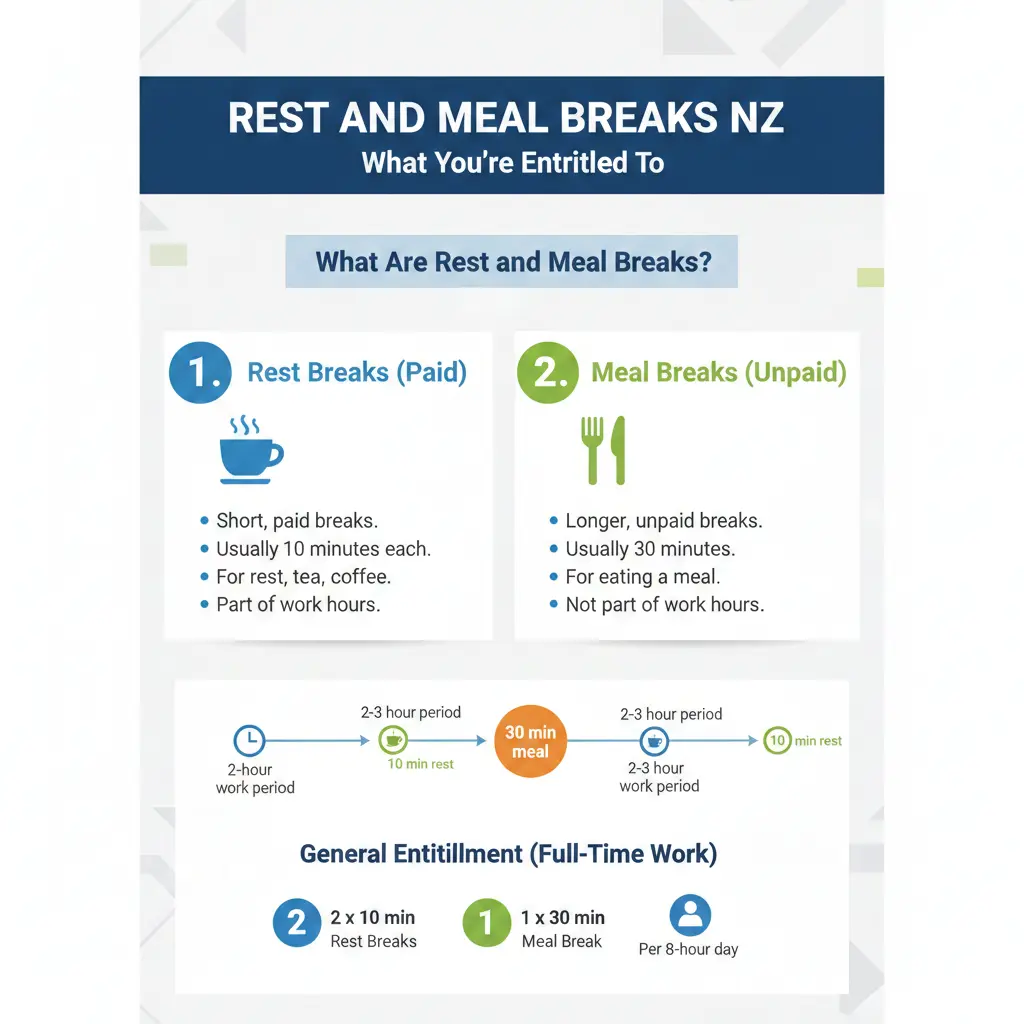
Rest and Meal Break Entitlements by Shift Length
Your entitlements scale with your shift duration. Here's the breakdown based on hours worked, as set out in the Employment Relations Act 2000. Note: These are minimums—your contract might exceed them.
| Hours Worked | Rest Breaks (Paid, 10 mins each) | Meal Breaks (Unpaid, 30 mins each) |
|---|---|---|
| Less than 2 hours | None | None |
| 2 or more, but less than 4 hours | 1 | None |
| More than 4, but no more than 6 hours | 1 | 1 |
| More than 6, but less than 10 hours | 2 | 1 |
| 10 or more, but no more than 12 hours | 3 | 1 |
| More than 12, but no more than 14 hours | 3 | 2 |
| More than 14, but no more than 16 hours | 4 | 2 |
Sources confirm this structure across official guidelines. For shifts over 8 hours, additional breaks follow the pattern, ensuring coverage throughout the day.
When Must Breaks Be Taken?
Timing isn't random—breaks spread evenly to keep you going. For example:
- More than 4 but no more than 6 hours: Rest break one-third through; meal break two-thirds through.
- More than 6 but less than 10 hours: First rest halfway to meal; meal in the middle; second rest halfway to end.
- 10-12 hours: First rest before meal, meal mid-first 8 hours, then rests spaced to end.
For longer shifts, breaks align around the first 8 hours, then repeat the pattern. Your employer sets exact times via agreement, but they must follow these guidelines.
Payment Rules: Paid Rest vs Unpaid Meals
Rest breaks are always paid—you're on the clock, treated as work time. Meal breaks are unpaid, but you can often leave the site. If your role requires staying (e.g., security), it might count as paid time—check your agreement.
Pro tip: Track your payslips. Rest break pay adds up, especially in casual or part-time roles, contributing to your KiwiSaver, ACC levies, and holiday pay calculations via IRD.
Exceptions and Special Circumstances
Not every job fits the standard mould. Exemptions apply to:
- Essential services (e.g., emergency services) or national security employers, but only if agreed and justified.
- Shifts under 2 hours: No breaks required.
- Alternative agreements: You can negotiate different timings or lengths if they meet the 'reasonable chance to rest' test, but never less than minimums.
Compensation instead of breaks? Rare and restricted—employers must provide actual time off. As of 2026, no major changes to these rules are in effect, though ongoing consultations monitor fairness.
What If Your Employer Doesn't Provide Breaks?
If breaks are skipped or denied, it's a breach. Keep records: note dates, times, and discussions. First, talk to your boss or HR—many issues resolve informally.
Next steps:
- Contact Employment New Zealand for free advice (0800 20 90 20).
- Raise a personal grievance within 90 days if unresolved.
- Lodge with the Labour Inspectorate for investigations.
Unions like FIRST Union or E tū offer support too. Breaches can lead to backpay, penalties, and even mediation.
Practical Tips for Kiwis Maximising Your Breaks
Make the most of your entitlements:
- Review your employment agreement: Spot better-than-minimum breaks.
- Communicate early: Suggest timings that suit team rosters.
- Use break time wisely: Stretch, hydrate, or step outside—boosts productivity.
- For shift workers: Factor in 11+ hours rest between shifts for recovery.
- Casual or gig economy? Breaks still apply per shift; track via apps like IRD's myIR.
In high-pressure sectors like retail, hospitality, or healthcare, advocate collectively. WINZ beneficiaries working part-time? Breaks count towards income reporting.
FAQ: Common Questions on Rest and Meal Breaks NZ
1. Can I work through my meal break for extra pay?
No, employers can't require this except in exempt cases. You must get the break.
2. What about on-call or remote work?
Breaks apply based on active hours worked. Discuss with your employer.
3. Do part-time or casual workers get breaks?
Yes, scaled to each shift's length—no daily cap.
4. Can breaks be at the start or end of my shift?
No, they must be during the work period, spread appropriately.
5. What if my industry has different rules, like farming or trucking?
Minimums apply unless a specific exemption or award exists—check with Employment NZ.
6. How do breaks affect my tax or KiwiSaver?
Paid rest time counts as income for IRD taxes, ACC, and KiwiSaver contributions.
Next Steps: Know Your Rights and Act
You're now equipped with the full picture on rest and meal breaks NZ: what you're entitled to. Download the Employment NZ breaks calculator or bookmark their page for quick reference. Chat with your employer today, and if needed, reach out to a union or advisor. Prioritising breaks isn't slacking—it's smart financial and health management for you and your whānau.
Disclaimer: This guide uses 2026 information but isn't personalised advice. Consult Employment New Zealand, IRD, or a professional advisor for your situation.
Related Articles
Working Multiple Jobs NZ: Tax and Legal Considerations
Juggling multiple jobs can boost your income, but it's crucial to understand the tax implications and legal requirements that come with working more than one role in Aotearoa. Whether you're a contrac...

Name Changes NZ: Legal Process and Costs
Considering a fresh start with a new name? Whether it's after marriage, divorce, or simply embracing a personal transformation, changing your name in New Zealand is straightforward but requires follow...

Holiday Home Tax Rules NZ: Private Use and Rental
Own a bach in Coromandel or a holiday home in Queenstown? You're not alone—many Kiwis cherish these escapes, but renting them out while enjoying personal use can trip you up on tax rules. Getting the...

Industry Bodies and Professional Associations NZ
Whether you're launching a business, advancing your career, or navigating financial regulations, industry bodies and professional associations in New Zealand offer invaluable support. These organisati...