Working with a Disability: Rights and Support in NZ
Imagine landing your dream job in New Zealand, only to face barriers because of your disability. You're not alone—thousands of Kiwis with disabilities want to work and contribute, yet systemic hurdles...
Sarah covers personal finance, tax, and KiwiSaver topics for Lifetimes NZ. She focuses on making money management straightforward and practical for everyday Kiwis.
Imagine landing your dream job in New Zealand, only to face barriers because of your disability. You're not alone—thousands of Kiwis with disabilities want to work and contribute, yet systemic hurdles often stand in the way. The good news? Our laws, strategies, and support systems are evolving to make working with a disability in NZ more accessible than ever, especially with the New Zealand Disability Strategy 2026-2030 setting bold goals for equal employment opportunities.
This guide breaks down your rights, available supports, and practical steps to thrive in the workforce. Whether you're job hunting, already employed, or an employer keen to build an inclusive team, you'll find actionable advice tailored to Kiwi realities—from Work and Income subsidies to legal protections under the Human Rights Act 1993.
Your Rights When Working with a Disability in NZ
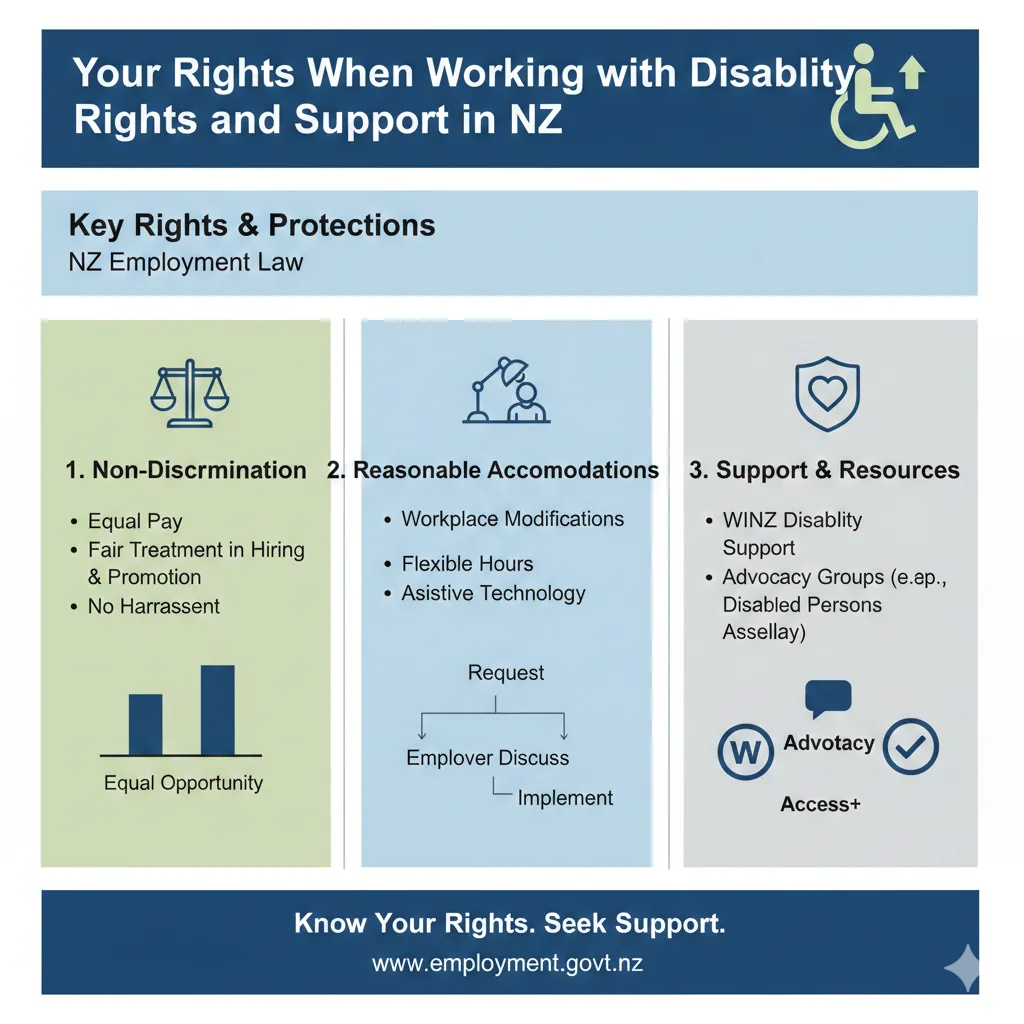
New Zealand's framework prioritises fairness and inclusion for disabled workers. At its core, the Human Rights Act 1993 prohibits discrimination on the grounds of disability in employment, meaning employers can't treat you less favourably because of your disability. This covers hiring, promotion, training, and dismissal.
Reasonable Accommodations: What Employers Must Provide
Employers are legally required to provide reasonable accommodations to ensure you can perform your job, unless it causes undue hardship—like excessive cost or disruption to business. Examples include:
- Flexible hours for medical appointments or fatigue management.
- Adaptive equipment, such as screen readers or ergonomic chairs.
- Modified workspaces, like ramps or quiet areas for sensory needs.
- Adjusted duties that play to your strengths.
Under the refreshed New Zealand Disability Strategy 2026-2030, workplaces must become more inclusive through flexible arrangements and job designs co-created with disabled people, whānau, and employers. Government agencies are leading by example, hiring more disabled staff and checking accessibility.
Protections Against Discrimination
If you face unfair treatment, you can raise a personal grievance through your employment agreement or contact the Human Rights Commission. Recent 2026 employment law updates via the Employment Relations Amendment Bill introduce a 'gateway test' for worker status and a $200,000 high-income threshold for unjustified dismissal claims (based on total remuneration, adjustable from July 2027). These changes aim to clarify rights without diluting protections for most Kiwis.
Minimum wage exemptions are also available if your disability limits job performance, but these must be applied for via Work and Income and can't discriminate.
Government Support for Disabled Workers
We've got a suite of practical supports to help you enter, stay, and advance in employment. These align with the Disability Strategy's focus on better pathways, readiness, and employer tools.
Work and Income (WINZ) Programmes
WINZ is your go-to for financial and practical help. Key options include:
- Flexi-wage Subsidy: Covers part of your wages if you're on a benefit, plus training costs. Ideal for trial periods or upskilling.
- Modification Grants: Funds workplace changes like handrails, visual aids, or ramps—up to certain limits based on need.
- Skills for Industry Funding: Pays for job-specific training to build confidence and capability.
These supports ensure you have resources that 'work for you', boosting economic security as per Strategy goals.
KiwiSaver and Income Support While Working
Balancing work and benefits? You can earn up to certain thresholds without losing entitlements. For 2026, check WINZ's abatement rates—e.g., main benefits reduce by 70 cents per dollar over $160 fortnightly for singles. KiwiSaver remains accessible; employers must contribute 3% minimum (rising with wage thresholds), and you can access flexible withdrawal options if needed via hardship applications to IRD.
ACC also covers work-related injuries, with no-fault coverage ensuring you don't lose income during recovery. If your disability interacts with a workplace injury, tailored rehab supports get you back faster.
Employment Pathways and Career Development
The Disability Strategy 2026-2030 emphasises meaningful careers at all levels, from entry roles to leadership, regardless of urban, rural, or remote work. Barriers like employer attitudes and mismatched pathways are being tackled head-on.
Inclusive Recruitment and Job Matching
Specialist services match your strengths to roles, including cultural needs. Expect inclusive practices like:
- Job ads in easy-read formats.
- Interviews with accommodations (e.g., NZSL interpreters).
- Pathways from education to work, raising expectations for disabled Kiwis.
Thriving in Your Role: Retention Supports
Once employed, access career development equal to others. The Strategy pushes for self-employment options too, with resources for starting your own business via Business Training and Advice Grants from WINZ.
Employers get practical tools—information packs, advice, and networks—to build disability-confident workplaces. By 2030, the aim is for disabled people to be valued equally, with better economic outcomes.
Tips for Employers: Building Inclusive Workplaces
If you're hiring, embracing disability inclusion isn't just right—it's smart business. The Strategy calls for disability-confident employers who harness disabled talent throughout the employment lifecycle.
- Recruit inclusively: Use specialist agencies and state abilities upfront.
- Design flexible jobs: Offer remote options, adjustable hours.
- Tap subsidies: WINZ modification grants and Flexi-wage ease costs.
- Train your team: Free resources from Employment NZ promote understanding.
2026 health and safety reforms simplify compliance for small businesses, focusing on critical risks while ensuring welfare—like basic facilities for all.
Overcoming Common Challenges
Despite progress, issues persist: underestimated capabilities, inaccessible workplaces, and support gaps. The Law Commission review starting 2026 will address these, engaging disabled Kiwis.
Practical tip: Document needs early in job applications. If self-employed, explore IRD's small business tax relief and KiwiSaver self-contributions for stability.
FAQ: Working with a Disability in NZ
What counts as a reasonable accommodation?
Changes enabling you to do your job, like flexible hours or tools, without undue employer hardship.
Can I get paid less than minimum wage with a disability?
Yes, via exemptions if your disability limits performance—but apply through WINZ and ensure fairness.
How do 2026 Disability Strategy changes affect me?
It mandates inclusive jobs, employer resources, and equal opportunities, with government leading.
What if my employer discriminates?
File a grievance or contact Human Rights Commission; protections remain strong post-2026 law updates.
Are there supports for self-employment?
Yes—WINZ grants, Strategy pathways, and IRD incentives for disabled entrepreneurs.
How does ACC fit in?
Covers work injuries with rehab support, complementing disability accommodations.
Next Steps to Get Started
Ready to take control? Contact WINZ for a free assessment, browse Employment NZ's hiring resources, or join disability networks like CCS Disability Action. Track the Law Commission's 2026 review for updates. Remember, this isn't financial advice—consult a professional advisor, IRD, or lawyer for your situation.
With these tools, working with a disability in NZ becomes not just possible, but empowering. Let's build a fairer workforce together.
Related Articles

Industry Bodies and Professional Associations NZ
Whether you're launching a business, advancing your career, or navigating financial regulations, industry bodies and professional associations in New Zealand offer invaluable support. These organisati...

Emergency Benefit NZ: When You Have No Other Options
When you're struggling financially and don't qualify for other benefits, the Emergency Benefit might be your lifeline. It's a discretionary payment designed for Kiwis in genuine hardship who've exhaus...

Unpaid Internships NZ: Are They Legal?
Unpaid internships are a common pathway for students and graduates to gain work experience in New Zealand, but there's often confusion about whether they're actually legal. The short answer is: unpaid...

Estate Administration NZ: Managing Someone's Affairs After Death
Losing a loved one is one of life's toughest challenges, and stepping in to manage their estate can feel overwhelming. In New Zealand, estate administration—the process of handling someone's affairs a...