Buy-to-Let Investment Guide for New Zealand

Thinking about dipping your toes into buy to let investment NZ? With house prices recovering from recent dips and interest rates easing in 2026, now's a smart time for Kiwis to build long-term wealth...
James writes about the New Zealand property market, renting, home ownership, and housing costs. He breaks down complex property topics into practical advice for renters and buyers.
Thinking about dipping your toes into buy to let investment NZ? With house prices recovering from recent dips and interest rates easing in 2026, now's a smart time for Kiwis to build long-term wealth through rental properties. Whether you're a first-time investor juggling a day job or looking to diversify your portfolio, this guide breaks down everything you need to know to get started confidently.
Understanding Buy-to-Let Investment in New Zealand
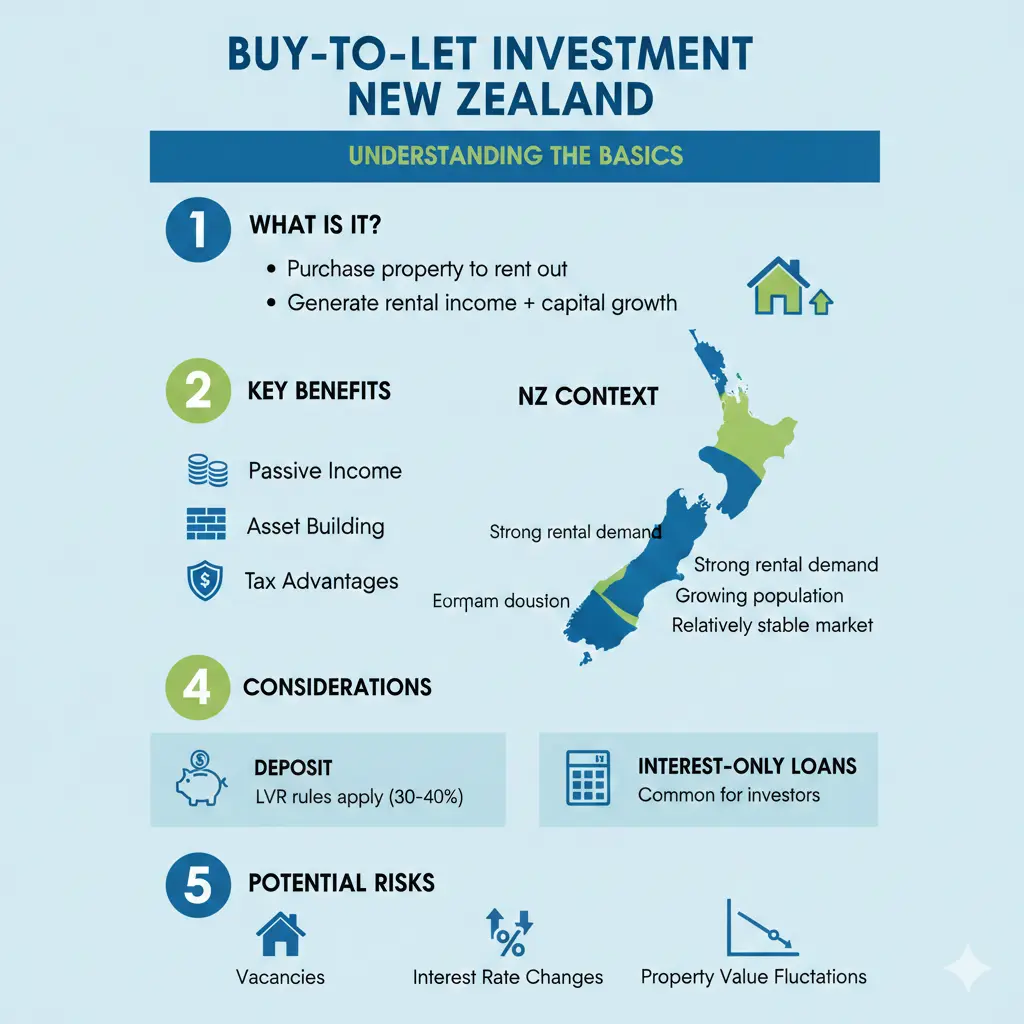
Buy-to-let, or buy to let investment NZ, means purchasing a property to rent out for income while hoping for capital growth over time. It's a popular strategy here because property has historically been less volatile than shares, offering leverage through bank loans that boost your returns. Unlike stocks, banks lend more generously for property, amplifying your buying power.
In 2026, the market favours the buy and hold approach over flipping. This 'set and forget' method suits busy New Zealanders – buy a property, rent it out, and let capital gains and rent do the work alongside your main job. Flipping properties for quick profit demands a 40% deposit on existing homes plus renovation funds, making it feel like a second full-time gig.
Why Buy-to-Let Still Works in 2026
- Lower interest rates: With rates dropping from peaks, you can borrow more while keeping repayments affordable, especially as house prices recover from 2022 highs.
- Rental demand: Cities like Auckland, Wellington, and Christchurch show strong tenant demand driven by population growth and limited supply.
- Long-term growth: NZ's high quality of life keeps property appreciating, making rentals a solid wealth-builder.
But it's not without risks – from tenant issues to maintenance costs. We'll cover how to mitigate those later.
Key Strategies for Buy-to-Let Success
Focus on buy and hold for accessibility. Purchase a rental (often renovated lightly), tenant it out, and profit from rising values and rent. New builds shine here, needing just a 20% deposit versus 30-40% for existing investment properties.
Buy and Hold vs Buy and Flip
| Strategy | Deposit Required (e.g., $600k property) | Pros | Cons |
|---|---|---|---|
| Buy and Hold | 20% ($120k) for new builds; 30% ($180k) for existing | Passive income, long-term gains, fits busy life | Slower initial returns |
| Buy and Flip | 40% ($240k) + reno costs ($30k+) | Quick profit potential | One-off gains, high effort, no ongoing rent |
Most Kiwis opt for buy and hold – it's realistic without specialist skills.
Navigating Lending and LVR Restrictions
Banks set Loan-to-Value Ratio (LVR) rules that shape your entry. In 2026, owner-occupiers need 20% deposits (80% LVR), but investment properties demand 30% on existing homes (70% LVR). These rules fluctuate – they've swung from 0% to 40% since 2019 – so check with lenders.
Steps to Secure Investment Lending
- Set goals: Aim for capital growth, cash flow, or both?
- Assess finances: Use a mortgage calculator; expect higher rates for investments.
- Get pre-approval: Builds confidence for offers.
- Choose property type: New builds often get better terms.
Partner with a broker for tailored advice, as criteria vary by bank appetite.
Top Locations for Buy-to-Let in 2026
Pick markets with strong yields, growth, and demand. Start by researching regions independently.
Prime Spots
- Lower Hutt: Now 2% undervalued (down from 16% overvalued), cheaper than Auckland with solid yields – ideal for budget investors.
- Auckland, Wellington, Christchurch: High demand from population and jobs, but pricier entry.
- Diversify geographically: Buy rentals away from your home to spread risk – slumps don't hit everywhere simultaneously.
Reference REINZ data for median prices and yields; e.g., aim for properties meeting market rents and growth.
Costs and Cash Flow: What to Budget For
Expect deposits, interest (higher for investments), rates, insurance, maintenance, and property management (8-10% of rent). Factor in vacancies and repairs – being a landlord isn't fully passive.
- Upfront: 20-30% deposit + legal/inspection fees.
- Ongoing: Mortgage, council rates, insurance (~$2k/year), management.
- Tip: Calculate yield: (Annual rent - costs) / property price. Target 4-6%.
Lock in fixed rates now to capitalise on drops.
Legal and Practical Tips for Landlords
Comply with tenancy laws via Tenancy Services (tenancy.govt.nz). Use standard agreements, conduct inspections, and handle bonds through Tenancy Services.
Actionable Steps
- Research tenants: Use referencing services.
- Healthy Homes: Ensure compliance by 2026 deadlines.
- Tax: Claim interest deductibility (phasing back in); track via IRD.
- Manage or outsource: Property managers handle day-to-day for a fee.
Avoid risks like bad tenants or market dips by diversifying and planning long-term.
Building Your Portfolio: Medium to Long-Term Goals
Start with one property, then scale. Medium-term (2-5 years): Second rental. Long-term (5-10 years): $150k gross rental income. Include property in a diversified plan – don't go all-in.
Next Steps to Launch Your Buy-to-Let Journey
Ready to invest? Get pre-approval from a broker, scout Lower Hutt or Wellington suburbs via REINZ, and crunch numbers with a buyer's agent. Consult Tenancy Services and IRD for compliance. Start small, stay patient – property builds wealth over decades for everyday Kiwis.
Frequently Asked Questions
Sources & References
-
1
NZ Property Investment (2026): A Step-by-Step Guide — www.opespartners.co.nz
-
2
Top 5 Places to Invest in New Zealand in 2026 — www.opespartners.co.nz
-
3
A Beginner's Guide to Property Investment in New Zealand — vegalend.co.nz
-
4
Top tips for building wealth through property in 2026 — moneybox.co.nz
-
5
Rental Investment - MyFuture — www.myfuture.co.nz
-
6
Building dreams and your property portfolio in 2026 — firstnational.co.nz
-
7
Buying residential property to live in | Toitū Te Whenua — www.linz.govt.nz
-
8
20 Property Investment Risks You Can't Ignore — www.moneyhub.co.nz
Useful Tools
Related Articles

Buying Off-Plan: How to Avoid the Common 2026 Construction Pitfalls
Picture this: you've spotted the perfect off-plan apartment in Auckland's bustling Wynyard Quarter, visions of harbour views and modern living dancing in your head. But months turn into years, costs b...
Property Investment 2026: Is Negative Gearing Still a Valid Strategy?
Imagine pouring your hard-earned KiwiSaver savings into a rental property, only to watch interest rates climb and rents lag behind. For years, negative gearing offered a tax lifeline, letting you offs...

Bright-Line Test Explained: Tax on Property Sales
Ever flipped a property for a quick profit or held onto an investment longer than planned? In New Zealand, the Bright-Line Test could mean the difference between keeping your gains or handing a chunk...

Interest Deductibility for Rental Properties NZ
Imagine pouring your hard-earned cash into a rental property, only to watch a big chunk of your mortgage interest payments get clawed back by the IRD come tax time. For years, that's been the reality...