Flatting in NZ: A First-Timer's Guide

Stepping into your first flat in New Zealand feels like the ultimate Kiwi rite of passage—freedom, mates, and maybe a few late-night Milo runs. But for first-timers, the rental jungle can be daunting,...
James writes about the New Zealand property market, renting, home ownership, and housing costs. He breaks down complex property topics into practical advice for renters and buyers.
Stepping into your first flat in New Zealand feels like the ultimate Kiwi rite of passage—freedom, mates, and maybe a few late-night Milo runs. But for first-timers, the rental jungle can be daunting, from dodging dodgy listings to divvying up the power bill. This guide breaks it all down with practical steps, real NZ examples, and the latest 2026 info to help you flat like a pro without the drama.
What is Flatting in NZ?
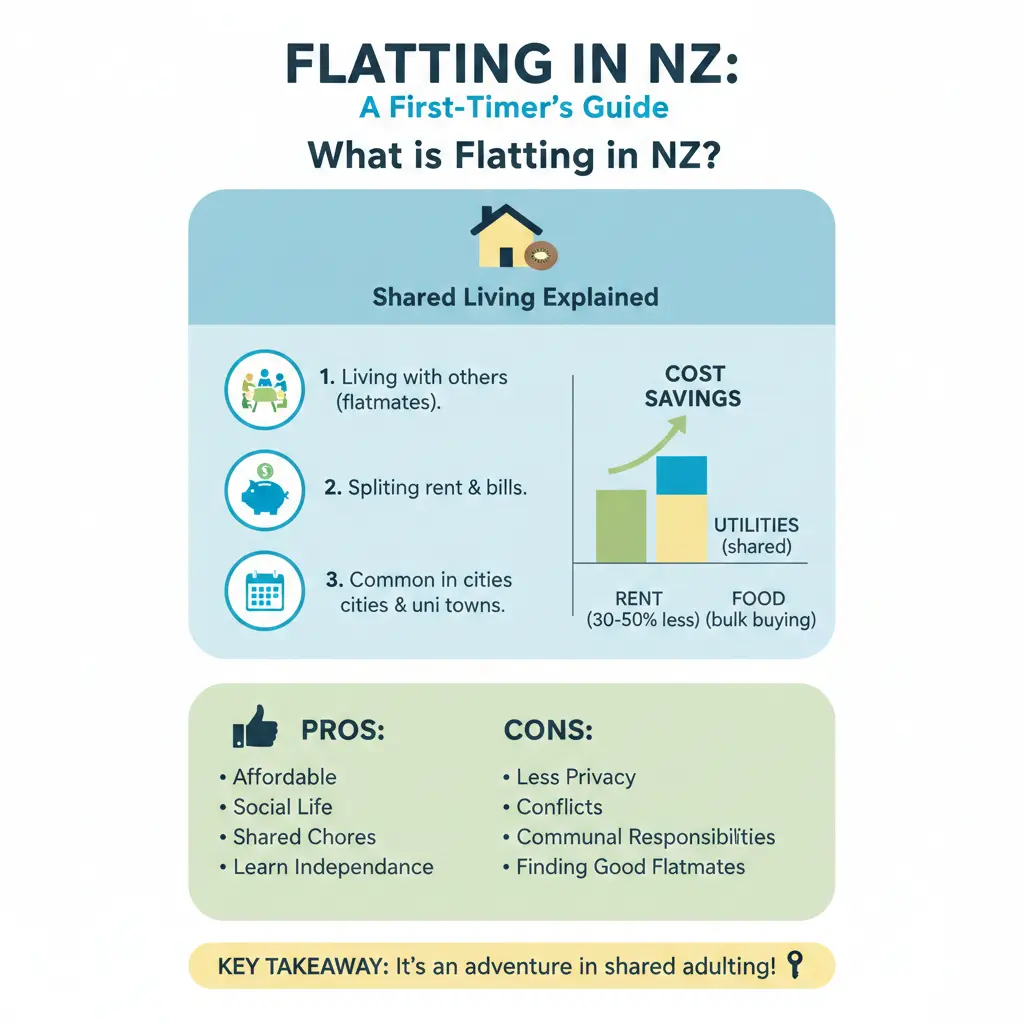
Flatting means sharing a rental property where each person has their own bedroom but splits common areas like the kitchen and lounge. It's hugely popular among young Kiwis, students, and professionals because it slashes costs compared to solo renting. Think classic Kiwi share houses in suburbs like Mt Eden in Auckland or Newtown in Wellington, buzzing with flatmates juggling work, uni, and weekend barbies.
Unlike solo tenancies, flatting often involves a head tenant who signs the main lease with the landlord, while others are flatmates with fewer legal protections under the Residential Tenancies Act 1986 (the Act). Flatmates' rights hinge on your flat-sharing agreement with the head tenant, not the Act itself—so get everything in writing.
Tenants vs Flatmates: Know the Difference
- Tenant: Signs the tenancy agreement with the landlord, covered fully by the Act. Responsible for rent, bond, and property condition.
- Flatmate: Pays rent to the tenant, not directly to the landlord. Use Tenancy Services' free flat-sharing agreement template to protect yourself.
If you're the head tenant, you're on the hook for the whole rent if a flatmate bails—choose wisely!
Finding Your First Flat: Where to Look in 2026
The NZ rental market in 2026 is competitive, especially in big cities like Auckland and Wellington, but smart searching pays off. Start with online platforms, then hit local networks.
Top Places to Search
- Trade Me Property and Flatmates Wanted: The go-to for listings nationwide. Filter by city, price, and furnished options.
- Real Estate Agencies: Ray White, Harcourts, and Barfoot & Thompson handle quality properties with formal applications.
- Facebook Groups: "Auckland Flatmates Wanted," "Wellington Flats," or city-specific groups for quick flatmate hookups.
- Apps like FlatLy: Tailored for NZ flatting, with tools for splitting bills and finding rooms.
- Uni Noticeboards: Great for students near Victoria, Auckland, or Canterbury unis.
Pro tip: Expand to neighbouring suburbs if city centre spots are scarce—think Lower Hutt for Wellington commuters or Papakura for Aucklanders.
City-Specific Tips
| City | Average Room Rent (2026, per week) | Hot Suburbs for First-Timers | Notes |
|---|---|---|---|
| Auckland | NZ$200–$320 | Mt Roskill, Onehunga | High demand; parking is gold. |
| Wellington | NZ$160–$280 | Newtown, Berhampore | Windy but walkable to town. |
| Christchurch | NZ$140–$250 | Riccarton, Addington | Student-friendly post-quake rebuilds. |
| Dunedin | NZ$120–$220 | North Dunedin | Cheap for students, party central. |
Budgeting for Flatting: What You'll Really Pay
Flatting saves cash, but hidden costs add up. Aim for rent under 30–40% of your income—use IRD's tax calculator to factor in after-tax pay.
Breakdown of Costs (2026 Averages)
- Rent: NZ$140–$280/week per room in shared flats. Split equally, usually.
- Bond: Up to 4 weeks' rent, lodged with Tenancy Services. Shared among flatmates.
- Utilities: Power/gas NZ$30–$50/week (split), internet NZ$20–$30/month each, water rates often fixed.
- Groceries: NZ$80–$120/week solo; bulk-buy and split with flatmates to save.
- One-Offs: Furniture, bedding (if unfurnished)—shop Trade Me or Facebook Marketplace.
Total Weekly Budget Example (Auckland solo room): Rent $250 + utilities $40 + groceries $100 + transport $30 = ~NZ$420. Track with apps like PocketSmith.
Smart Saving Tips
- Batch-cook meals and split grocery bills via a shared Google Sheet.
- Hunt sales via Countdown or New World apps.
- Choose power plans with Meridian or Contact for flatmate splits.
- Apply for WINZ accommodation supplements if eligible (low-income Kiwis under 25).
Applying for Your Flat: Get Approved Fast
Landlords get 50+ applications per listing—stand out with a killer app. It's free to apply or view under NZ law.
What to Prepare
- Proof of income (payslips, employment contract).
- ID (driver's licence, passport).
- References (boss, previous landlord).
- Bank statements showing steady cash flow.
Apply to multiple spots after viewing. If approved, review the tenancy agreement carefully—fixed-term or periodic? Check healthy homes standards (must-haves like insulation by now).
Flat Viewing Checklist
- Mould or damp? Test heaters.
- Working smoke alarms? Locks secure?
- Parking availability?
- Neighbourhood vibe—walk around evenings.
Legal Stuff: Tenancy Laws and Flatmate Agreements
The Residential Tenancies Act protects tenants but not flatmates. Download Tenancy Services' templates for peace of mind.
Key Rules for 2026
- 14-Day Notice: Landlords must give this for most endings.
- No Unhealthy Homes: Rentals must meet ventilation, heating standards.
- Bond Refunds: Automatic via Tenancy Services portal.
- Flatmate Agreements: Cover rent share, bills, cleaning roster, notice period (usually 21–30 days).
Landlord wants pets? Get written approval. Smoke? Declare upfront.
Setting Up Your Flat: Essentials for Smooth Living
Insurance—Don't Skip It
Contents insurance covers your gear against theft, fire—even dodgy flatmates. Parents' policy might not extend; get your own from State or AA (NZ$10–20/week). Landlords insure the building, not your stuff.
House Rules and Bills
Draft a flatmate agreement on day one: who cleans what, quiet hours, guests policy. Use Splitwise for bills—fair and drama-free.
First-Week Checklist
- Lodge bond online.
- Set up power/internet (compare via Power Compare).
- Do a joint property inspection with photos.
- Stock the pantry basics.
Common Pitfalls and How to Avoid Them
Red flags: No agency managing? Sketchy photos? Run. Bad flatmates? Vet with questions like "How do you handle chores?" or "Overnight guests OK?"
Tips for harmony:
- Weekly flat meetings.
- Rotate chores via app.
- Communicate early—don't let dishes fester.
Next Steps: Your Flatting Adventure Starts Now
Grab your docs, hit Trade Me, and line up viewings this weekend. Chat with potential flatmates about vibes and budgets upfront. You've got this—soon you'll be hosting flat warmings and mastering the art of shared Netflix. For official advice, head to tenancy.govt.nz. Happy flatting!
Frequently Asked Questions
Sources & References
-
1
Finding Rental Accommodation in New Zealand: Complete Renting Guide — themigratehub.com
-
2
Guide to Flatting in NZ — quashed.co.nz
-
3
How to Find a Flat in New Zealand: Complete Guide — www.myflatly.com
-
4
Flatting - Tenancy Services — www.tenancy.govt.nz
-
5
Tips for Renting Your First New Zealand Flat — www.wisemove.co.nz
-
6
Student Accommodation in New Zealand & Average Costs 2026 — boomerangedu.com
-
7
Cost of Living in New Zealand 2026-2027 — www.aeccglobal.com
-
8
When You Get a Flatmate in Your Own House — www.govt.nz
-
9
New Zealand Accommodation Guide for International Students — ptemagic.com
Useful Tools
Related Articles
The Ultimate Rental Inspection Checklist for NZ Tenants
Moving into a rental in New Zealand can feel like a big step, but nothing prepares you quite like acing that first property inspection—or preparing for the regular ones that follow. As a tenant, knowi...

Healthy Homes Standards: A Guide for NZ Landlords & Renters
If you're renting or managing a property in Aotearoa, you've probably heard about the Healthy Homes Standards. These legal requirements aren't just bureaucratic boxes to tick—they're designed to ensur...

Renter's Rights in New Zealand: Know Your Protections
Imagine signing a lease only to face unexpected repairs, unfair rent hikes, or eviction threats—that's the reality too many Kiwis have faced. But with the Renters' Rights in New Zealand evolving throu...

Tenancy Law Changes 2025: What Renters Need to Know
If you're renting in New Zealand, the tenancy law changes kicking in from early 2025 could reshape your rights and responsibilities as a tenant. These updates to the Residential Tenancies Act (RTA) br...