Pharmacist vs Doctor: Which Health Professional to See
Ever found yourself standing in the pharmacy aisle, wondering if your nagging cough needs a doctor's visit or if the friendly pharmacist can sort it out? In New Zealand, where healthcare costs can hit...
The Lifetimes NZ editorial team curates, fact-checks, and updates guides on personal finance, property, health, immigration, legal, business, and lifestyle topics relevant to Lifetimes NZ readers. Articles are produced with AI assistance and reviewed by the editorial team before publication.
Ever found yourself standing in the pharmacy aisle, wondering if your nagging cough needs a doctor's visit or if the friendly pharmacist can sort it out? In New Zealand, where healthcare costs can hit your wallet hard, knowing when to see a pharmacist vs doctor saves time, money, and unnecessary stress. With public health services funded through taxes and ACC, plus heavily subsidised prescriptions via PHARMAC, Kiwis have world-class access—but choosing the right professional keeps your health on track without draining your bank account.
This guide breaks down the key differences, when to pick one over the other, and practical tips tailored to our Kiwi system. Whether it's a minor ailment or something more serious, you'll know exactly which health professional to see.
Understanding the Roles: Pharmacist vs Doctor in New Zealand
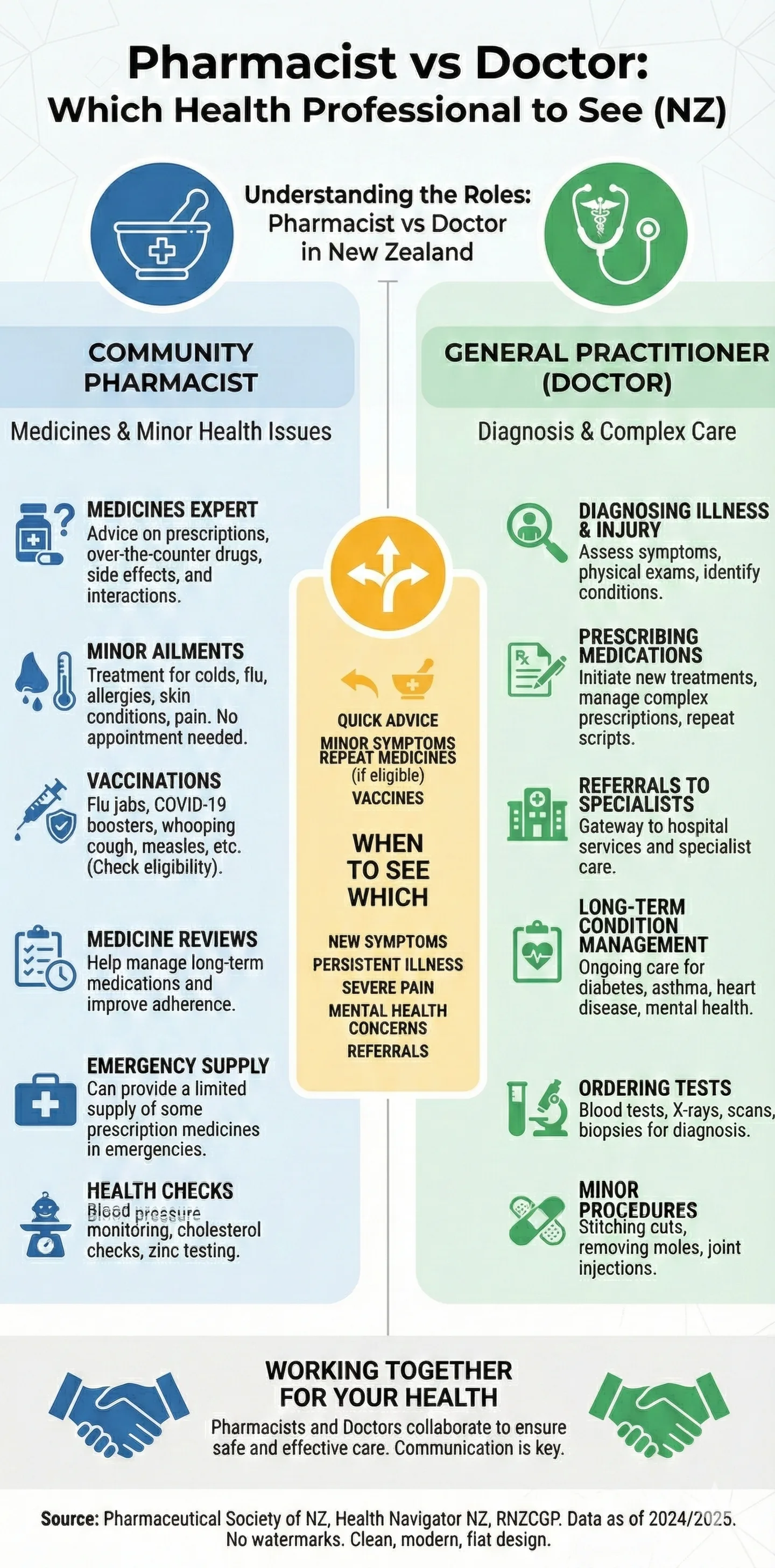
Doctors and pharmacists play complementary roles in our healthcare system, but their expertise differs significantly. Doctors focus on the big picture of your health, while pharmacists are medication masters.
What Doctors Do
Doctors diagnose illnesses, injuries, and chronic conditions, then create treatment plans that may include medication, procedures, or referrals. In NZ, general practitioners (GPs) are your first point of contact for most issues, handling everything from check-ups to managing diabetes or heart disease. Specialists take over for complex cases, like surgeons or cardiologists.
Under the Medicines Act 1981 and Misuse of Drugs Act 1975, only doctors (and certain nurse practitioners) can prescribe restricted medicines. With our capped GP visit fees—around $50–$80 for adults in 2026, often less for kids or Community Services Card holders—seeing a doctor is affordable but involves wait times, especially in rural areas.
What Pharmacists Do
Pharmacists are experts in medications: dosages, side effects, interactions, and safe use. They work in community pharmacies, hospitals, or clinics, advising on over-the-counter (OTC) remedies and ensuring prescriptions are dispensed correctly. In NZ, registered pharmacists undergo a four-year Bachelor of Pharmacy (BPharm) plus supervised practice and the Pharmacy Council registration exam.
Pharmacists can't diagnose or prescribe most drugs, but they provide invaluable checks—like spotting allergies or drug clashes—preventing costly hospital visits covered by ACC or public health.
Key Differences: Pharmacist vs Doctor at a Glance
Here's a quick comparison to help you decide which health professional to see based on your symptoms and needs.
| Aspect | Pharmacist | Doctor |
|---|---|---|
| Primary Focus | Medication advice, OTC treatments, prescription checks | Diagnosis, treatment plans, prescribing medications |
| Training Time (NZ) | 4-year degree + 1-year provisional practice | 6-year MBChB + 2-year foundation training (8+ years total) |
| Cost to You | Free consultation; $5–$10 prescription fee | $50–$80 per visit (subsidised) |
| Patient Interaction | Often quick, medicine-focused | Holistic assessments, procedures if needed |
| Average Salary (2026) | $82,000 NZD (staff); $86,000 (managers) | $150,000+ (GPs); higher for specialists |
Data shows strong demand for both, with pharmacist jobs growing through 2028, especially rurally. Doctors earn more due to broader responsibilities, but pharmacists offer work-life balance in community settings.
When to See a Pharmacist First
For everyday issues, start with your local pharmacist—they're trained, accessible, and free to consult. This aligns with Health New Zealand's (Te Whatu Ora) push to ease GP pressure.
- Minor ailments: Colds, coughs, allergies, indigestion, minor wounds, or hay fever. Pharmacists recommend OTC options like paracetamol or antihistamines.
- Medication questions: How to take your script, side effects, or interactions (e.g., with warfarin and new meds).
- Repeat prescriptions: Many pharmacies handle renewals via eScripts, saving a GP trip.
- Health checks: Blood pressure, cholesterol, or diabetes screening—free at most chemists.
In 2026, with PHARMAC subsidies, prescriptions cost just $5 per item (or $0 with Community Services Card). Rural Kiwis benefit most, as pharmacist vacancies are high.
Real Kiwi Example
Say you've got a sore throat and fever. A pharmacist can assess if it's viral (rest and lozenges) or suggest seeing a GP if bacterial. This prevented thousands of unnecessary visits pre-COVID, per Ministry of Health data.
When to See a Doctor Instead
Skip the pharmacy if symptoms suggest something serious—delaying can lead to ACC claims or hospital bills.
- Persistent or severe symptoms: Chest pain, high fever >3 days, unexplained weight loss, or breathing issues.
- Chronic conditions: Worsening asthma, diabetes control, or mental health concerns needing scripts.
- Injuries: Suspected fractures, deep cuts, or post-ACC events.
- Children/elderly: Any concerning symptoms in tamariki or whānau over 65.
Book via Healthline (0800 611 116) for free triage advice. In 2026, virtual consults via platforms like Tend or Hāna keep costs low ($40–$60).
Financial Impact
GP visits are tax-funded but have co-pays. High users qualify for CSC, slashing fees. Unnecessary ED trips? You might pay $50+ out-of-pocket if non-urgent.
Cultural and Accessibility Factors in Aotearoa
For Māori and Pasifika communities, culturally safe care matters. Many pharmacies offer te reo signage and kaumātua advice. Rural shortages mean pharmacists fill gaps—Te Whatu Ora lists vacancies on their site.
Immigrant health pros face streamlined registration via the Pharmacy Council or Medical Council, with fast-tracks for shortages in 2026.
Cost Breakdown: Saving Money with the Right Choice
Healthcare isn't free, but smart choices keep it affordable. Here's the 2026 reality:
- Pharmacist: $0 consult + $5 script = under $10 total.
- GP: $19.50–$85 (subsidised; free for under-14s).
- Specialist: $150+ (partly funded via referrals).
- Prescriptions: PHARMAC caps at $110/year for families.
ACC covers injury-related care, but prevention via pharmacists reduces claims. Track expenses for tax relief if self-employed—chat to IRD.
Disclaimer: This isn't personalised financial or medical advice. Consult professionals and seek advice from a financial adviser or accountant for your situation.
Training and Career Paths: Insights for Aspiring Kiwis
Considering a career? Pharmacy takes 5–6 years total vs 8–10 for medicine, with solid pay ($82k avg). Universities like Otago or Auckland offer top programmes.
FAQ: Pharmacist vs Doctor
1. Can pharmacists prescribe antibiotics in NZ?
No, only doctors or nurse practitioners can. Pharmacists advise on alternatives for minor infections.
2. What's cheaper for a cold?
Pharmacist—free advice and $5–$10 OTC meds vs $50+ GP fee.
3. How do I find a pharmacist or GP nearby?
Use Healthpoint.co.nz or the PHARMACIST app for 24/7 locators.
4. Do I need a referral for specialists?
Yes, from a GP—saves costs via public funding.
5. What's the wait time difference?
Pharmacists: immediate. GPs: 1–7 days (longer rurally).
6. Are virtual options available?
Yes, both offer telehealth in 2026 via Health NZ apps.
Next Steps for Better Health Choices
Next time you're under the weather, assess symptoms against this guide. Download the Healthify app for symptom checkers, get a CSC if eligible via WINZ, and chat to your whānau about shared care plans. Regular check-ups prevent big bills—book that GP annual review today. Stay healthy, Kiwis!
Related Articles

Industry Bodies and Professional Associations NZ
Whether you're launching a business, advancing your career, or navigating financial regulations, industry bodies and professional associations in New Zealand offer invaluable support. These organisati...

Emergency Benefit NZ: When You Have No Other Options
When you're struggling financially and don't qualify for other benefits, the Emergency Benefit might be your lifeline. It's a discretionary payment designed for Kiwis in genuine hardship who've exhaus...

Unpaid Internships NZ: Are They Legal?
Unpaid internships are a common pathway for students and graduates to gain work experience in New Zealand, but there's often confusion about whether they're actually legal. The short answer is: unpaid...

Estate Administration NZ: Managing Someone's Affairs After Death
Losing a loved one is one of life's toughest challenges, and stepping in to manage their estate can feel overwhelming. In New Zealand, estate administration—the process of handling someone's affairs a...