Property Managers NZ: What They Do and Your Rights

Navigating the rental market as a Kiwi landlord or tenant can feel overwhelming, especially with New Zealand's evolving tenancy laws and rising property values. Whether you're a busy professional owni...
Sarah covers personal finance, tax, and KiwiSaver topics for Lifetimes NZ. She focuses on making money management straightforward and practical for everyday Kiwis.
Navigating the rental market as a Kiwi landlord or tenant can feel overwhelming, especially with New Zealand's evolving tenancy laws and rising property values. Whether you're a busy professional owning investment properties in Auckland or a family renting in Christchurch, understanding property managers NZ: what they do and your rights empowers you to make informed decisions and protect your interests.
Property managers handle the day-to-day operations of rental properties, from finding tenants to ensuring legal compliance, allowing owners to focus on their investments while tenants enjoy hassle-free living. In this guide, we'll break down their roles, your rights under current 2026 regulations, and practical tips tailored for Kiwis.
What Do Property Managers in New Zealand Do?
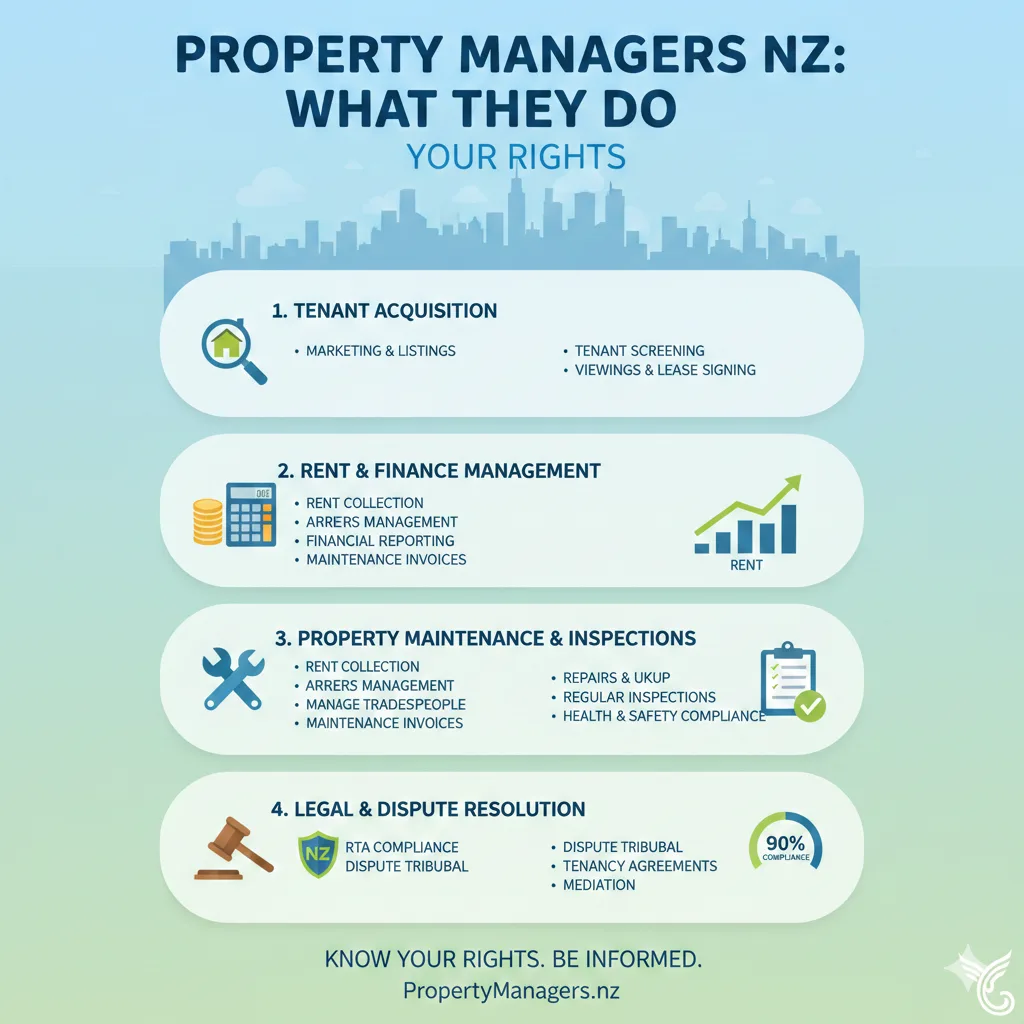
Property managers act as the go-between for landlords and tenants, managing everything from tenant selection to maintenance. They ensure properties remain compliant with the Residential Tenancies Act (RTA) and other regulations, maximising returns for owners while upholding tenant standards.
Tenant Acquisition and Management
Finding reliable tenants is a cornerstone of property management. Managers market properties through platforms like Trade Me Property, screen applicants with credit checks via agencies like Centrix, and conduct reference checks to minimise risks like non-payment or property damage.
Once tenants are selected, they draft and enforce tenancy agreements that comply with the RTA. These documents outline rent, bond (typically 4 weeks' rent), and responsibilities, reducing disputes. In 2026, with healthy homes standards fully enforced, managers verify properties meet ventilation, heating, and insulation requirements before signing new tenancies.
- Screening process: Background checks, income verification, and previous landlord references.
- Lease handling: Customising agreements for fixed-term or periodic tenancies.
- Relations: Acting as the first point of contact for queries, fostering positive relationships to boost retention.
Rent Collection and Financial Management
Rent collection is a core duty—managers set competitive rates based on local market data from sources like REINZ reports, chase arrears promptly, and handle late payments through formal notices under the RTA. They lodge bonds with Tenancy Services within 23 working days and process refunds at tenancy end, deducting for damages beyond fair wear and tear.
Financial oversight includes budgeting for expenses, tracking income via software like MRI or PropertyMe, and providing owners with detailed reports. For Kiwi landlords, this means clear visibility on cash flow, especially important with KiwiSaver withdrawals for first-home buyers impacting rental demand.
| Financial Task | What Managers Do | Benefit to Landlords |
|---|---|---|
| Rent Collection | Automated invoicing, arrears follow-up | Timely income, reduced voids |
| Budgeting | Forecast expenses, capex planning | Profitability insights |
| Reporting | Monthly/quarterly statements | IRD-compliant records for tax |
Property Maintenance and Inspections
Proactive maintenance keeps properties in top shape and compliant. Managers coordinate repairs—from plumbing leaks to healthy homes upgrades—using trusted local tradespeople. Routine inspections (every 3-6 months) spot issues early, documenting with photos for disputes.
For example, in Wellington's windy climate, they'll ensure gutters are clear to prevent water damage. Tenants submit requests via apps, and managers triage urgent vs routine fixes, always getting owner approval for costs over $500 unless emergencies.
Legal Compliance and Risk Management
Staying ahead of regulations is vital. Property managers ensure adherence to the RTA, Building Act, and upcoming licensing under the Residential Property Managers Bill, fully implemented by 2026. The Real Estate Authority (REA) and Ministry of Housing and Urban Development (HUD) oversee licensing, requiring training and code of conduct compliance.
They handle evictions via Tenancy Tribunal applications if tenants breach terms, and manage 90-day notices for no-cause terminations (phasing out for periodic tenancies by 2026). For vulnerable owners, court-appointed managers under the Protection of Personal and Property Rights Act 1988 (PPPR Act) protect assets if someone's unable to manage due to incapacity.
Your Rights as a Landlord When Hiring Property Managers NZ
As a property owner, you're entrusting pros with your investment—know your rights to avoid pitfalls. Contracts must detail fees (typically 7-10% of rent plus GST), services, and termination clauses.
Choosing a Licensed Manager
By 2026, all property managers must hold REA licences, proving training in RTA, healthy homes, and ethics. Verify via the REA public register—unlicensed operators risk fines up to $50,000. Look for members of the Property Managers Guild or REINZ for extra assurance.
Tip: Get multiple quotes and check reviews on Google or landlords.co.nz forums.
Contract Essentials and Fees
Standard agreements cover letting fees (1-2 weeks' rent), management fees, and extras like inspections ($150-200). Demand transparency—no hidden charges for bond lodgements. You can terminate with 20 working days' notice if dissatisfied, per RTA-aligned clauses.
- Review fee structure upfront.
- Insist on performance KPIs like 98% rent collection.
- Audit reports quarterly for accuracy.
What to Do If Things Go Wrong
If your manager underperforms, document issues and complain formally. REA handles licensing breaches; Tenancy Tribunal covers RTA disputes. For financial mismanagement, escalate to Disputes Tribunal (claims under $30,000). Always keep your own records for IRD tax deductions on management fees.
Your Rights as a Tenant Dealing with Property Managers
Tenants have strong protections under the RTA. Managers must provide 14 days' notice for inspections, respond to maintenance within reasonable timeframes (24 hours for emergencies), and not enter without consent except in specific cases.
- Quiet enjoyment: No unreasonable disturbances.
- Repairs: Urgent fixes free; non-urgent within 14 days.
- Bonds: Full refund unless proven damage.
- Report issues to Tenancy Services hotline: 0800 TENANCY.
In 2026, with rent increase caps at once yearly by inflation +10%, managers can't hike arbitrarily. Dispute via Tribunal—free and fast.
Special Cases: Property Managers Under the PPPR Act
For Kiwis unable to manage affairs due to age, injury, or illness, Family Court appoints welfare or property managers under the PPPR Act. They handle finances, sell assets if needed, and provide annual statements to court. No one can enforce debts or sell property without permission, protecting the vulnerable.
If assets under $25,000 and income below thresholds (e.g., $10,000/year in 2026), opt for simpler Administration Orders.
Practical Tips for Kiwis Hiring Property Managers
Choosing the right manager boosts yields by 10-15% through low voids and premium rents. Focus on Auckland's tight market or Dunedin's student demand.
- Interview 3-5 agencies; ask for owner references.
- Prioritise tech-savvy managers using portals for real-time updates.
- Budget 8% fees for full service vs self-managing savings—but factor stress and compliance risks.
- For ACC or WINZ tenants, confirm managers handle subsidies smoothly.
Disclaimer: This is general advice. Consult a licensed property manager or lawyer for personalised financial advice. Tax implications? Check ird.govt.nz for rental income rules.
FAQ
How much do property managers charge in NZ?
Typically 7-10% of weekly rent + GST, plus one-off letting fees. Shop around for 2026 rates.
Do I need a property manager for one rental?
Not legally, but yes if time-poor. They handle compliance, saving Tribunal headaches.
What if my property manager ignores maintenance?
Complain in writing, then REA or Tribunal. Tenants: use Tenancy Services.
Are property managers licensed in 2026?
Yes, mandatory via REA under new laws.
Can tenants contact owners directly?
Yes, but managers are primary contact per agreement.
How do I switch managers?
Give notice per contract; transfer bonds via Tenancy Services.
Next Steps for Savvy Kiwis
Ready to streamline your rentals? Search REA's register today, draft a manager shortlist, and review your portfolio against healthy homes standards. For personalised help, contact local REINZ branches or visit tenancy.govt.nz. Empower your property decisions—your financial future depends on it.
Related Articles

Industry Bodies and Professional Associations NZ
Whether you're launching a business, advancing your career, or navigating financial regulations, industry bodies and professional associations in New Zealand offer invaluable support. These organisati...

Emergency Benefit NZ: When You Have No Other Options
When you're struggling financially and don't qualify for other benefits, the Emergency Benefit might be your lifeline. It's a discretionary payment designed for Kiwis in genuine hardship who've exhaus...

Unpaid Internships NZ: Are They Legal?
Unpaid internships are a common pathway for students and graduates to gain work experience in New Zealand, but there's often confusion about whether they're actually legal. The short answer is: unpaid...

Estate Administration NZ: Managing Someone's Affairs After Death
Losing a loved one is one of life's toughest challenges, and stepping in to manage their estate can feel overwhelming. In New Zealand, estate administration—the process of handling someone's affairs a...