Work-Family Balance: Tips for NZ Parents

Being a parent in New Zealand means juggling school runs, work deadlines, and family dinners—all while trying to keep your sanity intact. With 74% of Kiwi workers now prioritising work-life balance ov...
Aroha writes about parenting, education, and family life in Aotearoa. She covers school choices, childcare, family benefits, and practical advice for raising a family in New Zealand.
Being a parent in New Zealand means juggling school runs, work deadlines, and family dinners—all while trying to keep your sanity intact. With 74% of Kiwi workers now prioritising work-life balance over job security when choosing jobs, it's clear parents like you are leading the charge for a better way to blend mahi and whānau life. This guide shares practical tips tailored for NZ parents to achieve that elusive work-family balance in 2026.
Why Work-Family Balance Matters for Kiwi Parents
New Zealand consistently ranks as the world's top country for life-work balance, scoring 86.87 on the Global Life-Work Balance Index for the third year running. Parents here benefit from 32 days of paid leave, six months of fully paid maternity leave, and a minimum wage of $16.42 an hour—far better than many nations. Yet, despite these perks, 50.5% of workers report a worsening work-life balance over the past year, often due to cost-of-living pressures forcing extra hours or second jobs.
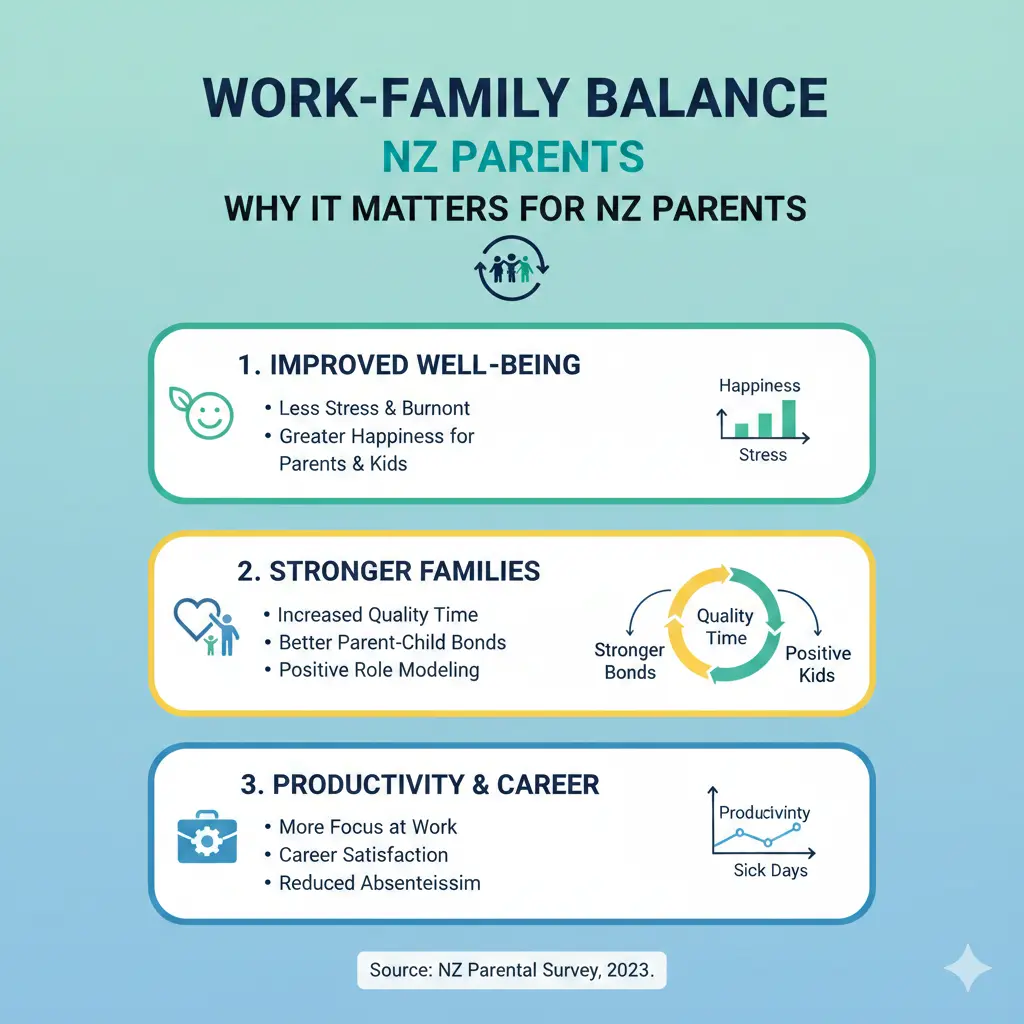
For parents, the stakes are higher. Burnout affects nearly 45% of New Zealanders, exacerbated by an "always-on" digital culture where emails ping during rugby games or dinner. Hybrid workers, common among parents, report better balance—59% rate it positively compared to 50% of on-site workers. Prioritising balance isn't just nice; it's essential for your tamariki's wellbeing, your relationship, and your own health.
Leveraging Flexible Work Arrangements in NZ
Flexible work is a game-changer for parents, and NZ law supports it. Since 2020, employees with six months' service can request flexible arrangements like part-time hours, compressed weeks, or remote work from Employment New Zealand guidelines.
Steps to Request Flexible Work
- Prepare your case: Show how it benefits your employer, like improved productivity from better-rested staff.
- Submit in writing: Use the official template from Employment New Zealand.
- Negotiate openly: Employers must respond within a month and can only decline for reasonable business grounds.
Hybrid models shine for parents—70% report higher non-monetary satisfaction. Communicate boundaries early: "I'll check emails after 5pm but focus on family first." Many Kiwi firms now offer asynchronous communication and the right to disconnect, reducing after-hours stress.
NZ-Specific Flexible Options
| Option | Description | Best For Parents |
|---|---|---|
| Compressed Week | Full-time hours over four days | Longer family weekends |
| Part-Time | Reduced hours with pro-rata pay | School-hour alignment |
| Remote/Hybrid | Mix of home and office | Childcare flexibility |
Choose employers valuing outcomes over hours—74% of Kiwis now demand this.
Navigating Childcare Options for Busy Kiwi Families
Quality childcare lets parents work without worry. In 2026, the government subsidises early childhood education (ECE) for kids under five, with 20 free hours weekly for three- and four-year-olds via Education Counts. Rates average $5–$8 per hour after subsidies, but costs vary by region—higher in Auckland, lower in rural areas.
Popular NZ Childcare Choices
- Home-Based ECE: Caring aunties or educators in homes; ideal for infants. Subsidised up to 20 hours.
- Kindergartens/Teacher-Led Centres: Play-based for 2–5s; free hours apply.
- Parent Co-Ops: Affordable, community-run—great for building whānau networks.
- Nannies or Au Pairs: Flexible for shift workers; check visa rules for au pairs.
WINZ offers Childcare Subsidies for low-income families—up to $315 weekly for one child. Apply via myIR. For after-school care, OSCAR programmes cost $5–$10 per session, often ACC-funded if work-related. Pro tip: Join waitlists early, especially pre-school term.
Mastering Time Management as a Working Parent
Time slips away with kids' activities and deadlines. Start by setting clear boundaries: Define work hours (e.g., 8am–4pm) and stick to them. Use tools like Google Calendar for shared family schedules—block "family time" as non-negotiable.
Daily Tips for Kiwi Parents
- Batch tasks: Meal prep Sundays for the week; saves evenings for tamariki.
- Prioritise ruthlessly: Eisenhower Matrix: Urgent/important first. Delegate school pick-ups via carpool apps like Carpoolworld NZ.
- Morning routines: 15-minute family hui over breakfast to align the day.
- Tech hacks: Apps like Todoist for work, Cozi for family—sync across devices.
Reconnect with nature—NZ's beaches and tracks are free therapy. Short forest walks post-school recharge everyone. Community involvement, like school working bees, builds purpose without extra time.
Prioritising Self-Care to Sustain Balance
You can't pour from an empty cup. With 45% burnout risk, self-care is non-optional. Kiwi parents thrive with "mental health days" beyond sick leave. Aim for 7–8 hours sleep; use KiwiSaver wellness apps for tracking.
Quick Self-Care Wins
- Micro-breaks: 5-minute breathing during lunch—try Headspace's free NZ content.
- Exercise: Join free ACC Active+ programmes or park runs.
- Support networks: Plunket for parenting advice; Parents Centre for workshops.
- Couples time: Date nights via shared calendars; use Grandparents@Work scheme.
Track progress weekly: Journal wins like "Made it to netball without emails." Employers offering community days help too.
Common Challenges and How to Overcome Them
Cost of living hits hard—many parents work extra to cover bills. Counter with budgeting apps like PocketSmith (NZ-made). Guilt is rife; reframe: Balanced parents raise happier kids. If struggling, contact WINZ for Working for Families tax credits—up to $135 weekly per child in 2026.
Your Next Steps to Better Work-Family Balance
Start small: This week, request a flexible chat with your boss and block family time in your calendar. Explore ECE subsidies via Education NZ and join a local parents' group on Facebook. Track one month—adjust as needed. You're not alone; with NZ's supportive systems, balanced whānau life is achievable. Ka pai!
Frequently Asked Questions
Sources & References
-
1
New Zealand Workers Prioritise Balance Over Security in 2025 — www.frogrecruitment.co.nz
- 2
-
3
New Zealand has the best work-life balance in the world — fortune.com
-
4
Mood of the Workforce 2026 — union.org.nz
-
5
Hybrid Working in New Zealand | What 2026 Data Shows — www.zeil.com
-
6
Global Life-Work Balance Index 2025 — remote.com
Useful Tools
Related Articles

Screen Time Guidelines for Kiwi Kids
Ever caught your little one glued to a tablet, eyes wide and fingers flying? In Aotearoa, where Kiwi kids spend more screen time than most—up to 42 hours a week for teens—it's time to hit pause and re...

School Zones NZ: How They Work and Why They Matter
Choosing the right school for your tamariki can feel like navigating a map of coloured zones—literally. In Aotearoa, **school zones NZ** dictate where your child is guaranteed a spot, helping prevent...

Best Playgrounds in Christchurch: Family Guide
Christchurch has some of the best family playgrounds in Aotearoa, offering everything from award-winning attractions to hidden gems perfect for a weekend adventure. Whether you're looking for thrillin...

Kids Sports NZ: Costs and Options by Age
Getting your kids active in sports is one of the best gifts you can give them as a Kiwi parent—building fitness, teamwork, and lifelong habits. But with rising costs biting into household budgets, und...