Financial Hardship: Where to Get Free Help

Feeling the pinch from rising bills, job loss, or an unexpected emergency? You're not alone—many Kiwis face financial hardship each year, but free help is available right here in New Zealand to get yo...
The Lifetimes NZ editorial team curates, fact-checks, and updates guides on personal finance, property, health, immigration, legal, business, and lifestyle topics relevant to Lifetimes NZ readers. Articles are produced with AI assistance and reviewed by the editorial team before publication.
Feeling the pinch from rising bills, job loss, or an unexpected emergency? You're not alone—many Kiwis face financial hardship each year, but free help is available right here in New Zealand to get you back on track without adding debt.
Whether it's emergency grants from Work and Income, budgeting advice from community services, or bank hardship programs, there are practical steps you can take today. This guide breaks down where to find free financial hardship help, how to apply, and what to expect in 2026, so you can access support quickly and confidentially.
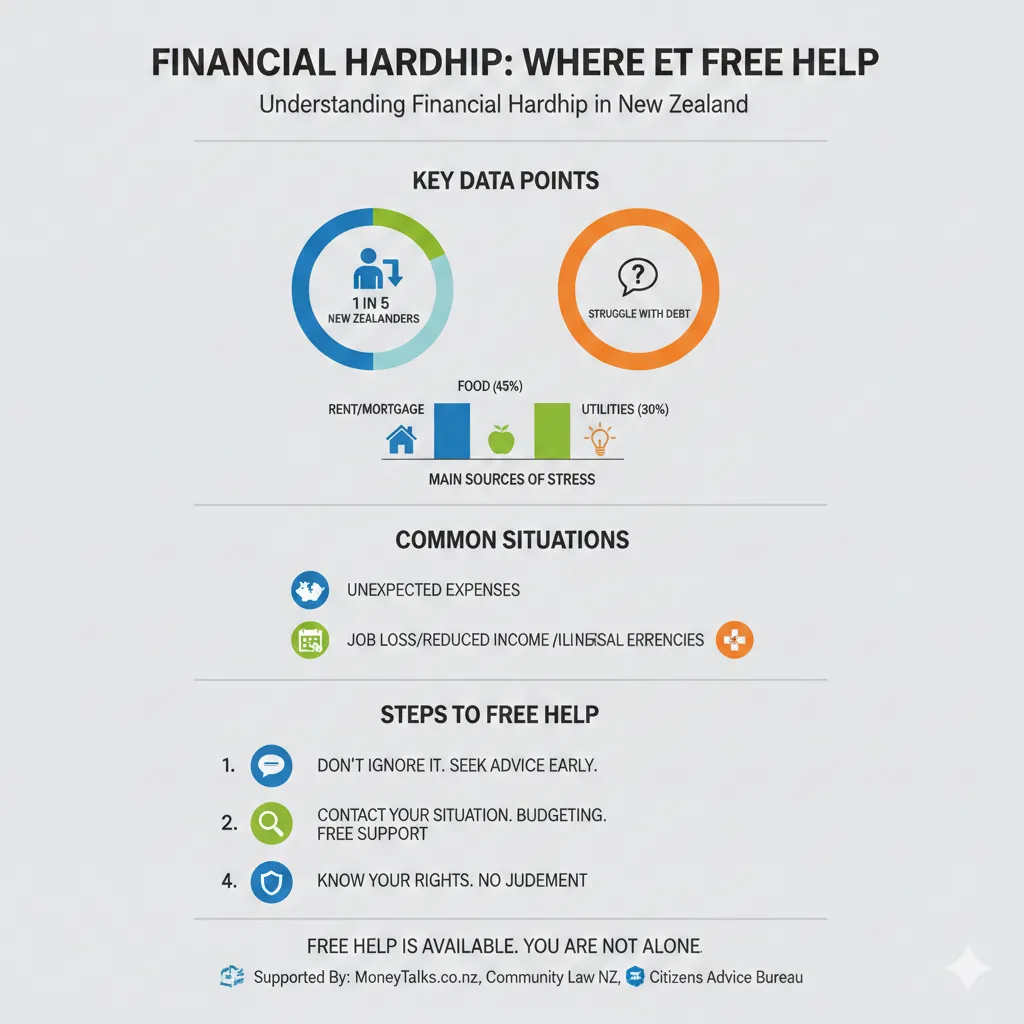
Understanding Financial Hardship in New Zealand
Financial hardship hits when everyday costs like rent, power, or food outstrip your income, often due to unemployment, illness, or natural disasters. In New Zealand, Work and Income (part of MSD) defines it as situations where you can't meet urgent or unexpected costs, even if you're working.
Key signs include falling behind on bills, skipping meals, or using credit for essentials. Importantly, you don't need to be on a benefit to qualify for help—anyone meeting income and asset tests can apply.
Common Causes and Stats
- Job loss or reduced hours: With KiwiSaver contributions and IRD tax credits affected, many turn to WINZ for bridges.
- Health issues: Disabilities or illnesses qualify for extra allowances via the Community Services Card.
- Emergencies: Severe weather events, like the 2026 North Island storms, trigger relief funds from banks and councils.
- Student struggles: Unanticipated costs threaten studies, with grants available at institutes like Ara.
In 2026, inflation and living costs remain high, but government programs ensure no Kiwi goes without essentials if eligible.
Work and Income: Your First Stop for Free Emergency Help
Work and Income offers the broadest range of free hardship assistance, including one-off grants and advances. These are needs-based, with no interest, and cover food, bills, and more.
Special Needs Grants
These are non-recoverable payments for essentials you can't afford. Examples include:
- Food grants for those in immediate need.
- Help with power disconnection or urgent travel.
- Up to annual limits (e.g., $200–$500 for food, depending on circumstances), but exceptional cases allow more.
To qualify, prove low income/assets and unavoidable costs. Apply via MyMSD online or call 0800 559 009.
Advance Payments and Recoverable Assistance (RAP)
An advance is like an interest-free loan from your future benefit, repaid via deductions. Even non-beneficiaries can get RAP for urgent needs like car repairs or school costs.
Limits: Up to six weeks' benefit, but managers approve more in hardship. Repayments spread over weeks to avoid strain.
Get quotes for big items; payments go via Work and Income Payment Card or direct to suppliers.
Temporary Additional Support
Assessed automatically during applications, this tops up benefits for ongoing costs like rent. It's ongoing if eligible, helping stabilise finances long-term.
Tip: Always mention Temporary Additional Support when applying—it's often overlooked but vital.
How to Apply for WINZ Hardship Help
- Log into MyMSD or call 0800 559 009.
- Explain your situation honestly; provide evidence like bills.
- Attend a face-to-face if needed—payments can start from application date.
- Visit an office for a Payment Card if required.
For disasters, phone the same line for main benefits or living expense help.
Free Budgeting and Financial Mentoring Services
Beyond grants, free advice prevents future hardship. These services offer confidential, one-on-one support tailored for Kiwis.
MoneyTalks and CommunityLaw
MoneyTalks provides free budgeting advice, linking you to mentors and tools. It's nationwide, with helplines and online calculators.
CommunityLaw offers impartial info on rights, debt, and services—no cost, just expertise.
Bank Support Finders and Programs
- ASB Support Finder: Answers questions to match you with govt benefits; applies on your behalf.
- Westpac, BNZ: Hardship assistance like reduced repayments or early KiwiSaver access (with evidence).
- Fidelity Life: Relief for weather-affected policyholders in 2026 events.
Banks like Westpac and Kiwibank help open accounts for WINZ payments, even with poor credit.
Specialist Free Help: Students, Disabilities, and Disasters
For Students
Tertiary providers like Ara offer Emergency Assistance Grants for citizens/permanent residents facing sudden hardship. Provide bank statements; funds support continued study.
StudyLink also covers extras via allowances—check eligibility online.
Disability and Health Support
The Community Services Card lowers healthcare costs; apply via WINZ. Disability allowances, subsidies, and loans cover extras like home mods.
Disaster Relief
Local councils provide Mayoral Relief Funds ($1,000–$2,500 caps) for ratepayers hit by events like floods. Check localcouncils.govt.nz for your area's rules.
Banks offer tailored relief, e.g., Westpac for North Island weather impacts.
KiwiSaver Withdrawals: A Last Resort
For severe hardship, withdraw KiwiSaver funds via your provider with evidence. Strict rules apply; processing takes weeks. Exhaust WINZ options first.
Disclaimer: This isn't financial advice—consult a professional or MoneyTalks before acting.
Practical Tips to Maximise Free Help
- Gather evidence: Bills, bank statements, quotes.
- Apply early—backdating possible for disasters.
- Combine supports: WINZ grants + budgeting advice.
- Use MyMSD for speed; face-to-face for complex cases.
- Contact creditors: Banks must consider hardship under responsible lending laws.
FAQ
1. Do I need to be on a benefit for hardship help?
No, RAP covers non-beneficiaries if you pass income/asset tests.
2. How long does WINZ approval take?
Often same-day online; phone or in-person within days.
3. What's the difference between grants and advances?
Grants are free (non-recoverable); advances repay via benefit deductions.
4. Can banks help with free hardship support?
Yes, via reduced payments, tools like ASB Finder, or KiwiSaver access—no fees for advice.
5. Is there help for students in hardship?
Yes, Ara and similar grants for emergencies; StudyLink for ongoing.
6. What about tax or ACC during hardship?
IRD offers payment plans; ACC covers injury-related costs—contact directly.
Next Steps: Take Control Today
Start with a call to Work and Income at 0800 559 009 or log into MyMSD—it's free, fast, and Kiwi-focused. Pair it with MoneyTalks for budgeting, and check your bank's hardship page. You've got this; one step leads to stability.
Seek personalised advice from professionals. Rates and eligibility can change—verify with official sources.
Related Articles

Industry Bodies and Professional Associations NZ
Whether you're launching a business, advancing your career, or navigating financial regulations, industry bodies and professional associations in New Zealand offer invaluable support. These organisati...

Emergency Benefit NZ: When You Have No Other Options
When you're struggling financially and don't qualify for other benefits, the Emergency Benefit might be your lifeline. It's a discretionary payment designed for Kiwis in genuine hardship who've exhaus...

Unpaid Internships NZ: Are They Legal?
Unpaid internships are a common pathway for students and graduates to gain work experience in New Zealand, but there's often confusion about whether they're actually legal. The short answer is: unpaid...

Estate Administration NZ: Managing Someone's Affairs After Death
Losing a loved one is one of life's toughest challenges, and stepping in to manage their estate can feel overwhelming. In New Zealand, estate administration—the process of handling someone's affairs a...